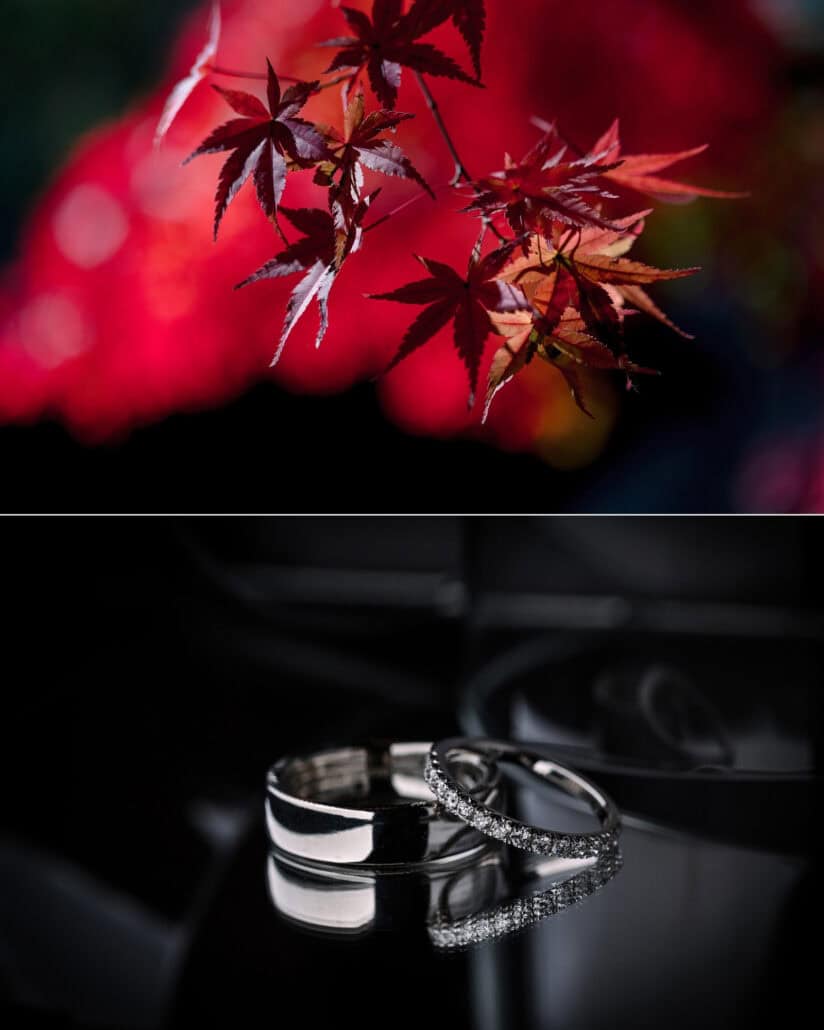
There’s a camphor tree in the garden at Jinya that Hayao Miyazaki played under as a child, and its shape is why the inn calls it the Totoro tree. Last November, beside it, under maples that had already turned red, two people stood in front of the people they love most and said the vows they’d written for each other. This Jinya wedding film is how they’ll go back and hear them.
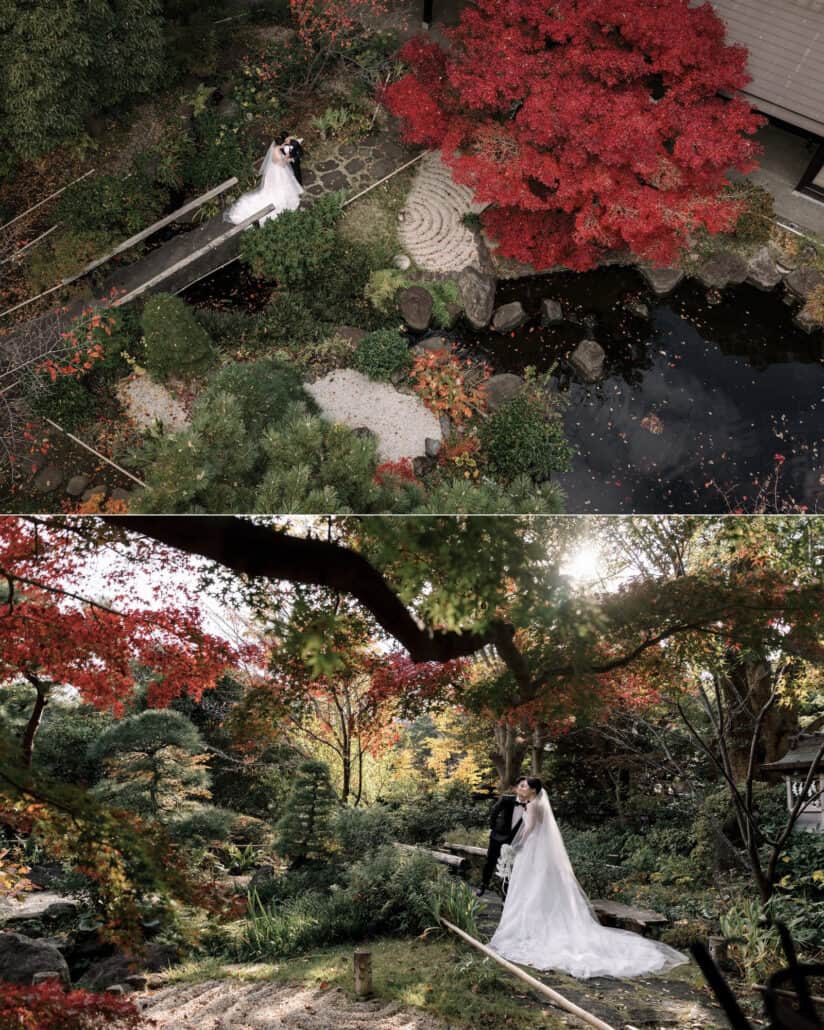
In its own words, Jinya has spent more than a hundred years adding colour to people’s stories. Theirs belongs to the garden now.
Their wedding has its own post, with the photographs and both days. This one is about the films: a feature for the two of them, a highlight for everyone and a teaser for their last dance. The teaser above holds the two days in a minute. When you have time for the whole ceremony, it’s further down, both of their vows in full.
Storytellers, Not Photographers
We’ve always told our team that we aren’t photographers or filmmakers. We’re storytellers, and every part of what we do tells the story in its own way.
The planning is where the story is written. Dee and her team start from the couple’s dream and shape it into a journey, for the two of them and for everyone who came. Here it ran over two days: a welcome night at the inn, then a wedding in its garden.
The photographs are family history. A photograph stops a moment and holds it still long enough to look at properly, and to keep coming back to. One frame can carry a hundred memories: who was standing just out of shot, what someone said a second before, how cold the garden was that morning. Being trusted to record a family’s history is a privilege, and we treat it like one.
Film gives back what a photograph has to leave out. The voices, the laugh before a line lands, a face changing as someone listens. You don’t only remember the day. You get to go back into it.
A Jinya Wedding Film That Keeps Their Voices
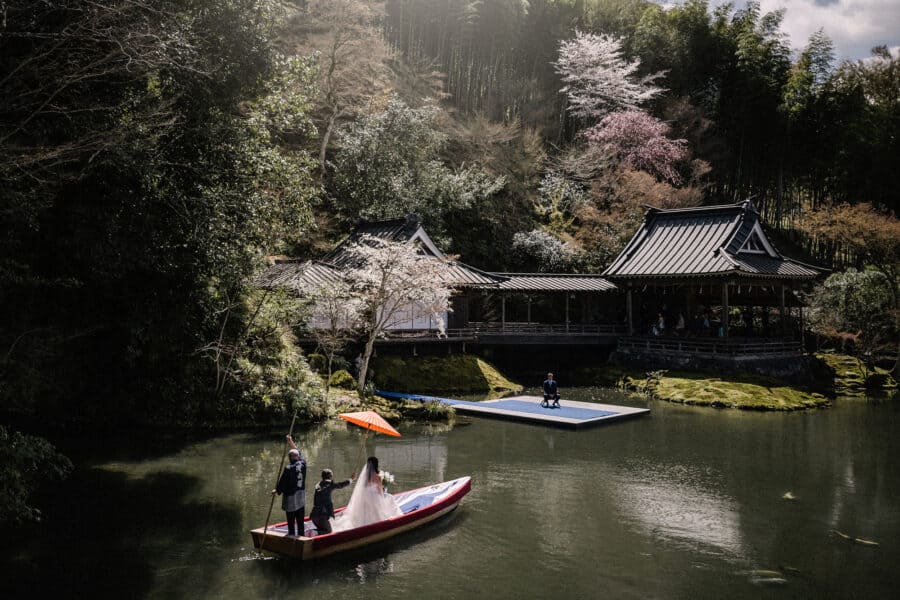
Both of them wrote their own vows. Their ceremony was led by a friend who’d known the bride for nearly ten years, and she told everyone that writing their own vows was one of the first things the couple wanted, without hesitation.
They’d asked for an unplugged ceremony, so as she walks the aisle on her father’s arm, you won’t find a phone in the rows.
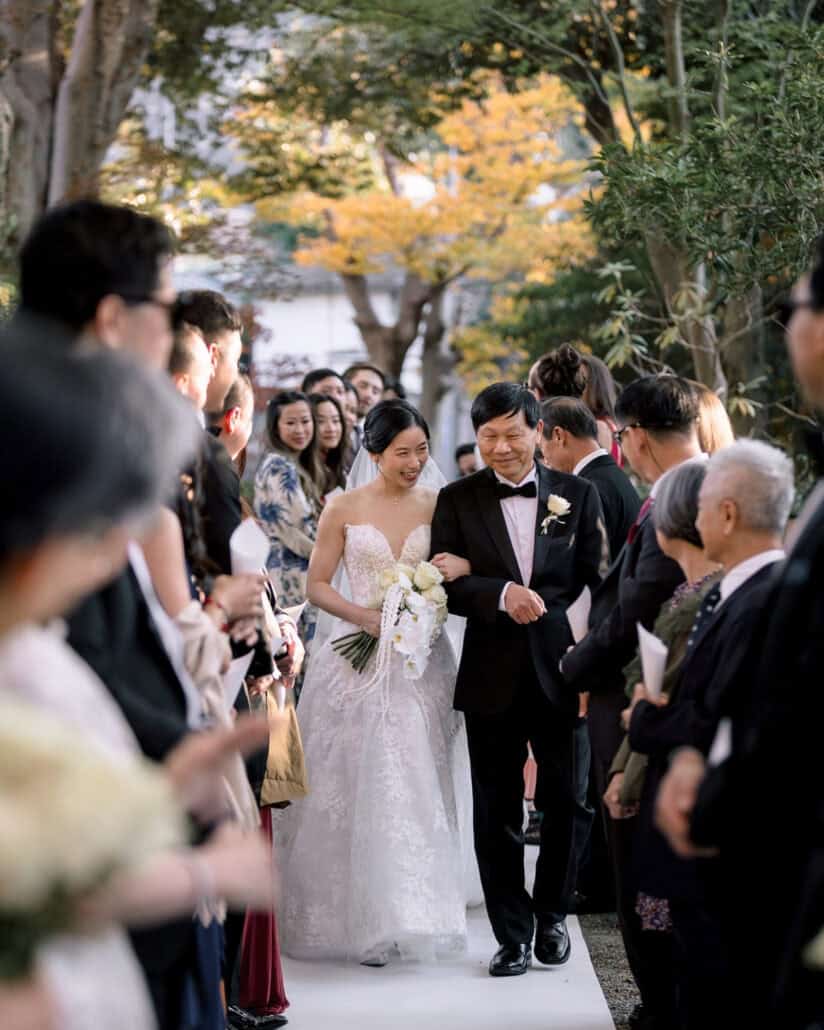
In the feature, each of their vows has a chapter of its own, whole and in their own voices. Those words were written for one listener, and the film keeps them exactly as they were said. The ceremony had its own sound recorder, so nothing either of them said goes missing.
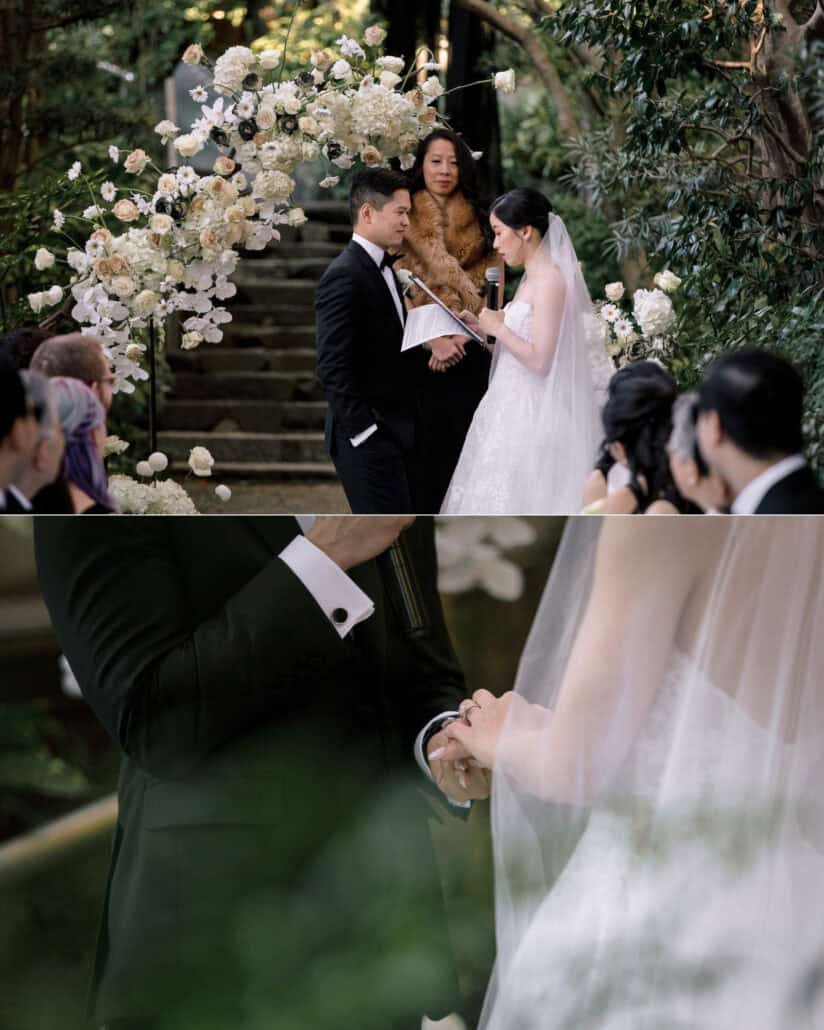
The music rises once, in the pause between her vows and his. For those seconds the film leaves the ceremony for the garden and the two of them alone, close and then from above. When the music drops back, it’s his turn.
Two Mornings, Cut Together
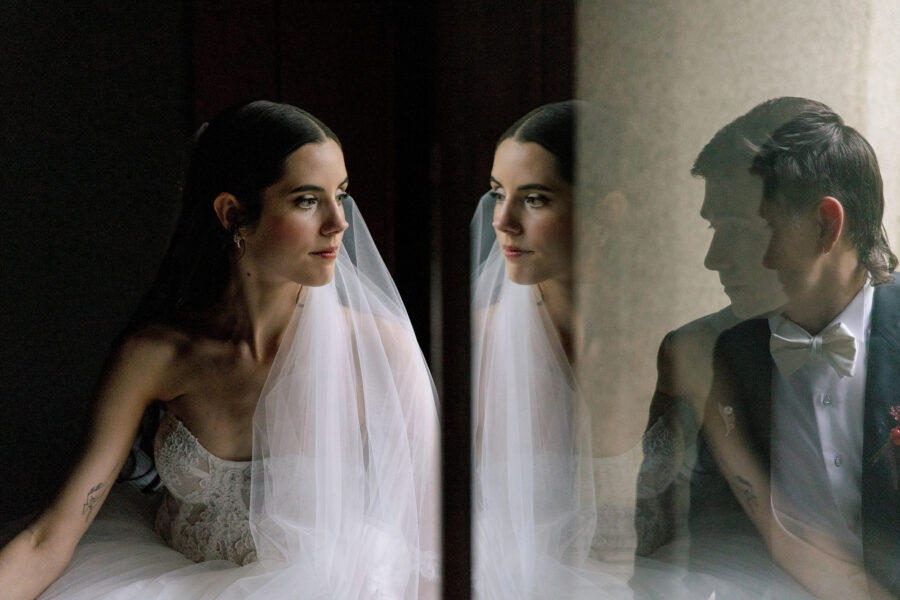
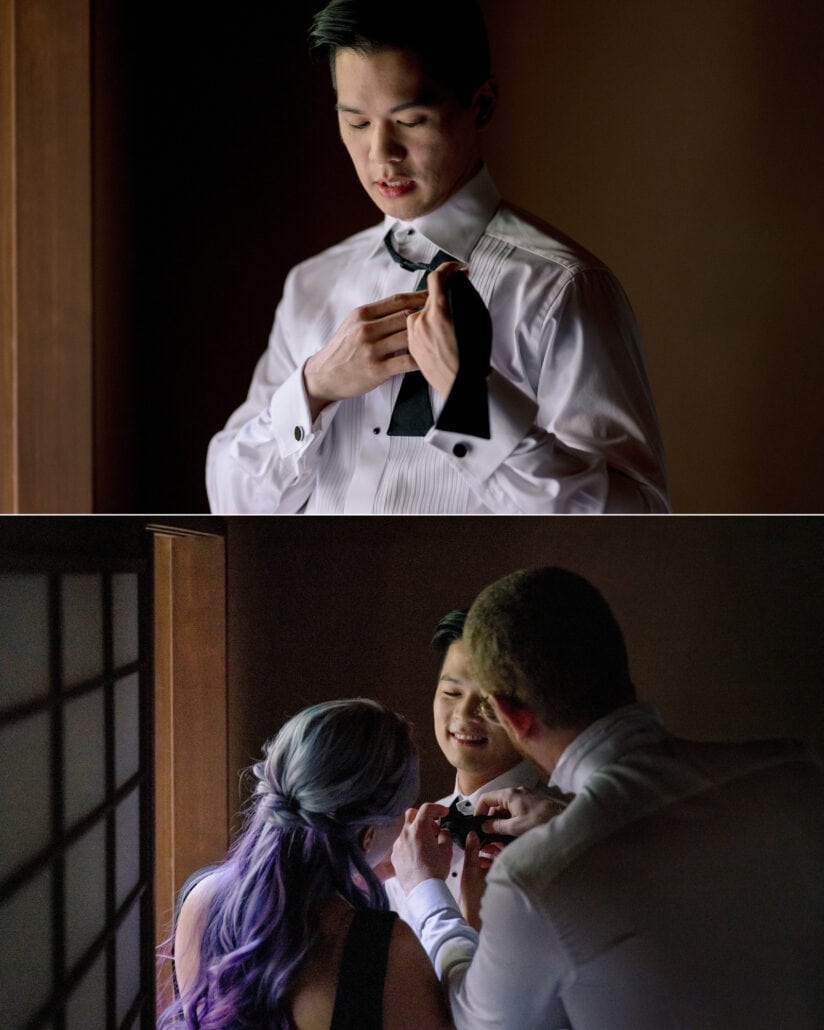
Before the vows, the film cuts his morning against hers. Neither of them saw the other’s morning on the day. In the film, they do. His had a bow tie that took two friends, some instructions and one pointed question: “Did you get past step two?”
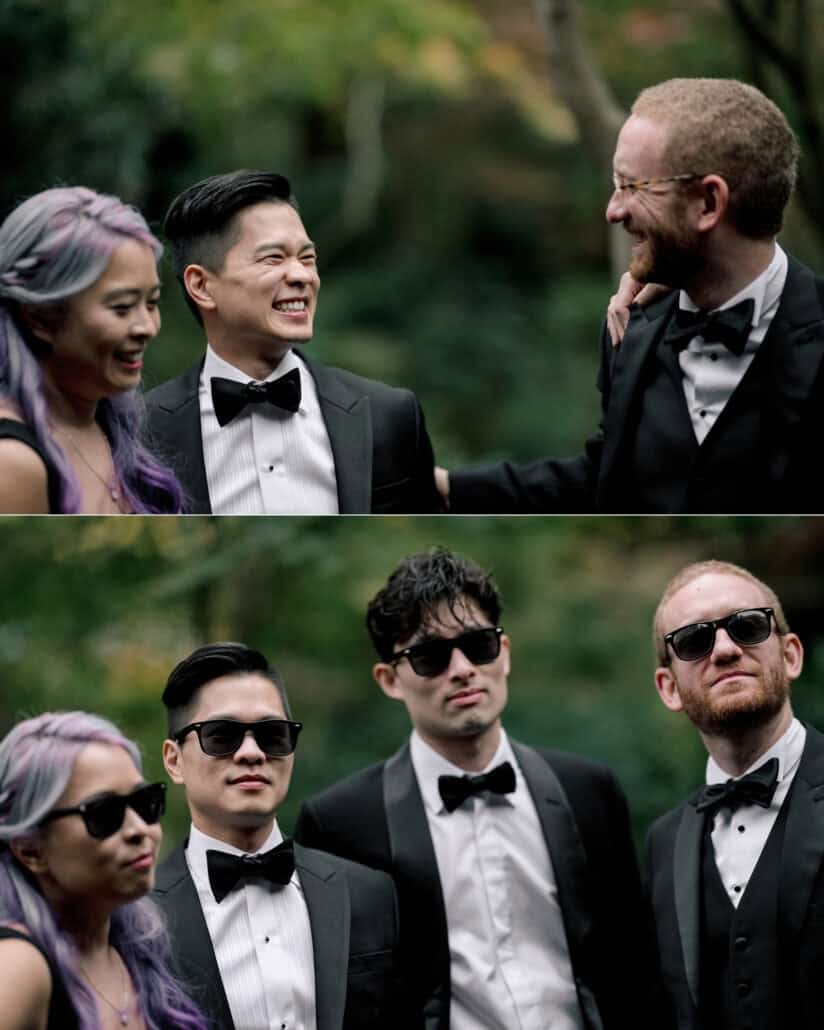
In a huddle in the garden, one of his crew called the whole day before it happened: “First, you guys go down the aisle.” Then the bride. “And then, we watch. We’ll dance!” Someone answered, “Good talk, thanks coach!” It all happened in that order.
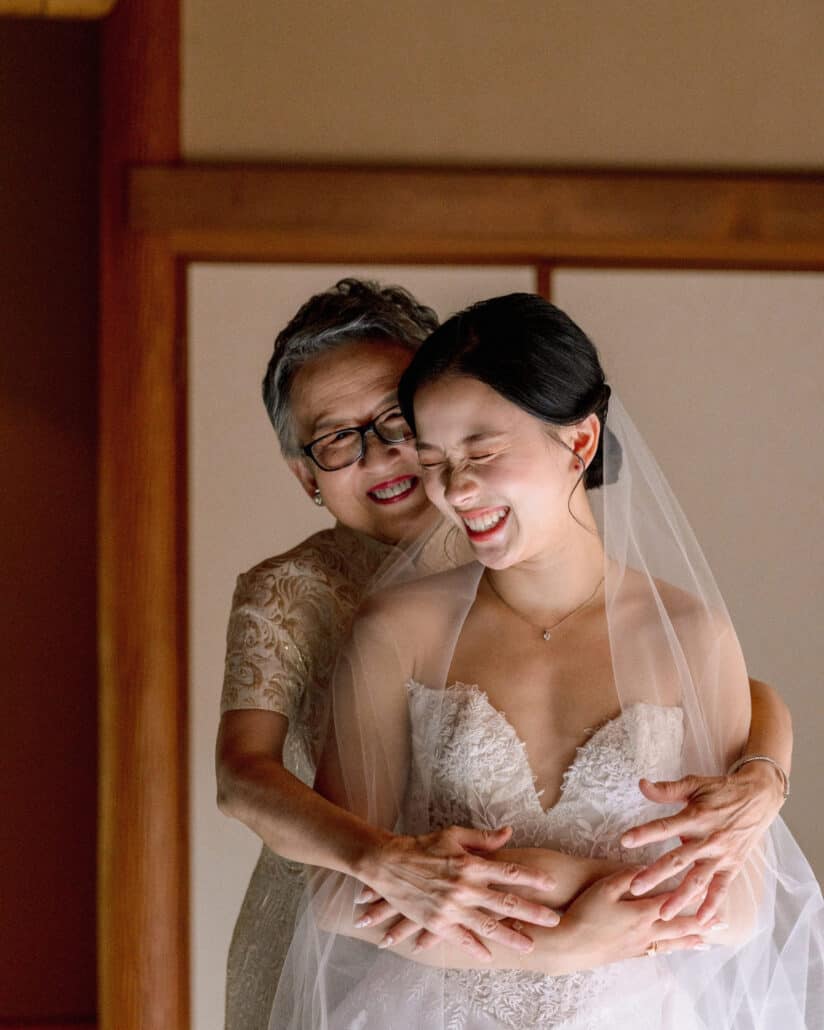
Her morning had her mother, the veil and a room that clapped at every step. “I love how we all clap out through everything!” she said. “It’s like I feel really affirmed!”
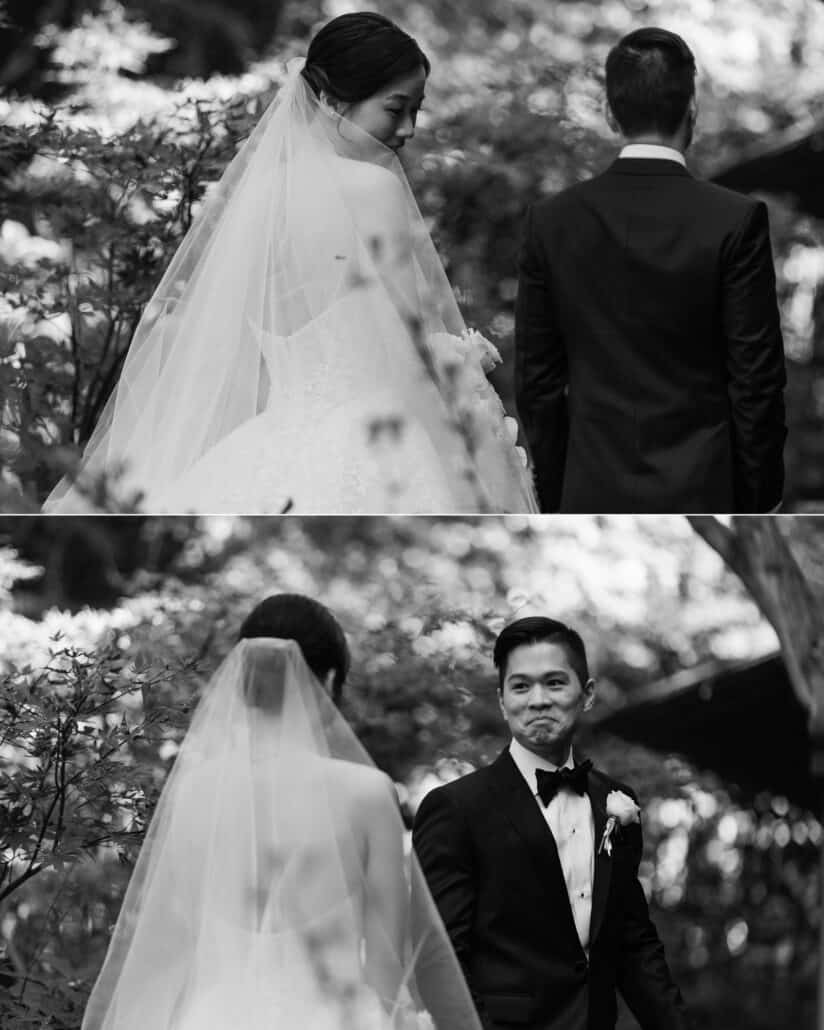
The first look in the garden has a chapter of its own. He cried. We’ll leave it there.
The Night Before, With a Mallet
The welcome night came first. Their MC explained the mochitsuki to the room: a carpenter once made a mortar when a new house went up, and when weddings were held at home, mochi was pounded as part of them. The couple went first at the wooden usu. The room settled on eight strikes and called every one.
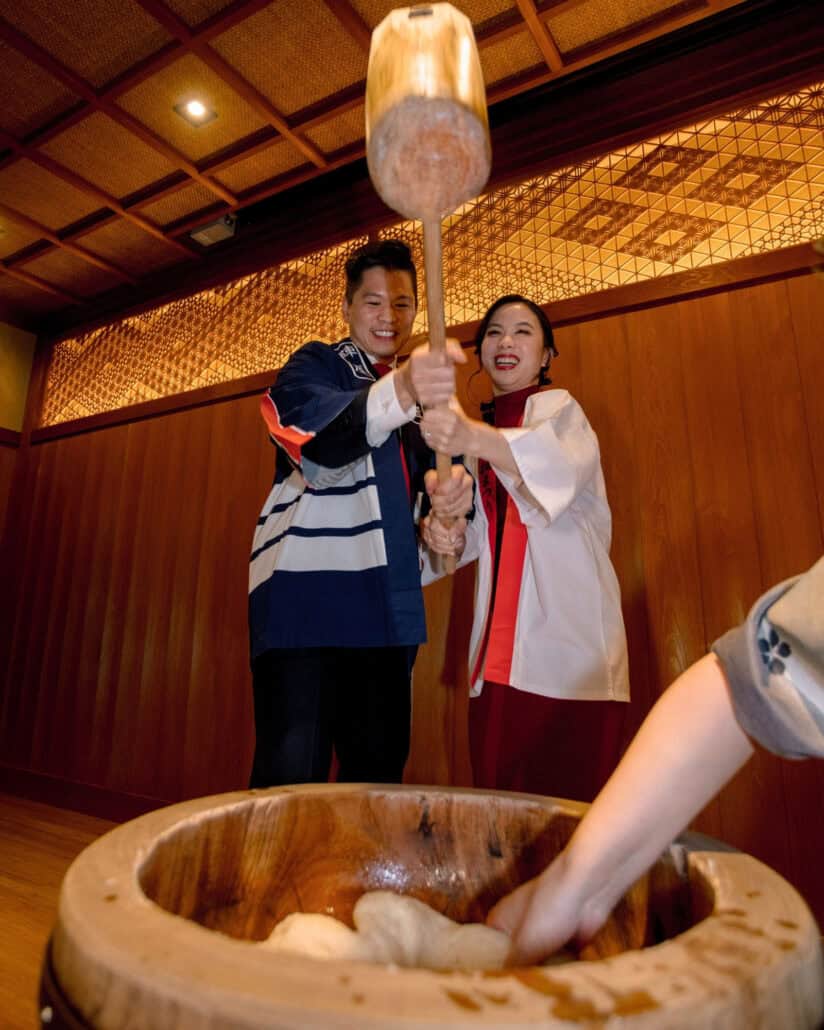
The groom gave the welcome, and one line from it has stayed with us: “It is the friends and families in our lives that make living so meaningful.” He also gave everyone three warnings for “these next 48 hours”: “get ready to stretch your bellies”, “prepare your liver” and “prepare to get no sleep”.
The Drum at Jinya’s Door
In February 1952, one of Japan’s great shogi players arrived at Jinya the day before game six of a title match and rang the bell. By his account, nobody came. A clerk walked past and paid him no attention, and from somewhere inside he could hear a banquet. He waited about thirty minutes, went to another inn and refused to play. It’s still called the Jinya Incident.
It may not have been about the doorbell at all. He’d already won the series, and under the rules of the day the next game would be played at a handicap, with the reigning champion, the Meijin, treated as the weaker player. He later wrote that he couldn’t shake his reluctance to damage the Meijin’s standing.
Jinya took the doorbell seriously anyway.
Since then, it has sounded a drum at the entrance for its guests. In the inn’s own words, the drum that greets guests and sees them off is hospitality you’ll only find there. Over the years it has hosted more than three hundred shogi and go title matches, some of them played over two days with a night in between, like this wedding. Jinya remembers things. It’s a good place to leave a promise.
Their Last Dance, in a Minute
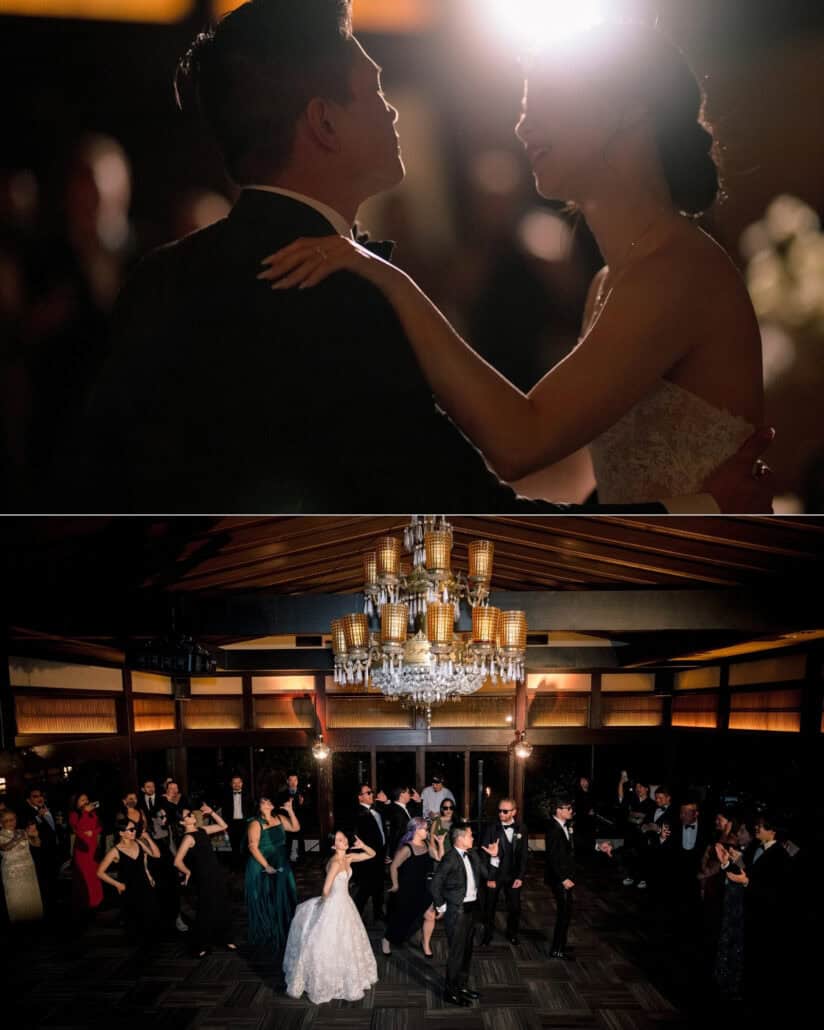
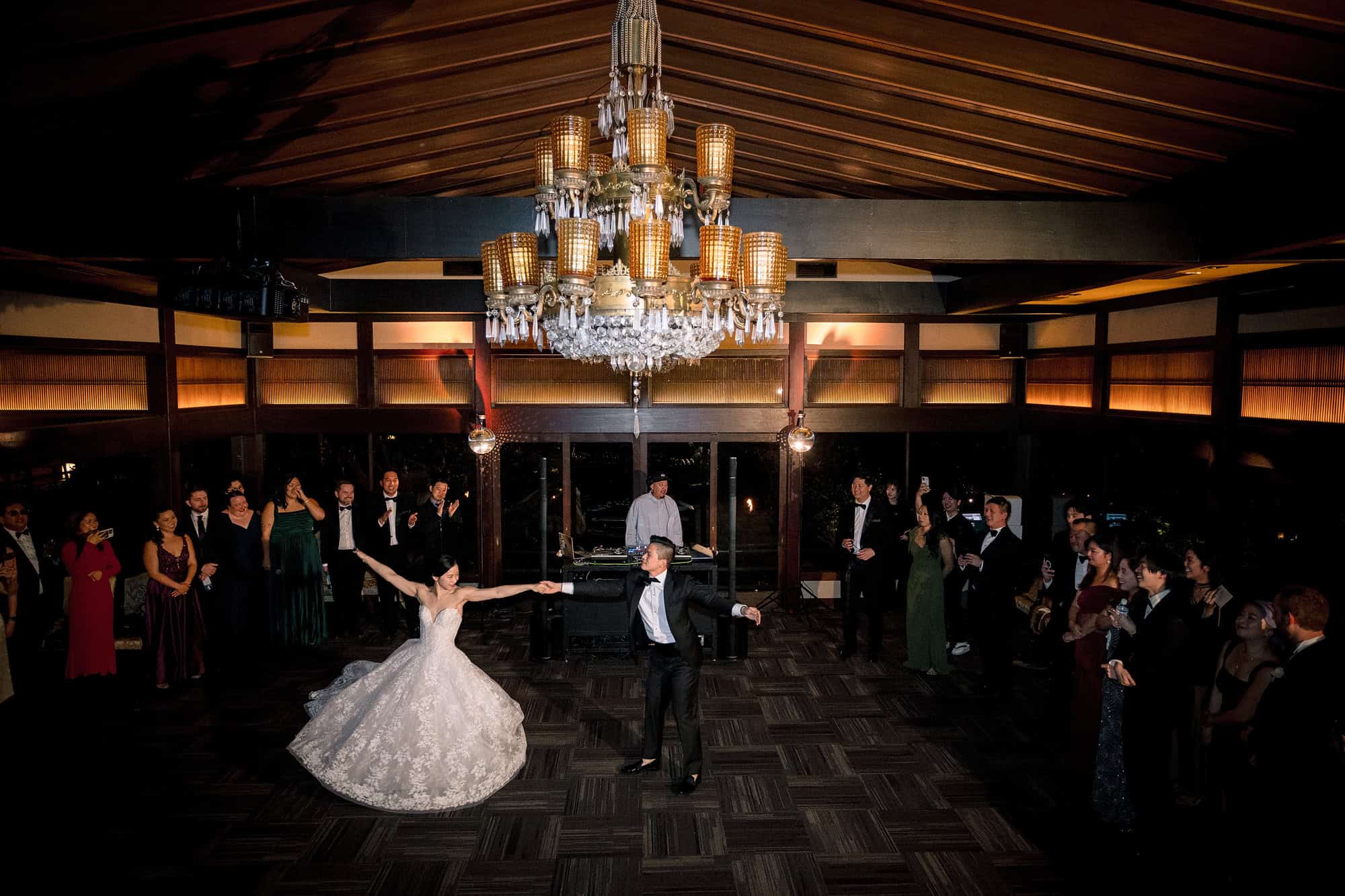
By evening the phones were back out. A spotlight caught the two of them at the door of the reception, flair bartenders sent shakers into the air, and their friends didn’t leave them alone on the dance floor for long.
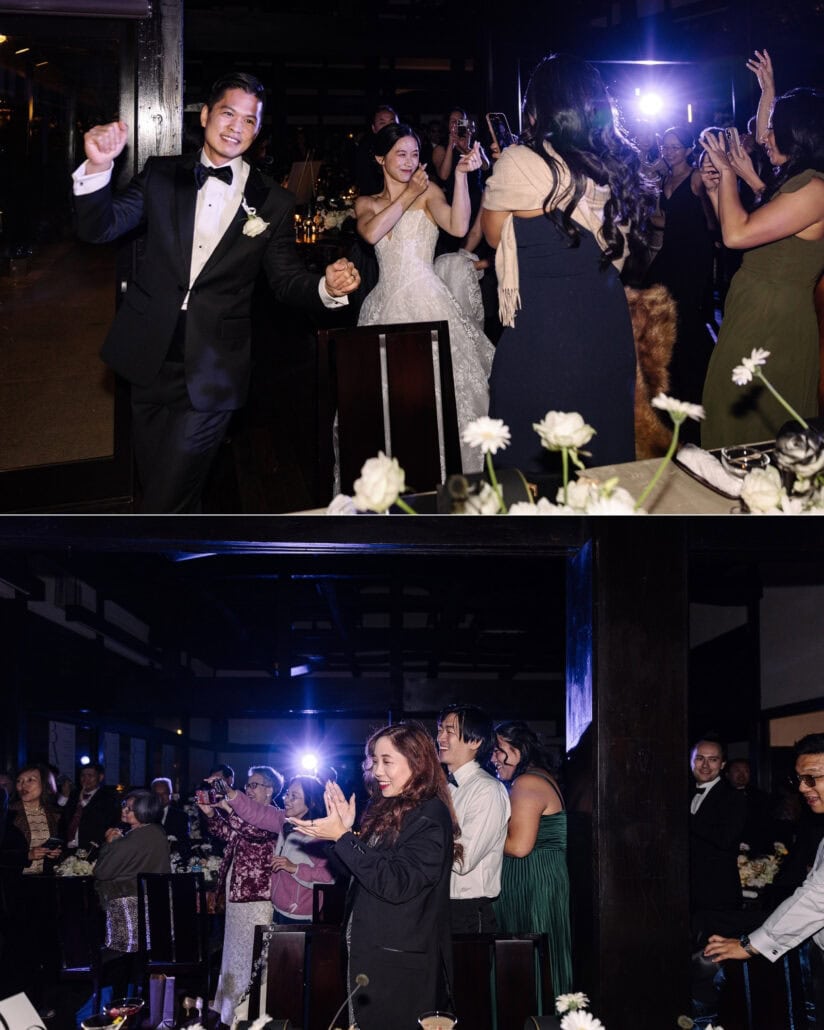
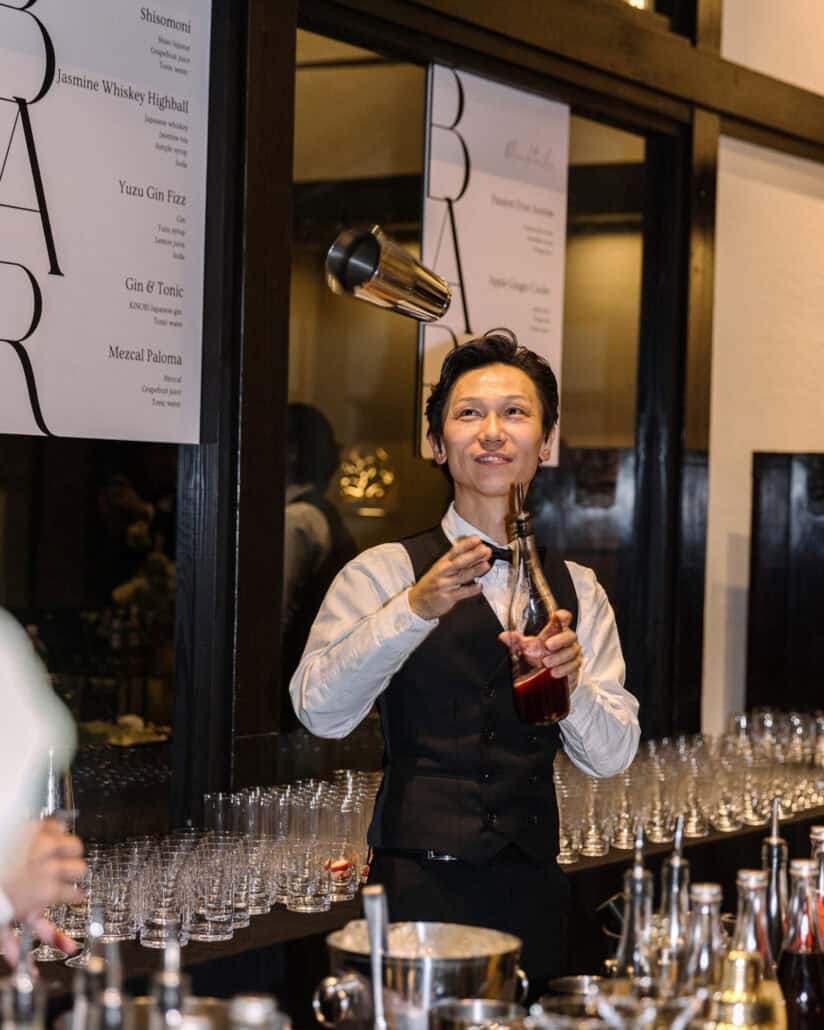
The teaser, the shortest Jinya wedding film of the three, is cut to “Shelter” by Porter Robinson & Madeon, the song their DJ played for the last dance. There are no titles on it, by choice. The song’s quiet intro carries the day, from the string quartet to the kiss under the arch. Then the drop lands, and the teaser turns to night.
The last dance is where those three warnings had been heading all along. The floor closed into a ring around the two of them, people who’d flown in from all over and spent two days together, and they were chanting before the drop landed.
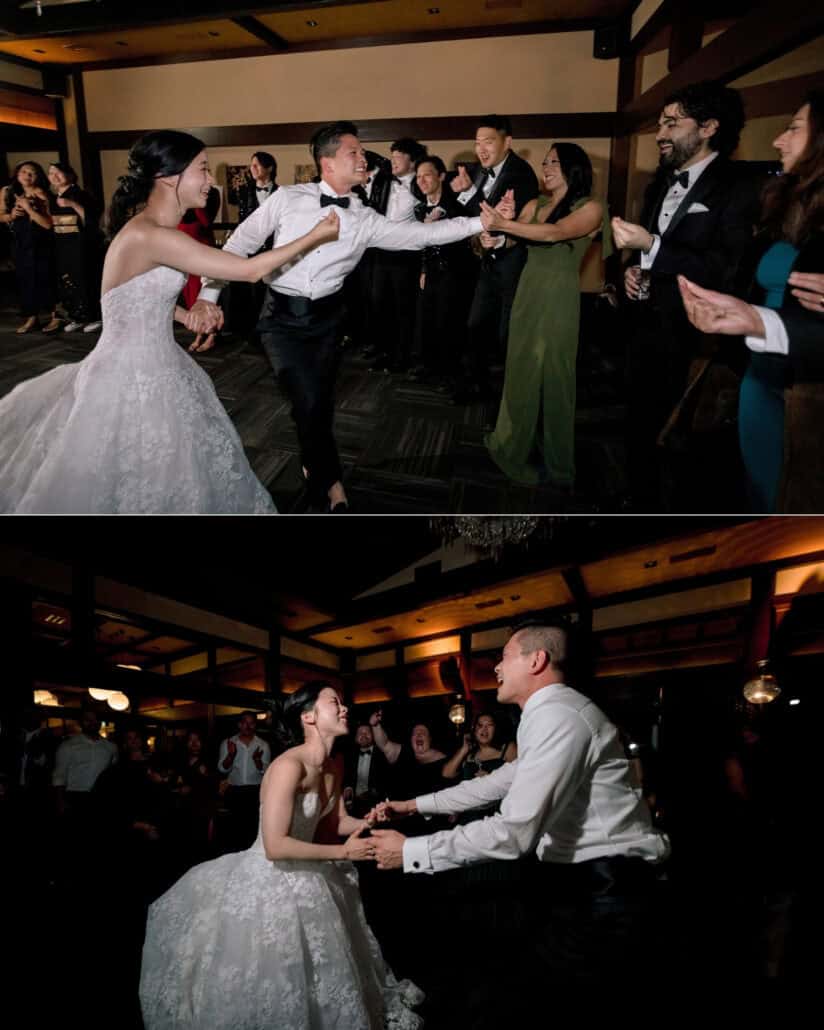
That song, in that room, happened once. At the end someone announced, “We’re going to the afters! After afters!”
The third warning held.
Where All Three Films End
All three films end on the same shot: a night flight over Jinya’s garden path, the two of them walking it hand in hand, slowed to half speed. The highlight, the one made for sharing, plays on their wedding post.
The photographs will let them stop and look. The films will let them go back in and hear it all again. And the garden keeps what it heard, beside a camphor tree that has been keeping things for a very long time.