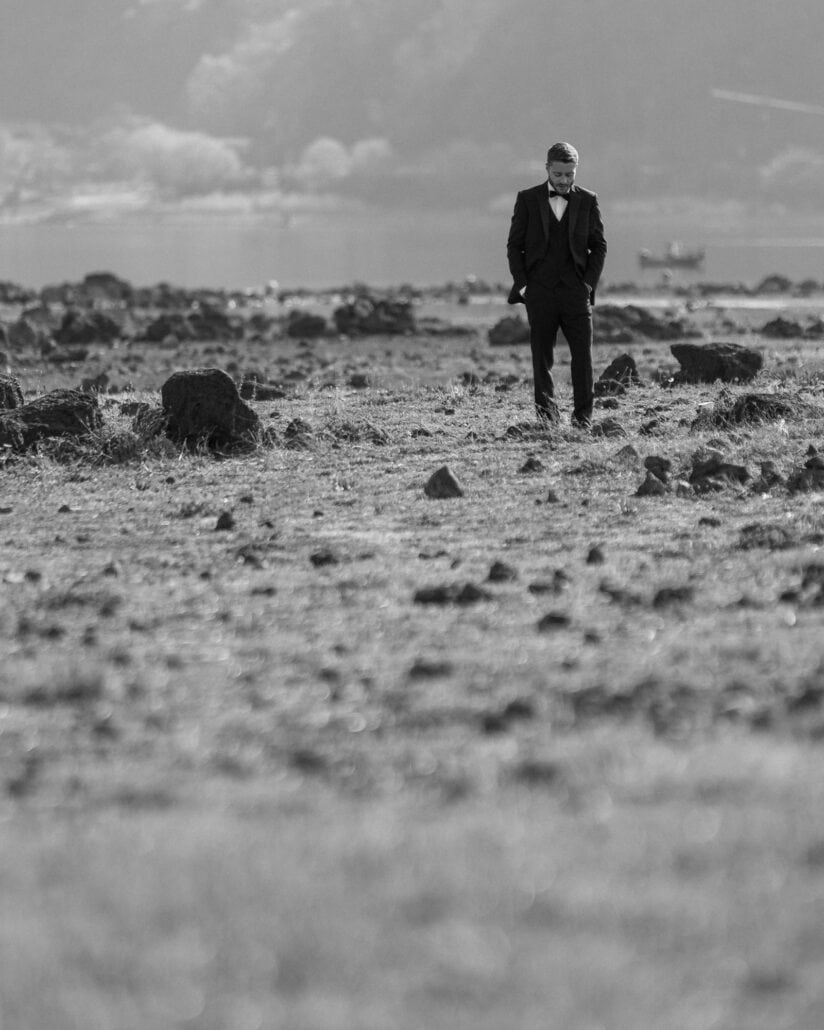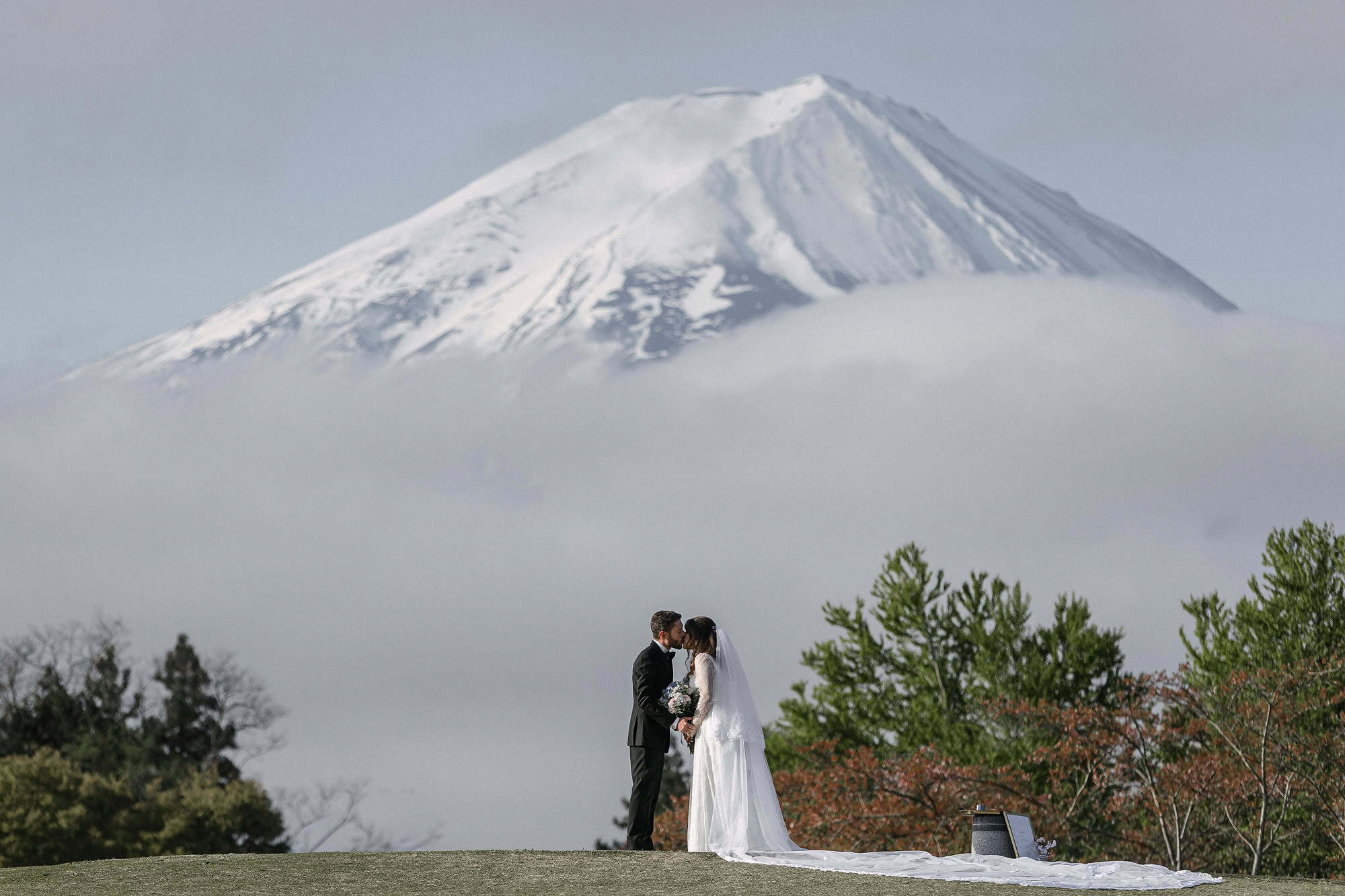
Simple can be remarkable. It can mean giving the things that need space, space.
There’s a Japanese idea that gets close to this: ma (間), the interval between things. The pause. The space that gives what surrounds it room to register. In Japanese architecture, music and art, that space isn’t treated as empty. It has a job to do. We think about that with weddings too.
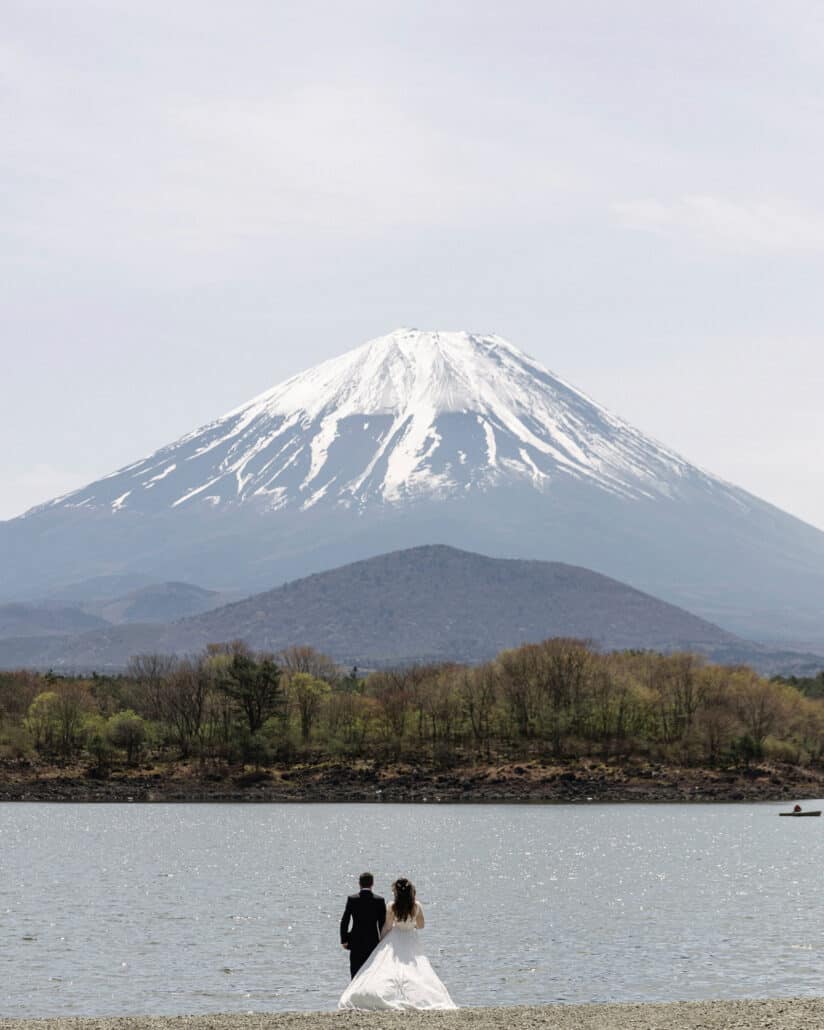
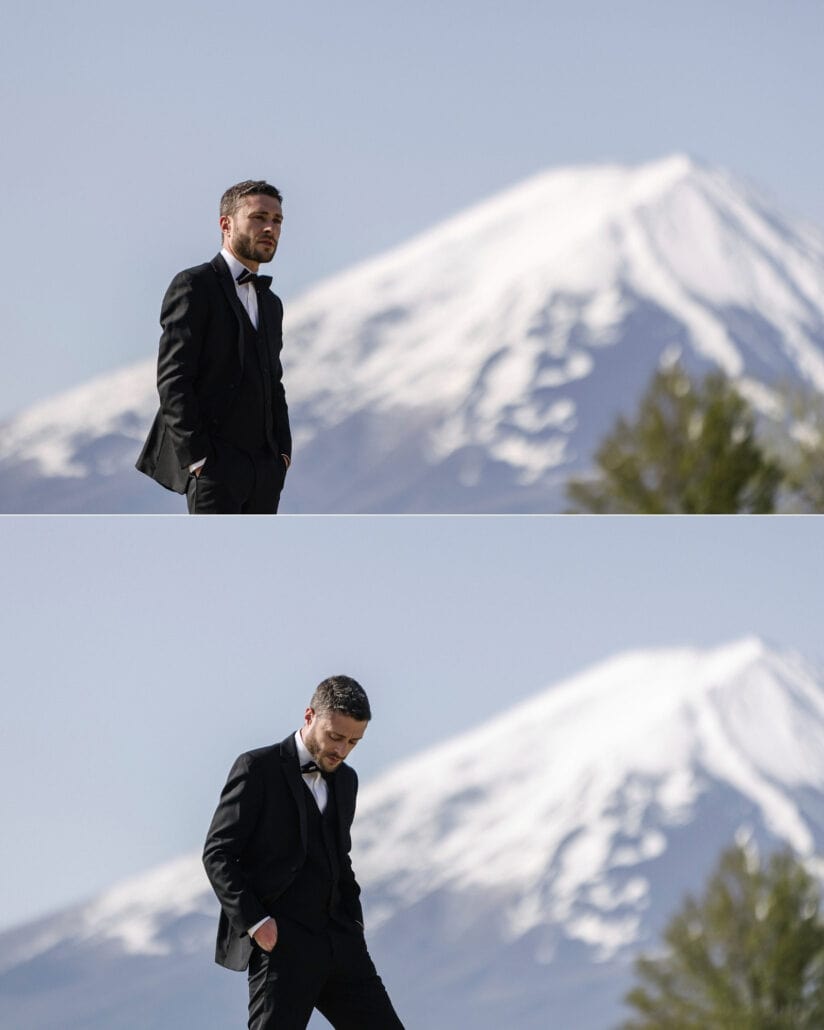
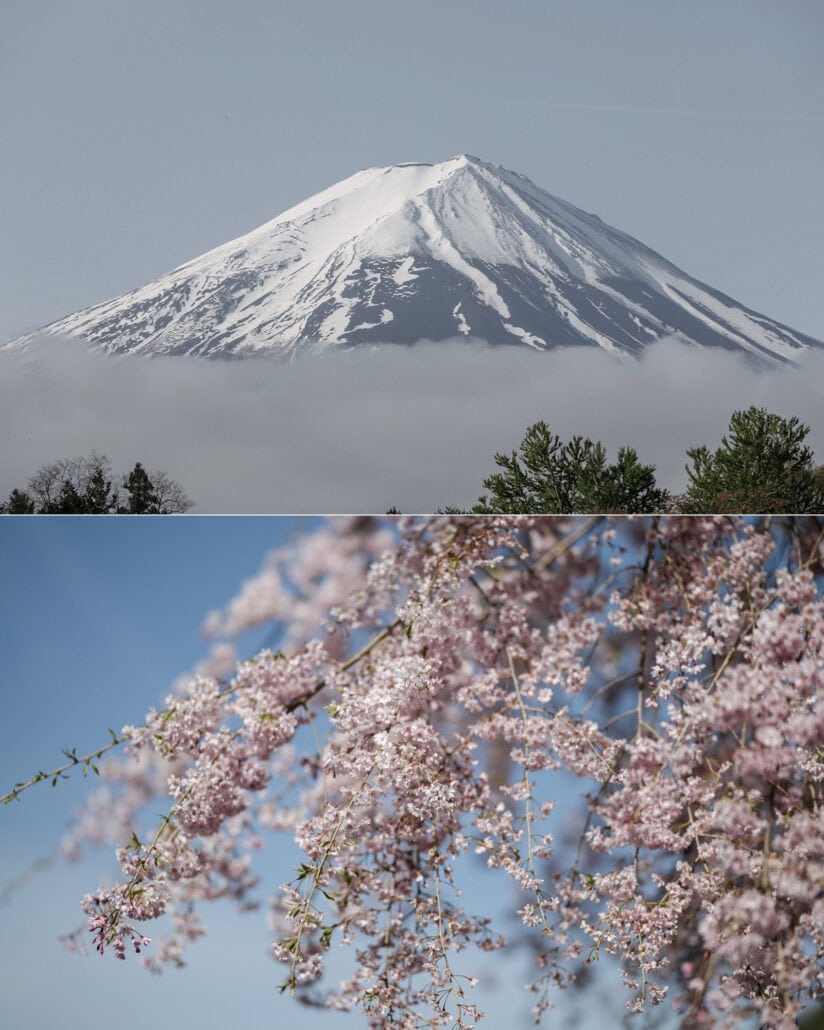
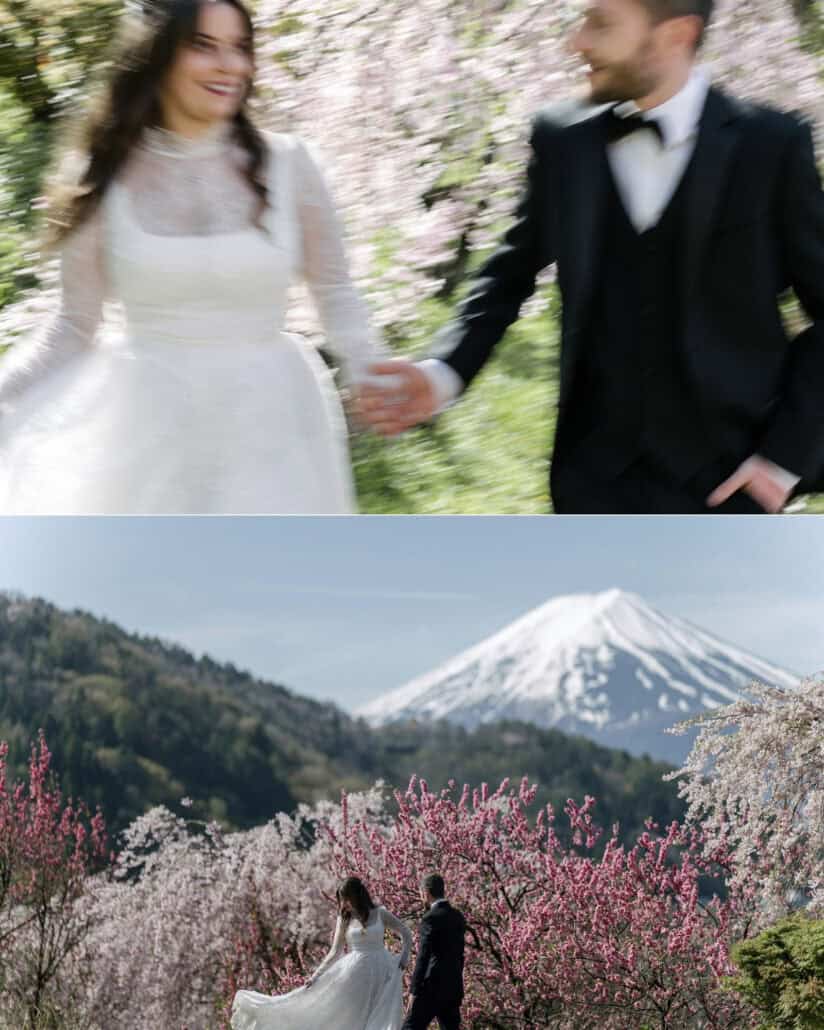
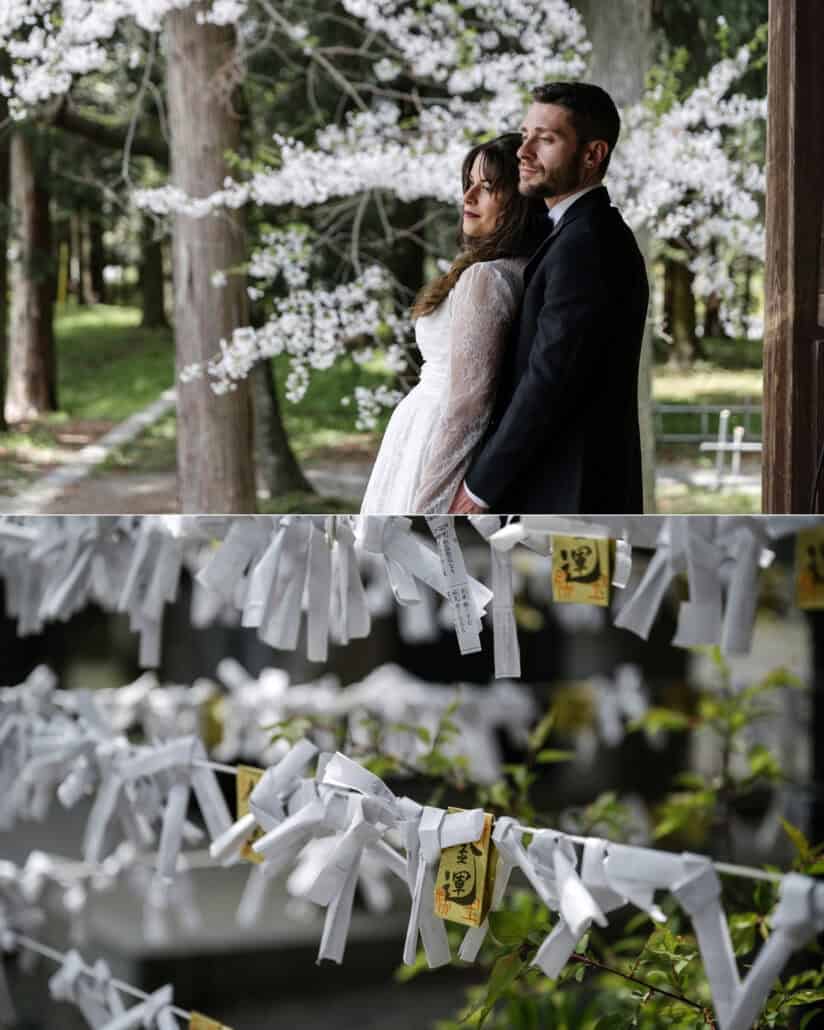
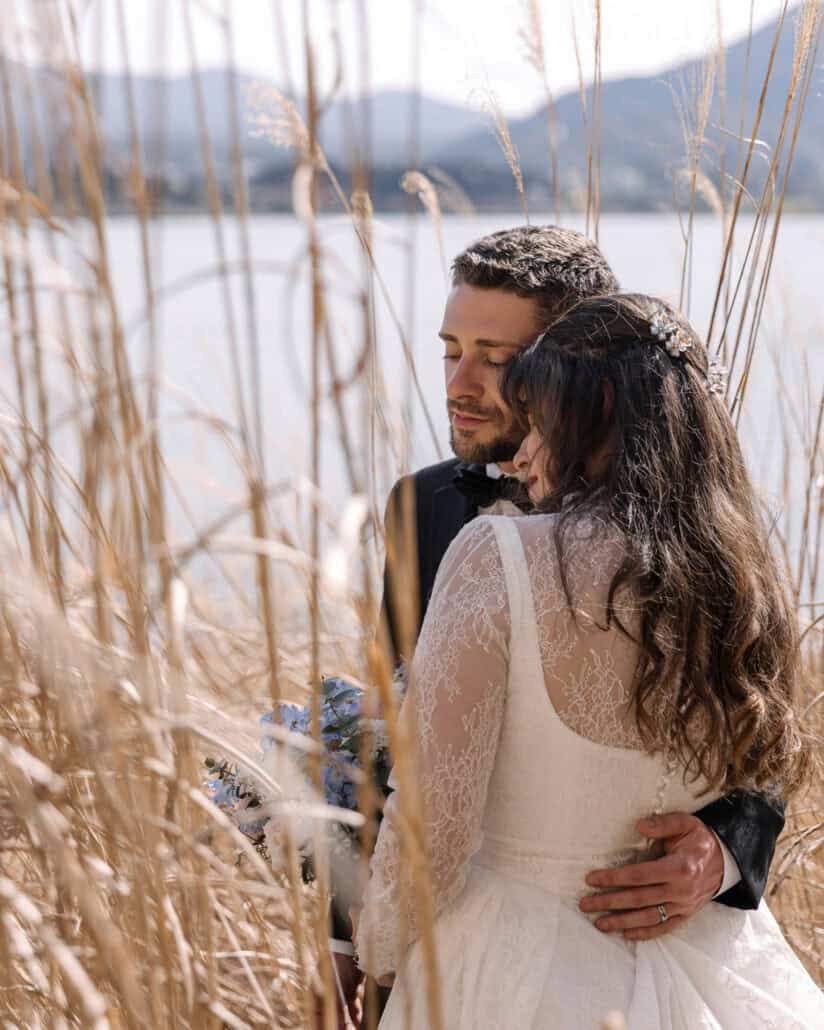
This spring elopement at Mt Fuji began with a wonderfully distilled brief: “Keeping it simple, having a view of Mount Fuji with cherry blossoms, exchange vows and photos!”
That was the heart of it. The two of them. Fuji. Cherry blossoms. Vows. Photographs. Enough time to look around. Enough time to actually be there.
Simple. Which, of course, is entirely different from uncomplicated.
The Complexity Belongs Behind the Scenes. And Before the Day.
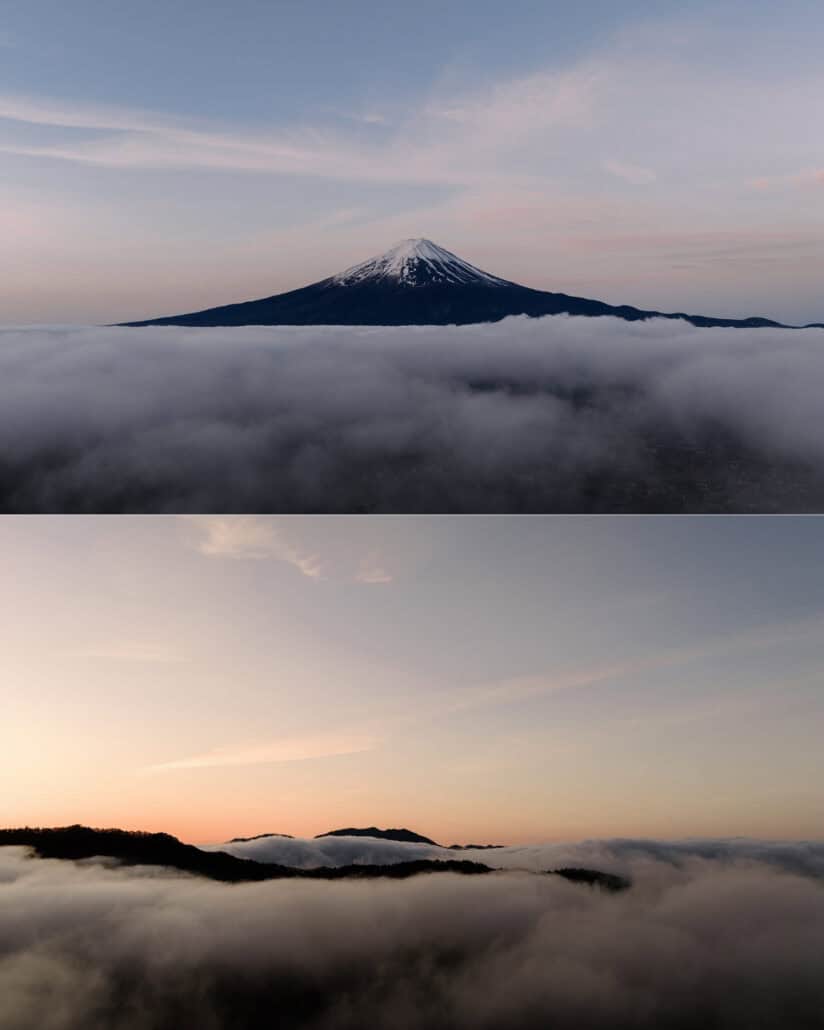
To make a day like this feel simple takes rather a lot of complexity. Spring has to be understood rather than merely booked. Cherry blossoms move according to their own schedule. Fuji has never shown the slightest interest in anyone’s wedding timeline. Sunrise is sunrise, whether everyone got enough sleep or not. Roads, permissions, shrine arrangements, travel between locations, photography, film, food and light all have to meet each other at approximately the right moment.
And most of that work happens long before the couple ever gets there. That’s the point. The complexity belongs behind the scenes. And before the day. The couple gets the space.
They’d been clear about what that space should hold. They described themselves as adventurous early birds, happiest outdoors, interested in art and history, with a shared sense of humour that apparently survives every mood. They’d wanted to visit Japan for years. The culture interested them. So did the seasons, the atmosphere, the history and the simple fact that there was an enormous amount here they wanted to explore.
In their words, Japan was “a no brainer.” Fair enough.
A Wedding Can Have More Than One Chapter
Before Japan, they’d already gathered for a small ceremony in a park close to home, with her father officiating. Simple. Intimate. Family.
That gave Japan a different job. This part could be the adventure. They didn’t need another version of what had already happened. What they wanted here was a quiet pause for the two of them to exchange vows and rings, followed by time to move through the landscape, make photographs, make a film and absorb the places they’d travelled so far to experience.
We love that weddings can work this way. One chapter can hold family. Another can hold travel. One can happen close to home. Another can begin before sunrise on the other side of the world.
None of them has to diminish the others. Together, they become the story.
Sunrise, Blossoms and Fuji
So we started early. Very early. They’d told us they were early birds, which is exactly the sort of information a planner enjoys receiving when sunrise at Mt Fuji is being discussed. By the time much of Kawaguchiko was waking up, they were already outside.
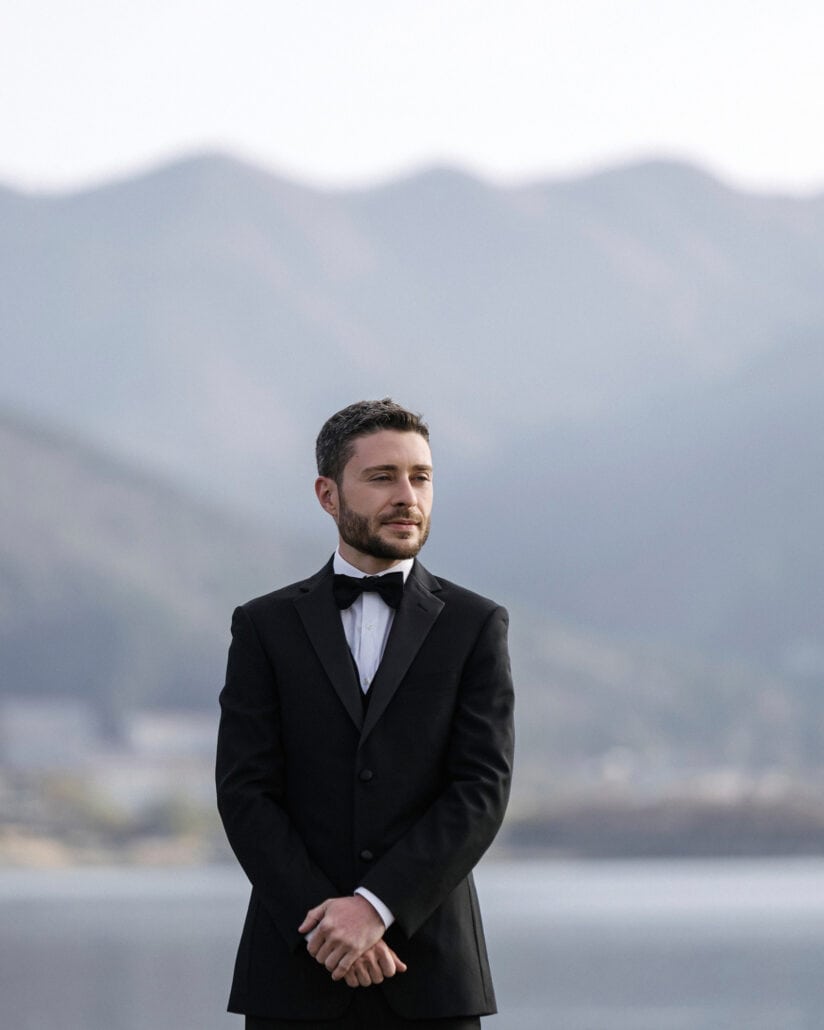
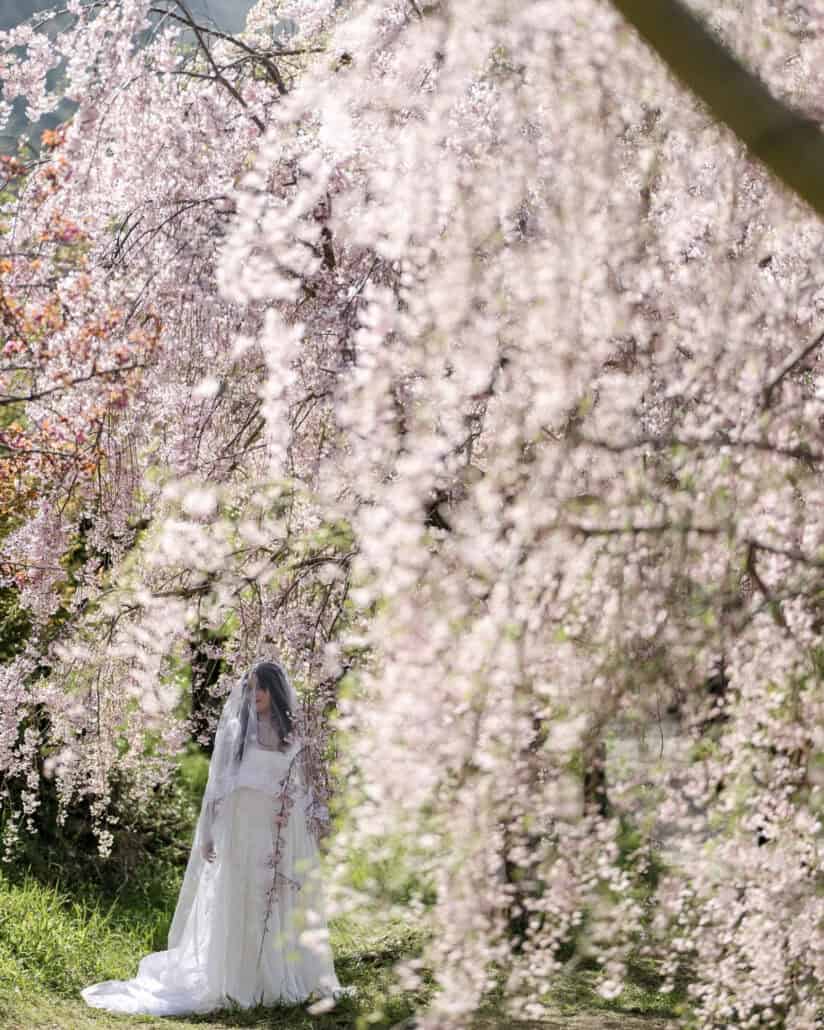
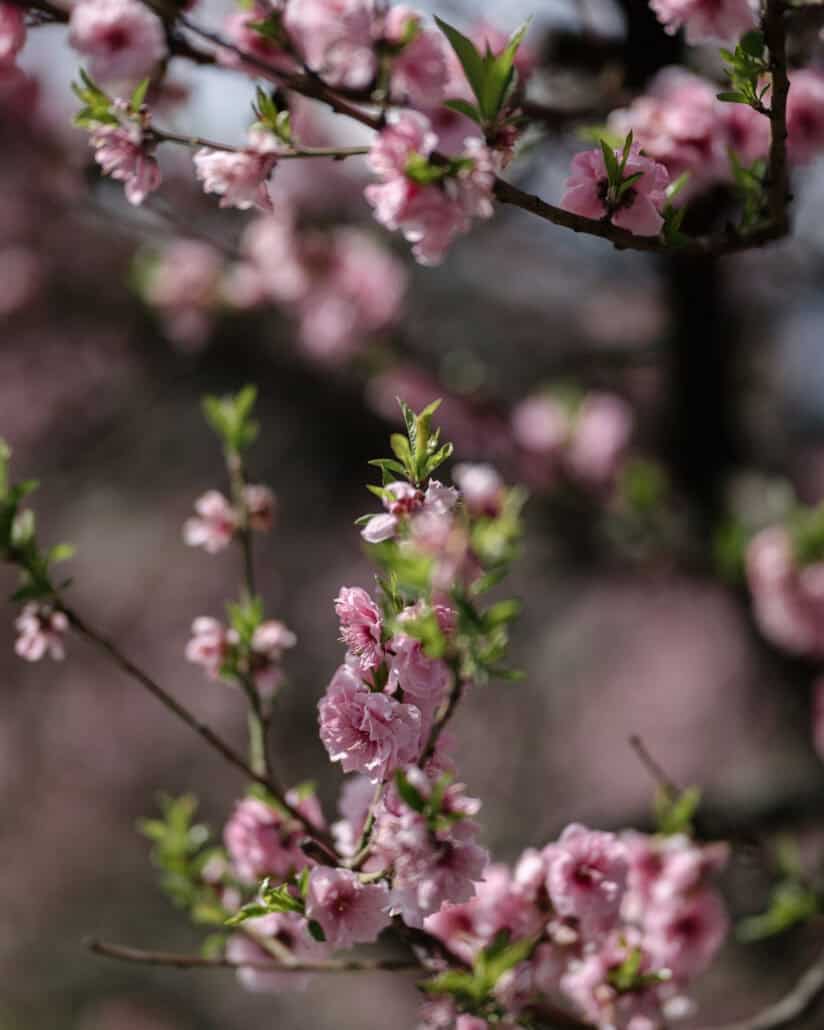
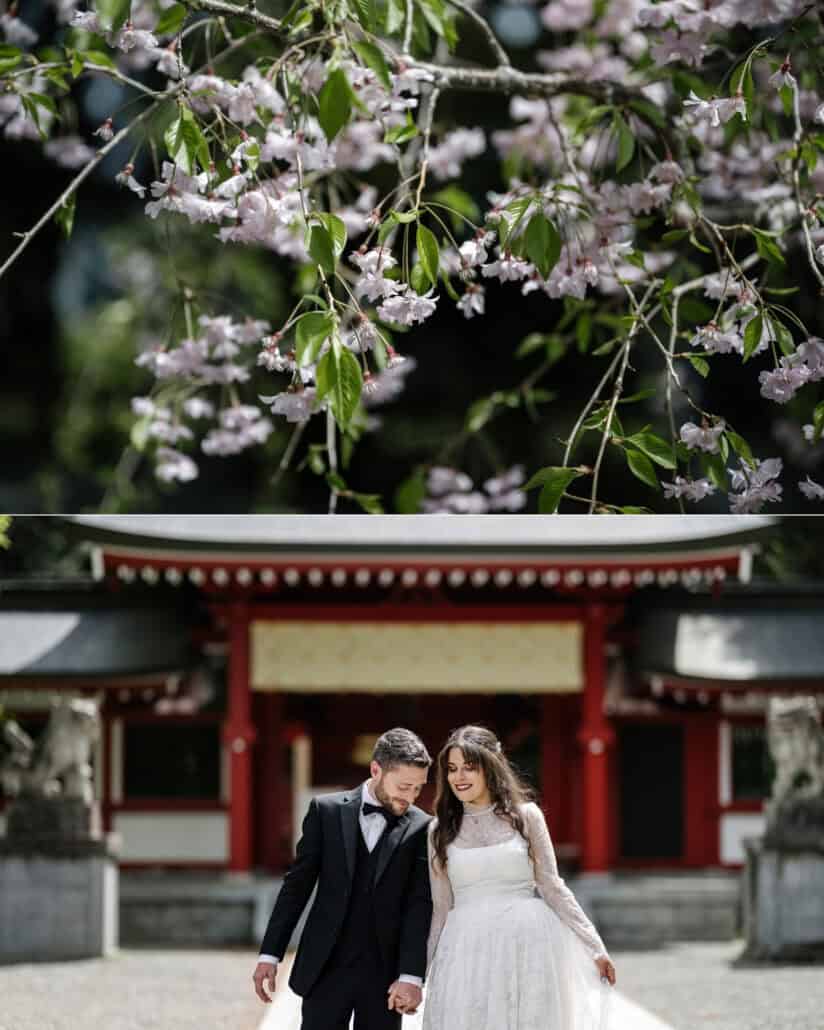
This was the image they’d kept coming back to throughout planning: Mt Fuji with cherry blossoms. There’s something lovely about the fact that those two things have a much older relationship here than wedding photography.
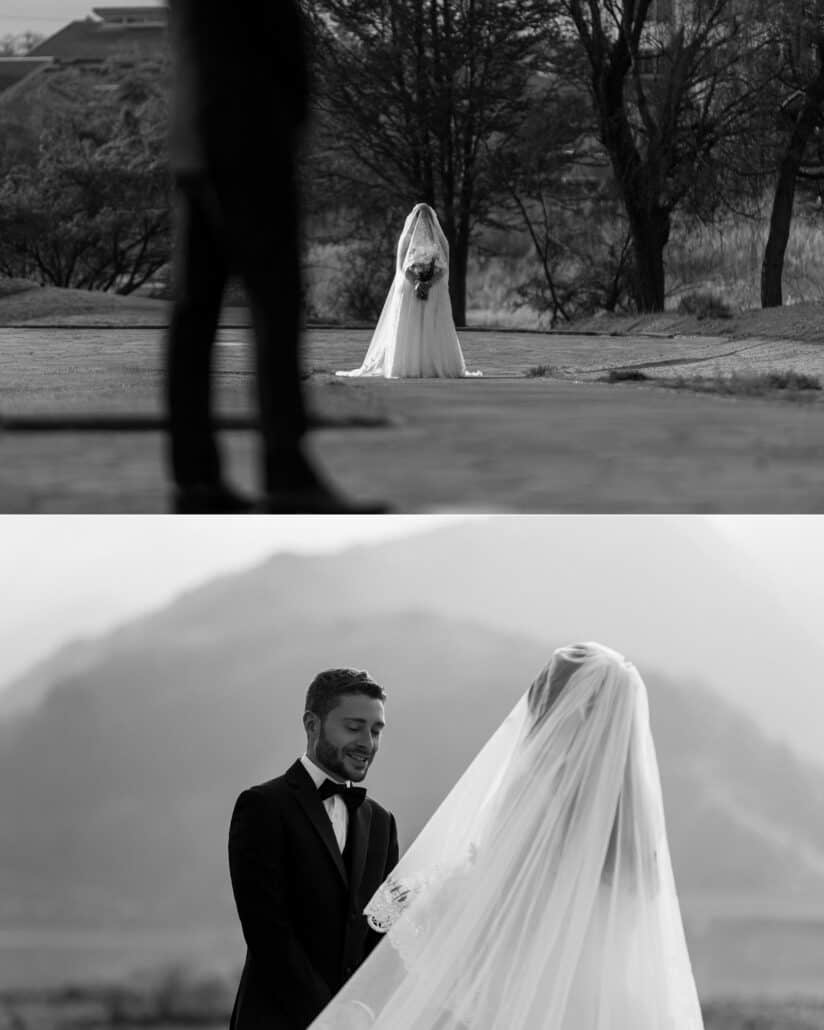
In the Sengen tradition surrounding Mt Fuji, Konohanasakuya-hime is the principal deity at Fujisan Hongu Sengen Taisha, the head shrine of more than 1,300 Sengen shrines. Because of her name, cherry trees are regarded as sacred there, and hundreds have been planted within the shrine grounds. Our couple didn’t choose Fuji and sakura because of that history. But we love knowing it’s there. People have been connecting this mountain with blossoms, spring and belief for a very long time.
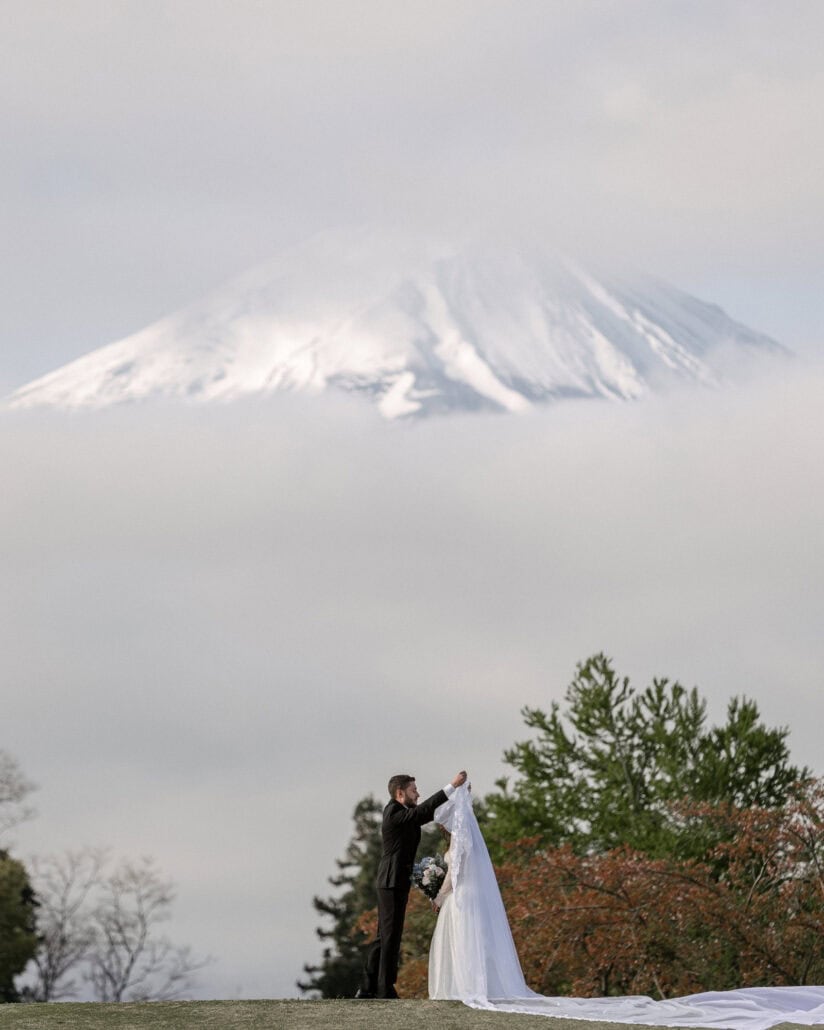
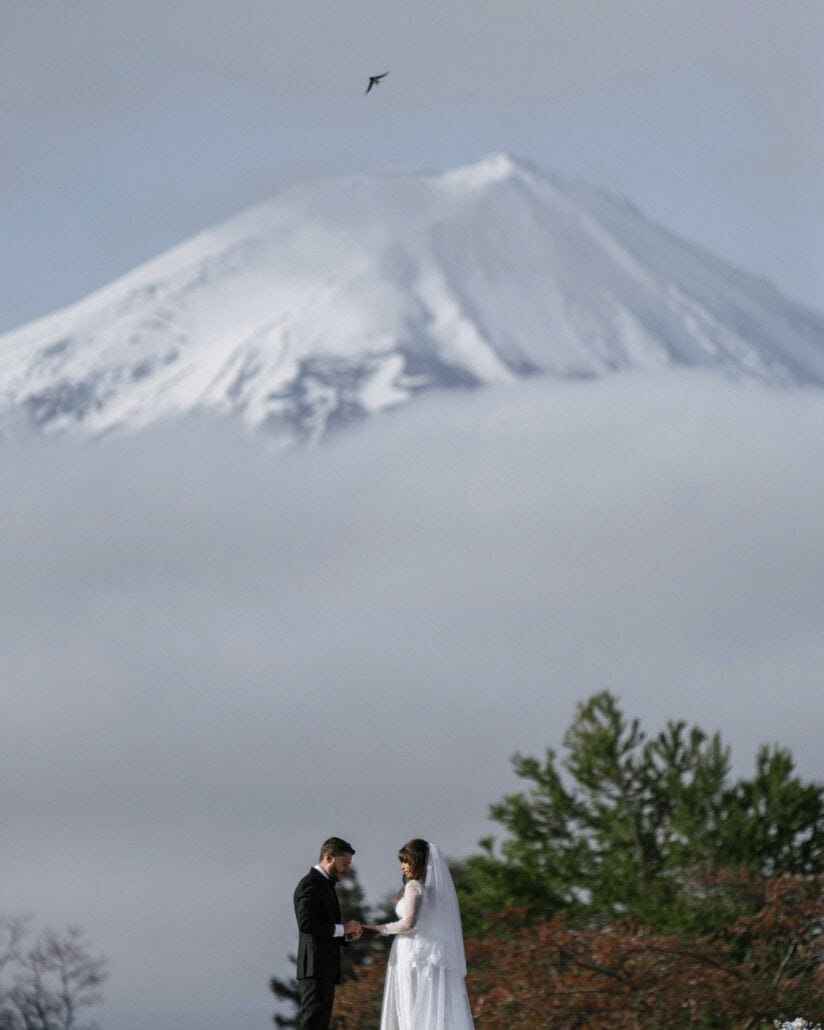
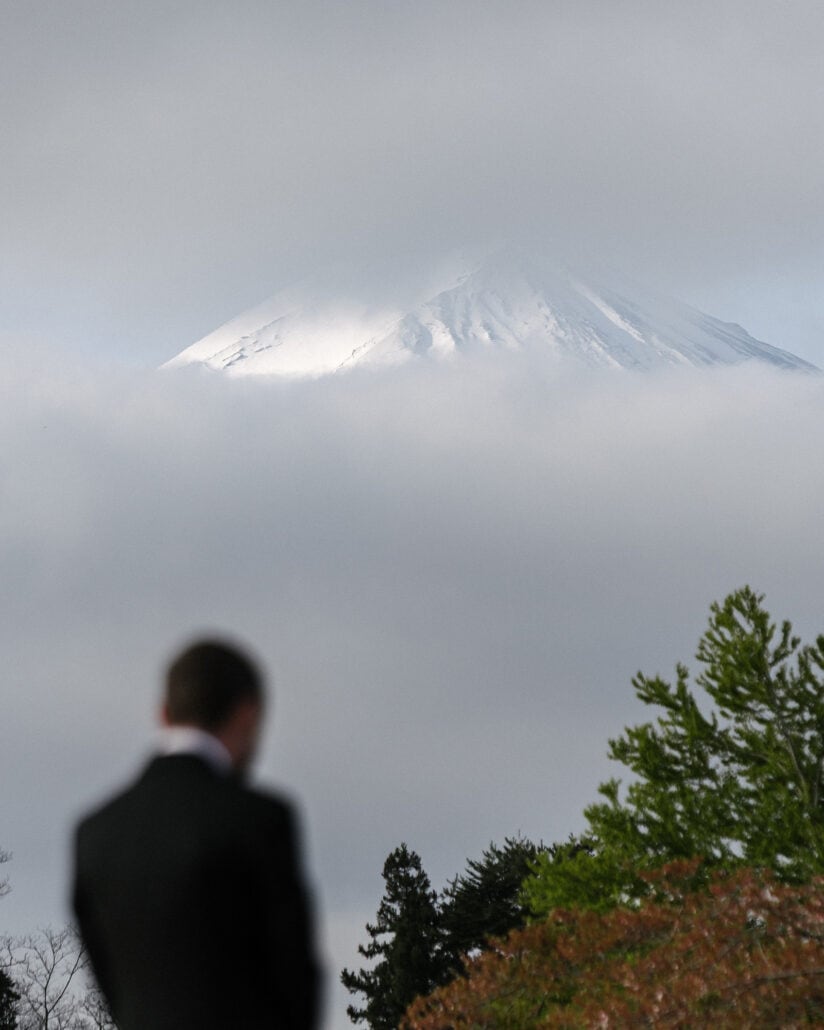
And on this morning, the mountain turned up. Fuji was in cloud when they began their vows and above it by the time they’d finished. The blossoms came after.
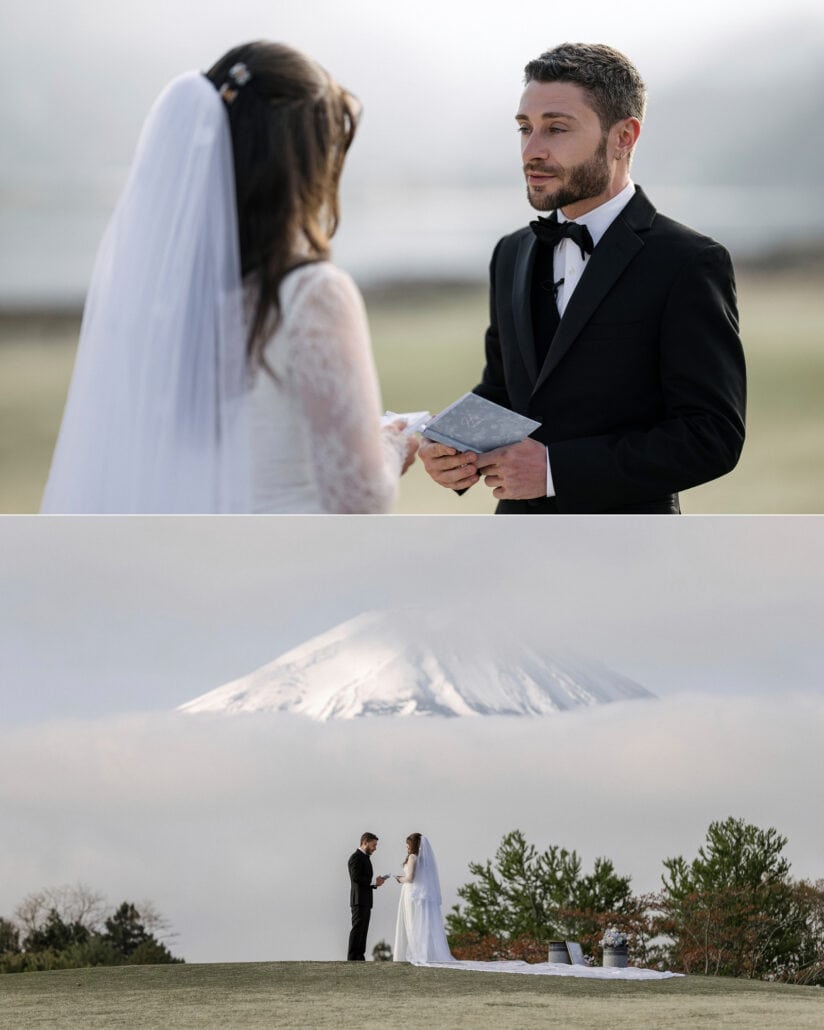
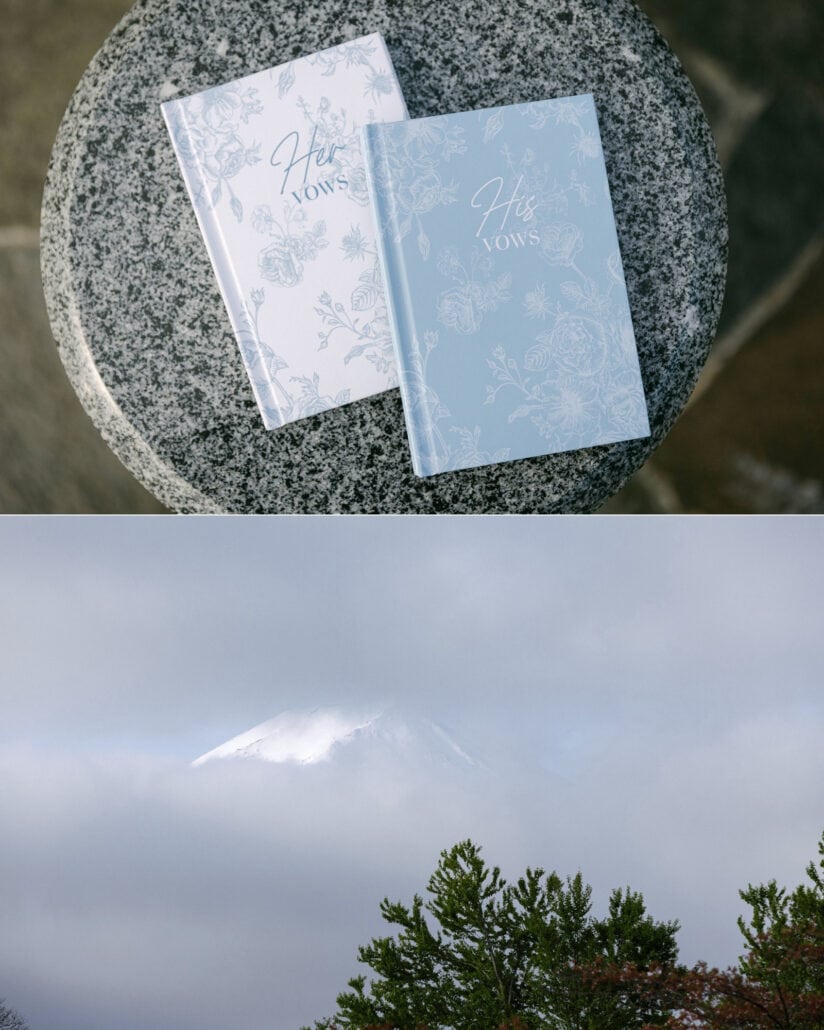
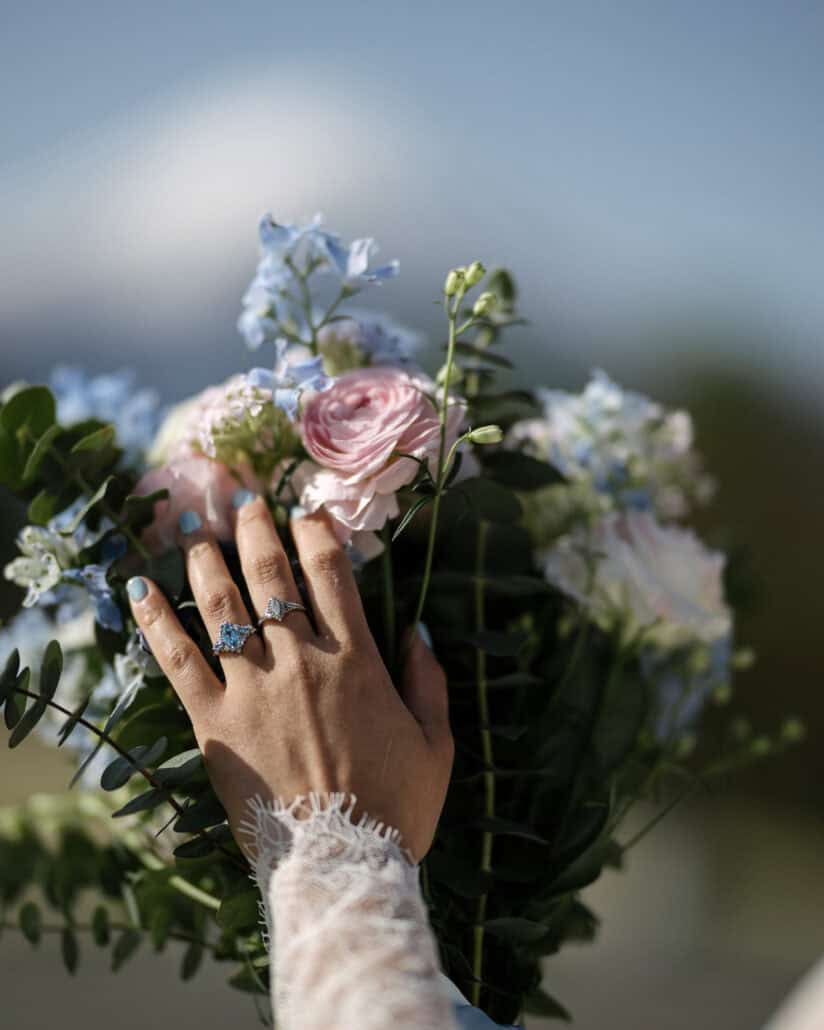
Their ceremony didn’t need an audience. They read their vows to each other and exchanged rings. The rest of the morning could wait.
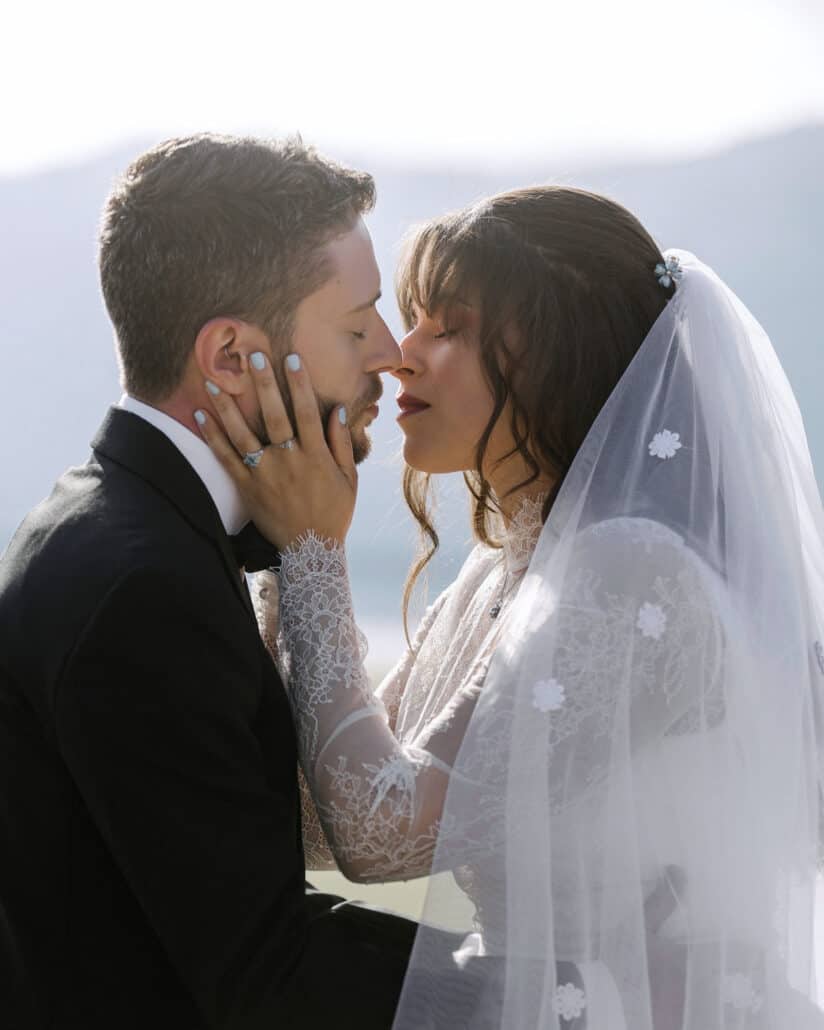
The Day Had Room to Move
This is where their original idea of simplicity becomes important. A wedding day can become so full of moments that none of them gets enough time to become a memory. We wanted the opposite.
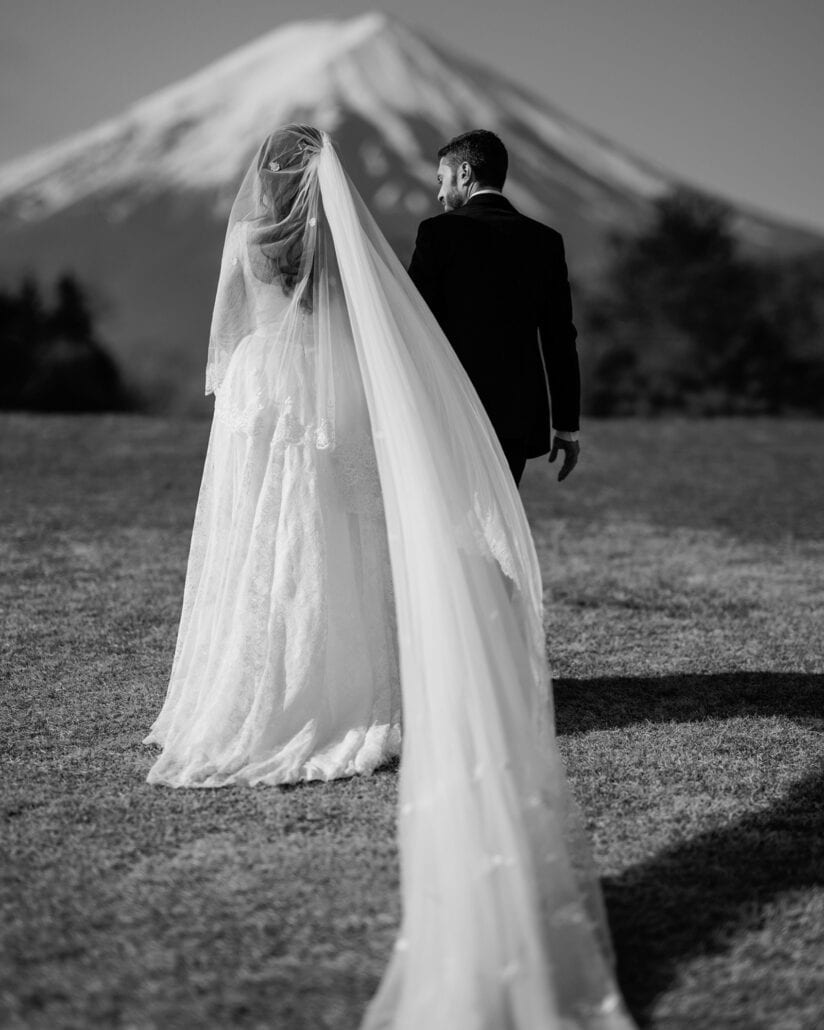
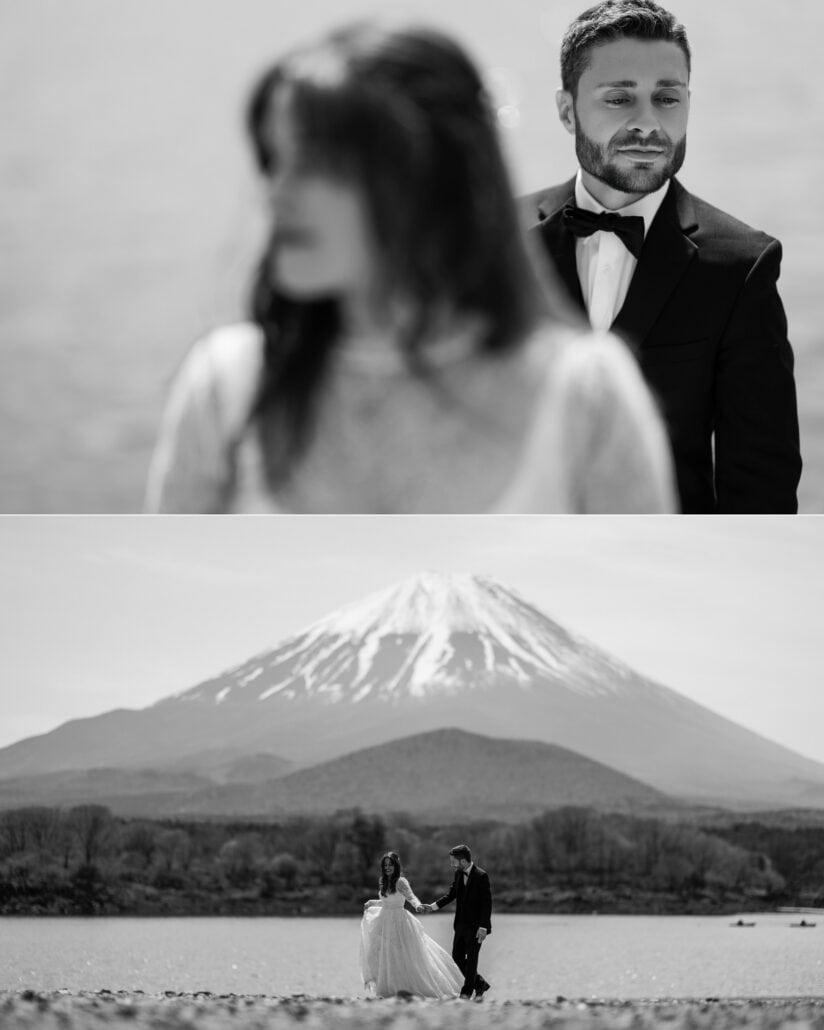
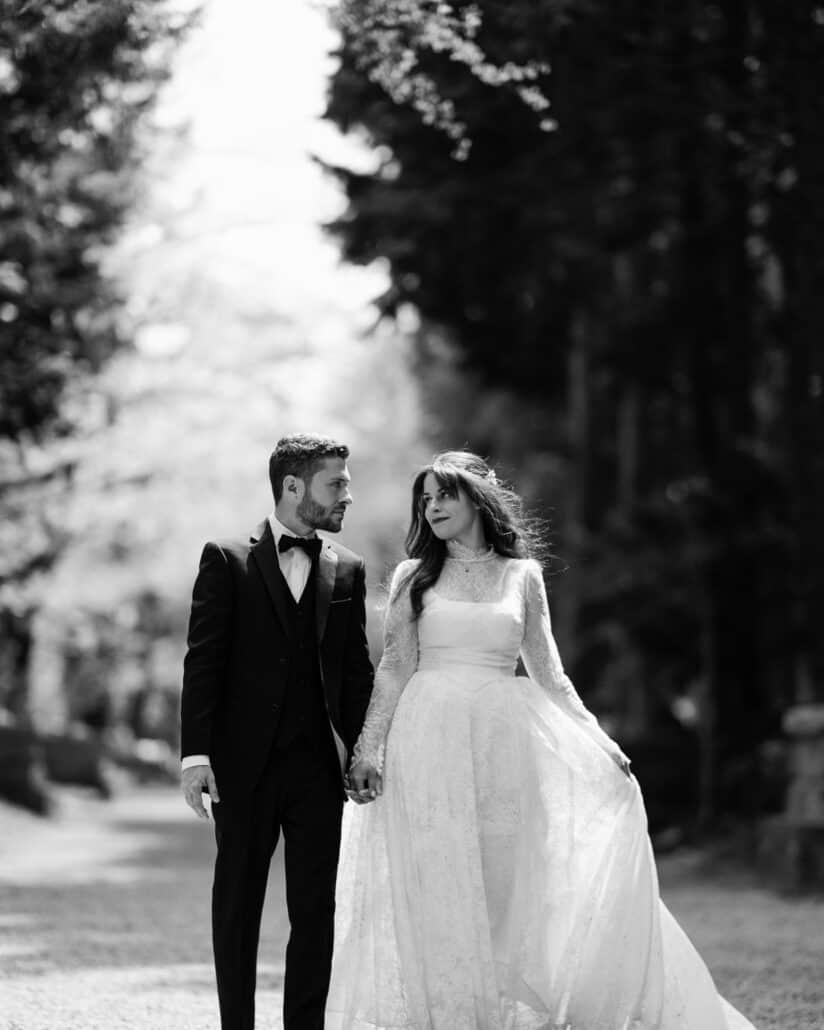
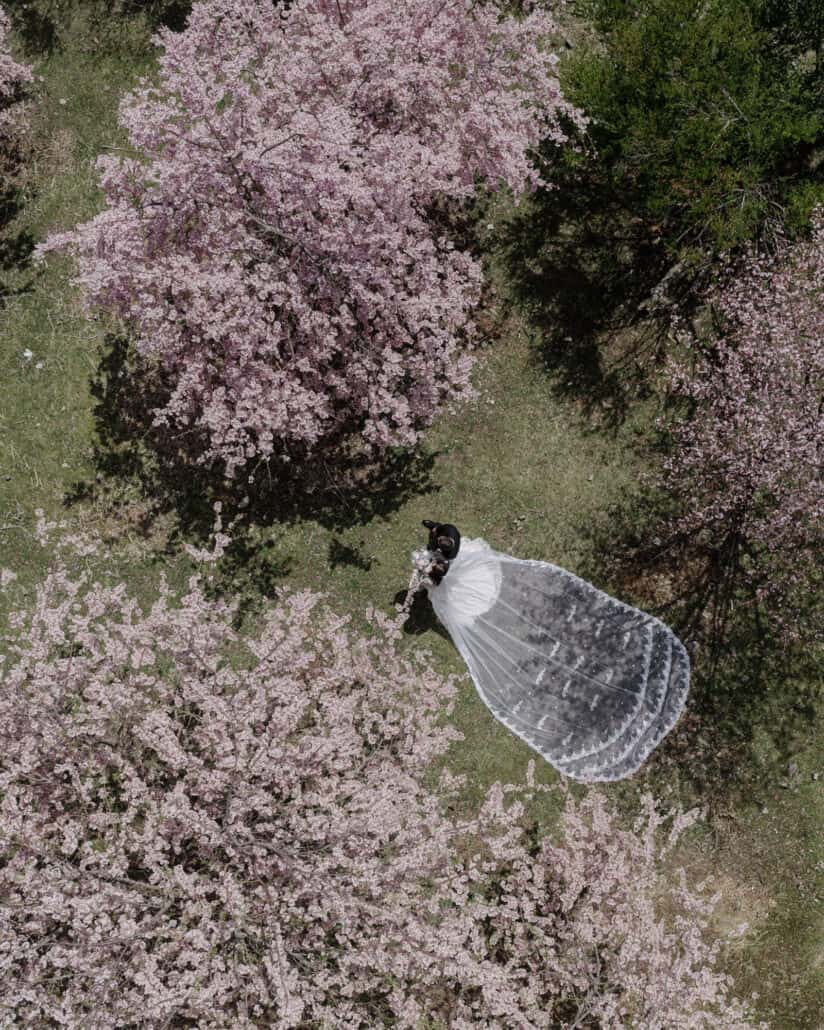
Once the vows were finished, there was room to walk. Room for photographs. Room for the light to change. Room to look at the mountain without immediately being moved towards the next thing.
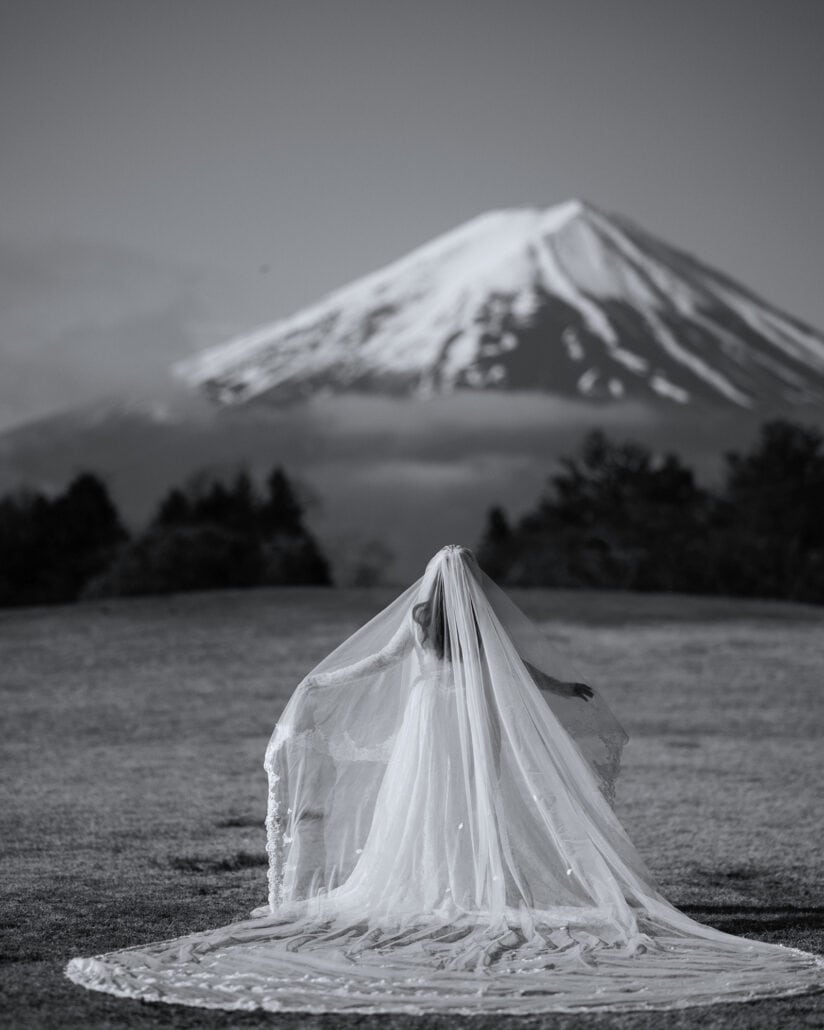
They’d imagined walking through nature from the beginning. Photography was a priority, but the day was never supposed to become one extended photoshoot. Their planning notes talked about exploring, absorbing the different places and leaving enough time for the experience itself. That distinction matters.
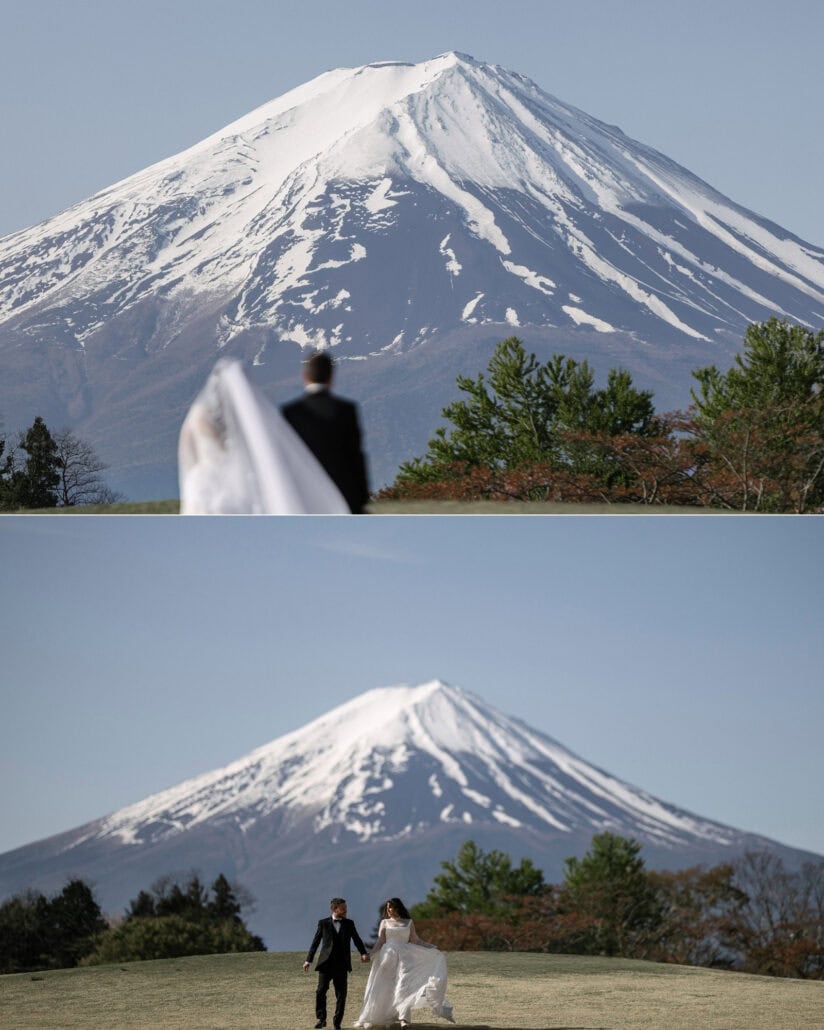
You can make photographs of a place. Or you can spend enough time there that the photographs begin to carry what it felt like to be in it. We’re always aiming for the second.
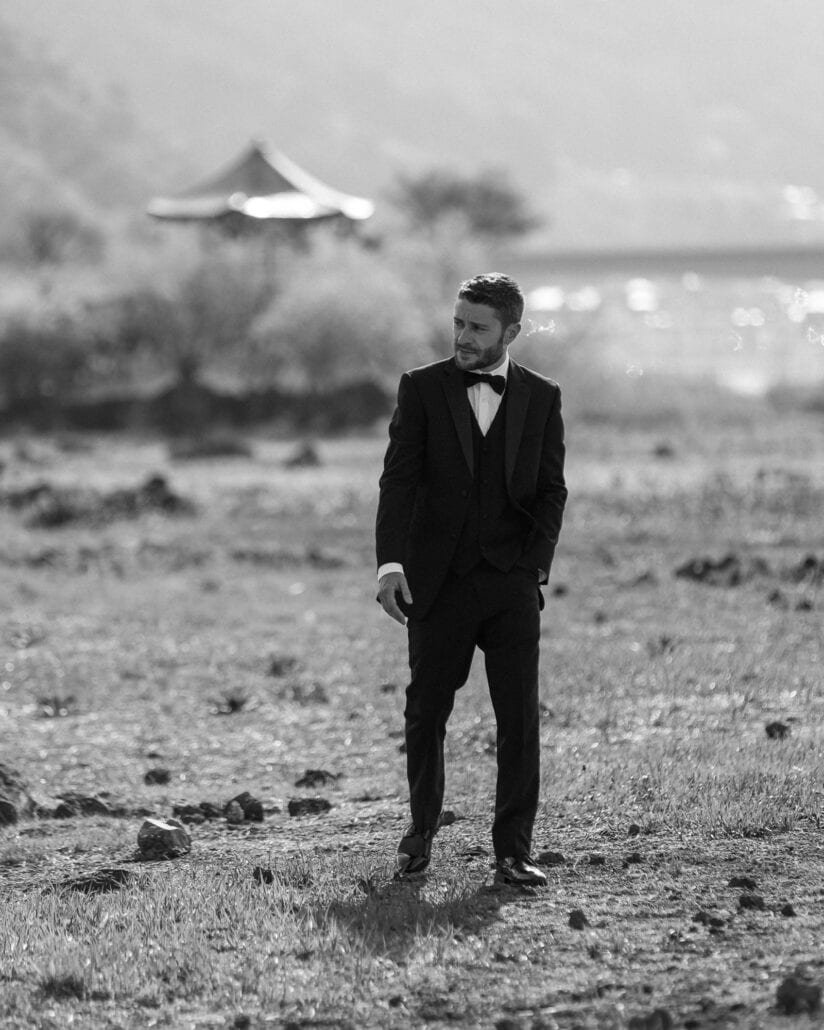
A Shrine, on the Shrine’s Terms
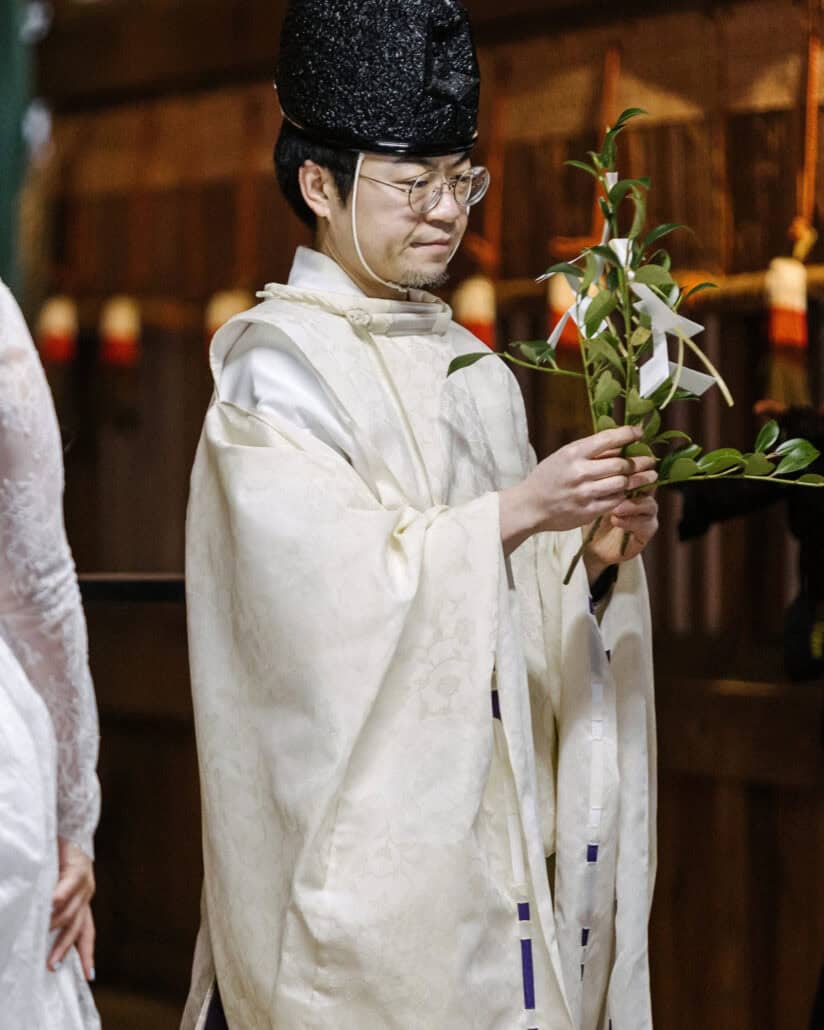
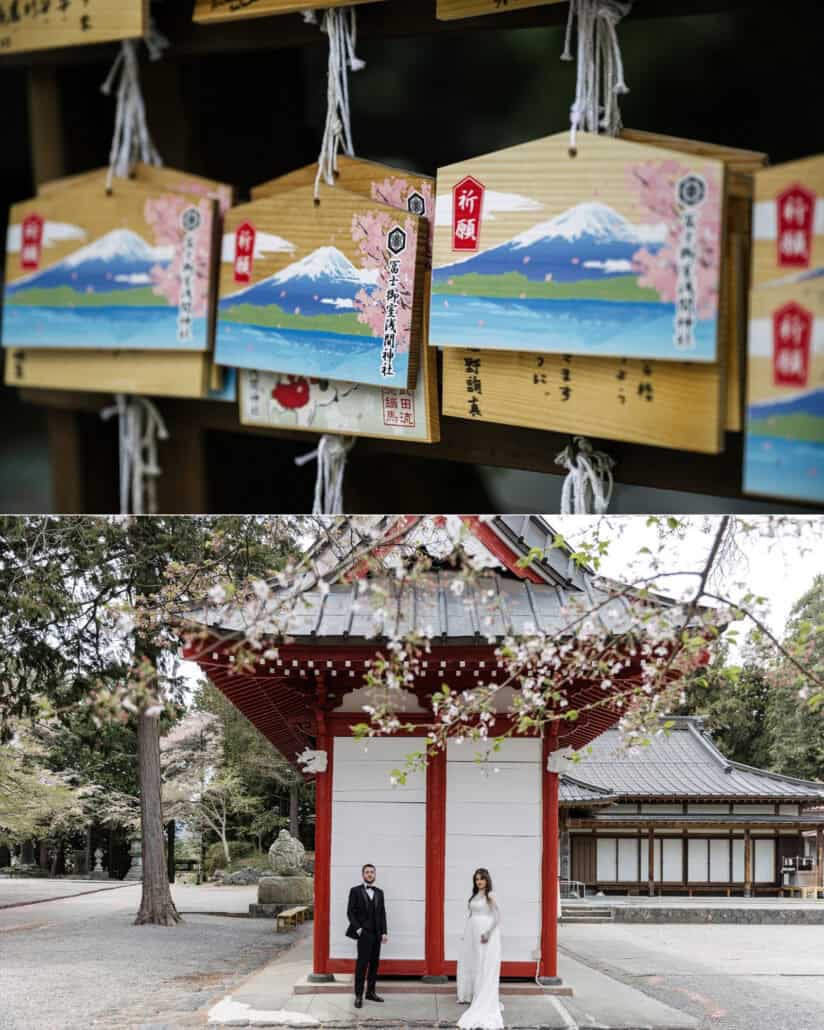
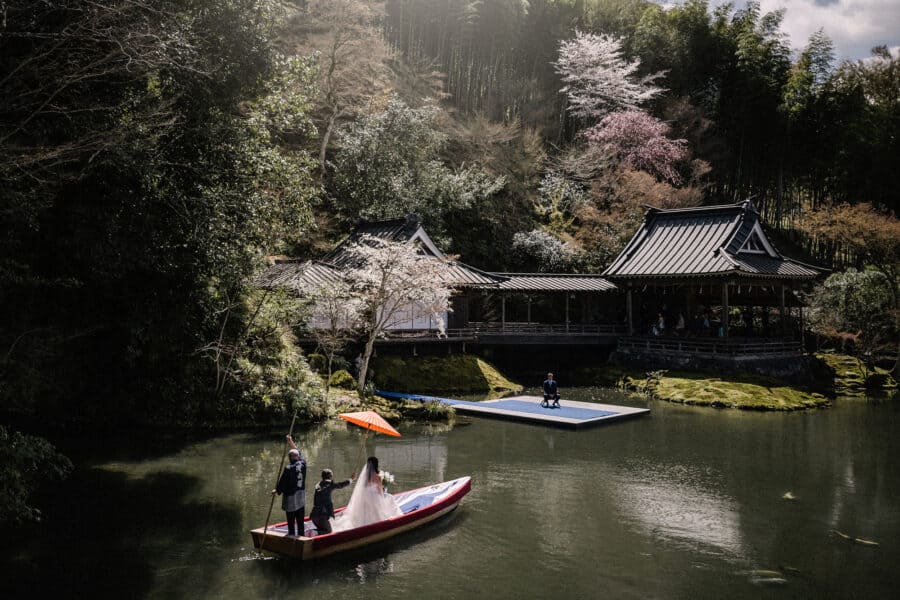
Later, the day changed pace. They were welcomed for a shrine blessing.
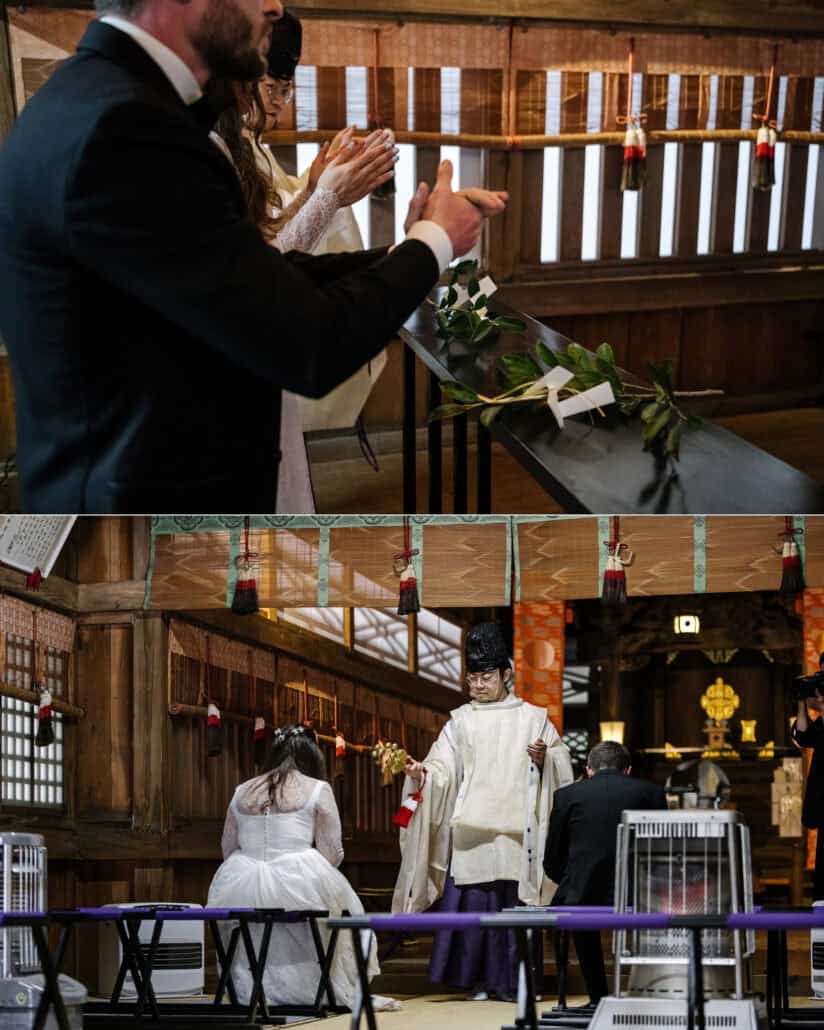
A shrine in Japan is a living place of worship, not an architectural set waiting for a wedding to arrive. Its rituals belong to the shrine. Its rules belong to the shrine. Being welcomed into that space means entering with respect for both.
For a couple who had spoken so much about their interest in Japanese history and culture, this became a very different way of experiencing the country. The morning had been open landscape, mountain, blossoms and vows for two. Here there was structure. Ritual. A continuity much older than their day.

Those contrasts are part of what makes travelling through Japan so compelling. You can move between contemporary life, deep landscape and practices that have endured for generations without any of them feeling like a reconstruction. They’re all happening now. So was this.
Hōtō at the Teahouse
Then we ate. By that point, they’d already been up since before sunrise, exchanged vows beneath Fuji, walked through spring and had their shrine blessing. Lunch mattered.
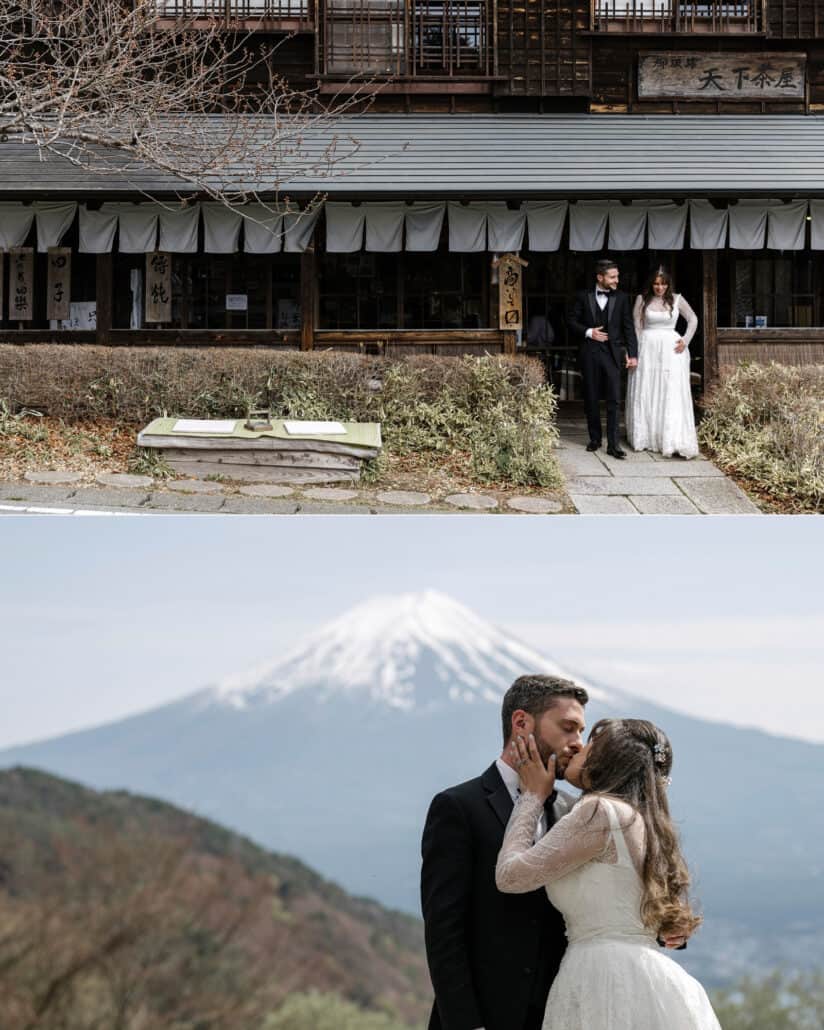
They stopped at a teahouse for hōtō, one of Yamanashi’s defining local dishes: broad, flat wheat noodles simmered with vegetables in a miso-based broth. It’s food that belongs firmly to this part of Japan.
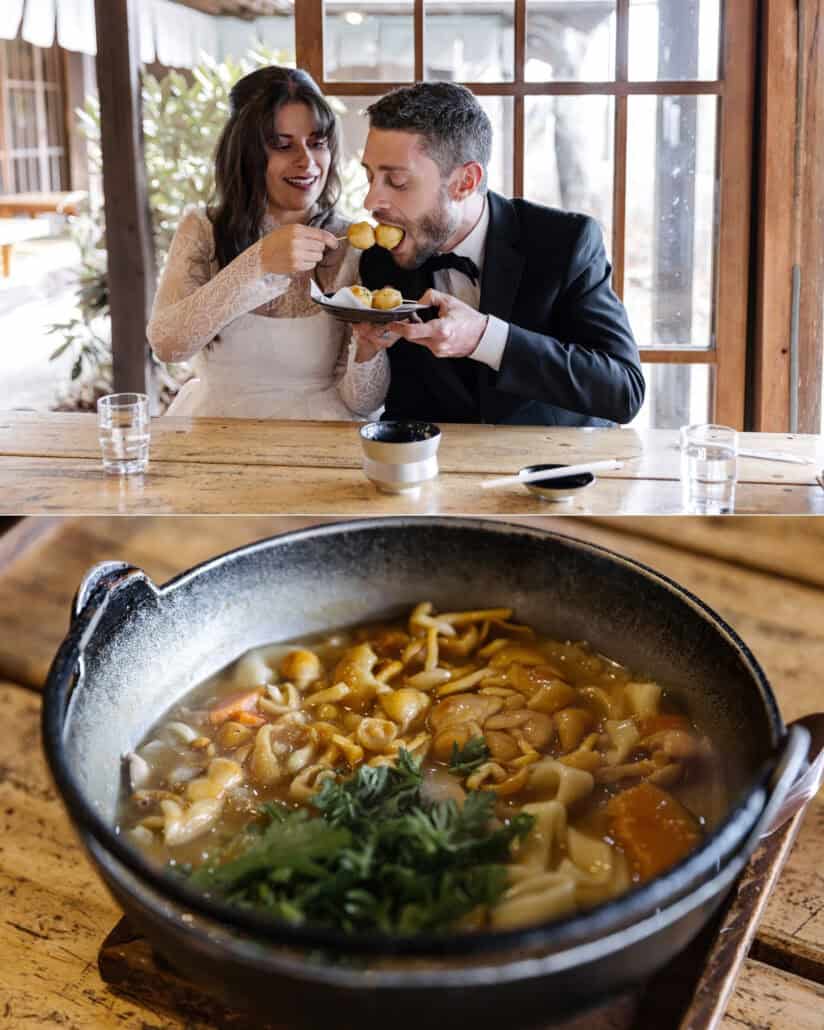
Hōtō has been eaten in Yamanashi for generations, often cooked in a large pot with seasonal vegetables. There’s an old local story connecting it to the sixteenth-century warlord Takeda Shingen and his soldiers. Like many good food stories, history and folklore have become comfortably tangled together over time. What matters to us is that it belongs here.
They’d crossed the world to marry in Yamanashi. Lunch should taste like Yamanashi too. Warm. Local. Substantial. And exactly right after a morning outside.

Opening the Sake by the Lake
By afternoon, they were beside the water. And there was a sake barrel. They’d been interested in kagami biraki during planning, and this was where it found its place in the day.
The language behind the ritual is lovely. Kagami means mirror. The round wooden lid of the sake cask is likened to one, and mirrors have long carried ceremonial significance in Japan. Biraki means opening. Opening, rather than breaking.
At celebrations, the lid is opened with wooden mallets, and the sake inside is shared with wishes for good health, prosperity and good fortune. We particularly like that idea of opening. Opening something together. Beginning something. Sharing what’s inside.
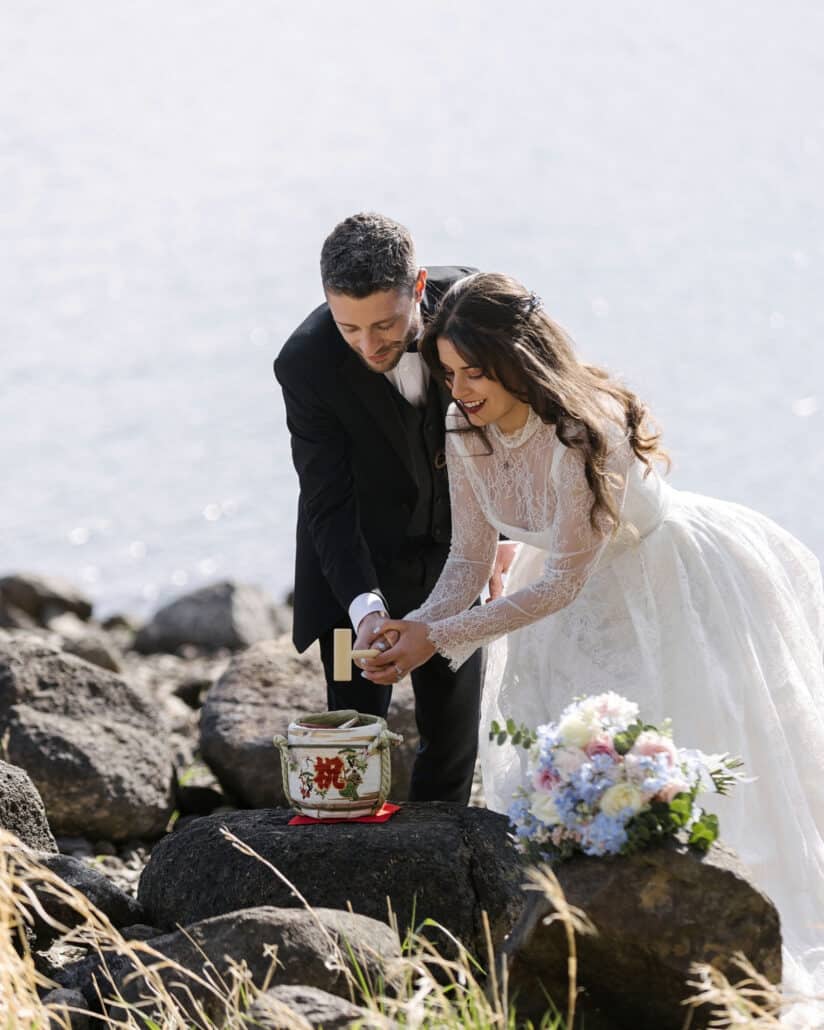
Usually there are plenty of people standing around waiting for the sake afterwards. Here, there were two. A lake. A barrel. One mallet, held by both of them. And nobody who needed them to make a speech before they hit it.
Marriage contains multitudes. Some of them involve very satisfying wooden hammers.
A Day for People Who Came to Explore
None of this feels accidental when you go back to what they told us before they arrived. They love hiking and being outdoors. They like small local shops. They’re interested in history and art. Their wider trip would take them from Fuji and Kawaguchiko towards Kyoto, Osaka, Nara and Tokyo, with plenty of time simply to wander.
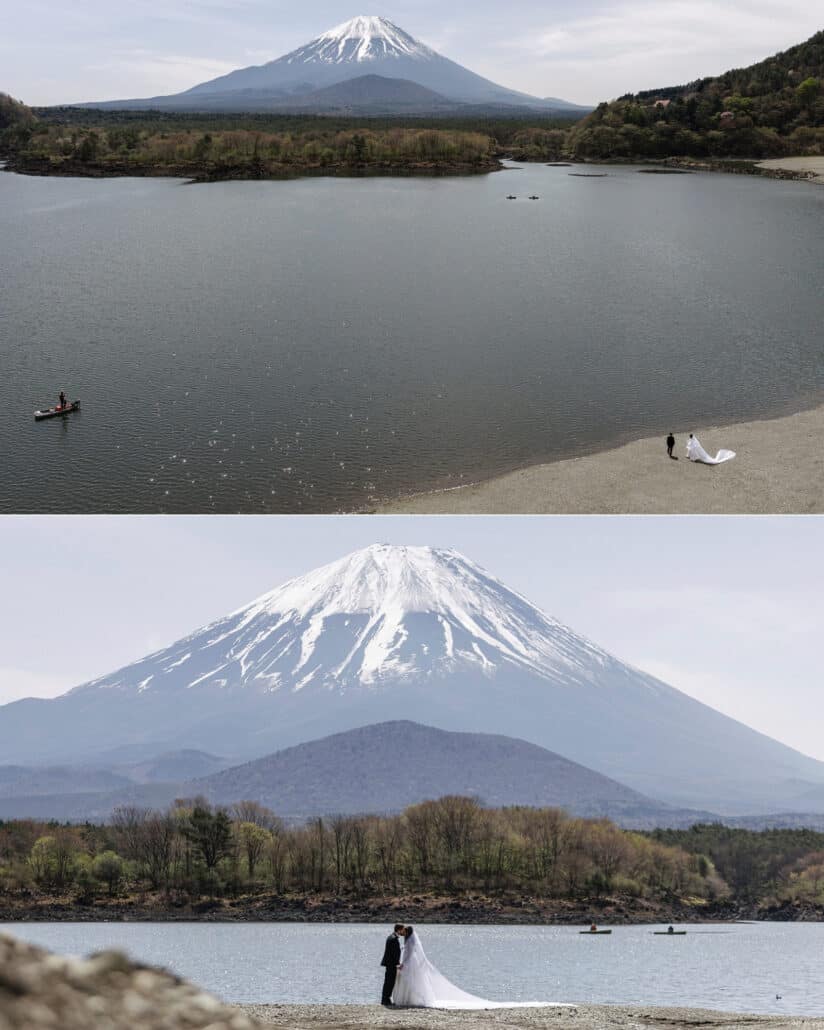
The elopement followed the same philosophy. It had structure. Sunrise. Vows. Shrine. Hōtō. Lake. Sake.
But within that structure was space. That’s the part we care about.
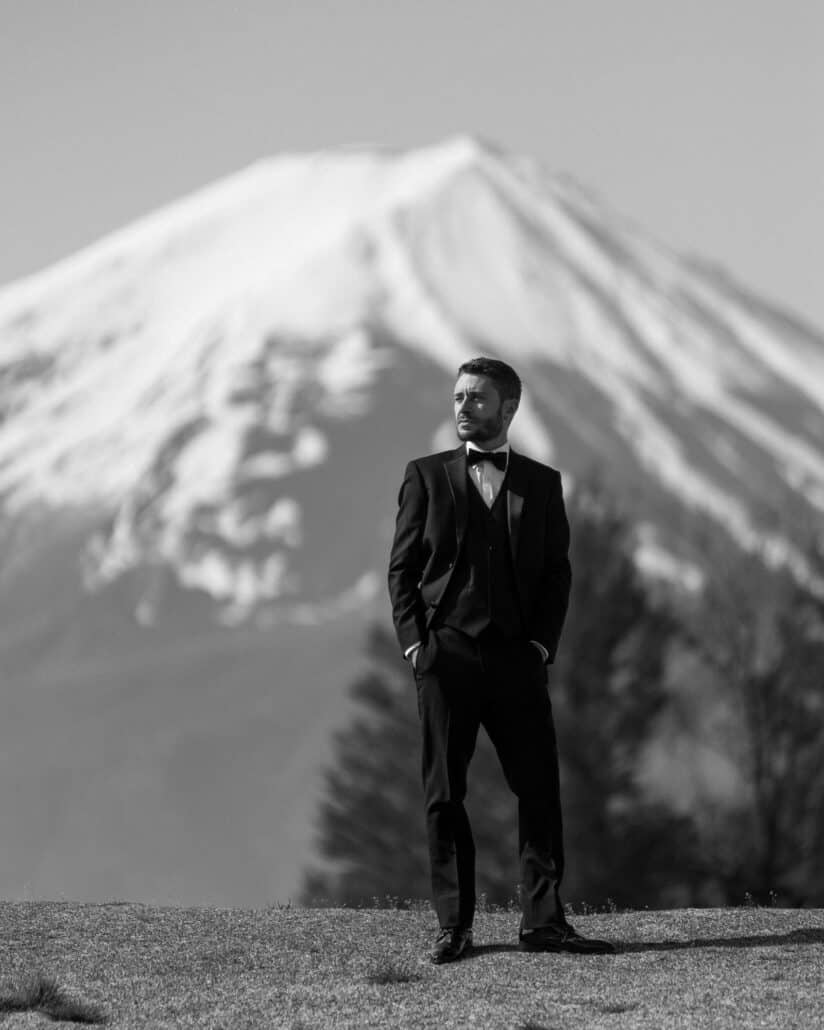
You need enough planning that the day holds together, and enough freedom that it still feels like you’re somewhere. Somewhere new. Somewhere worth noticing.
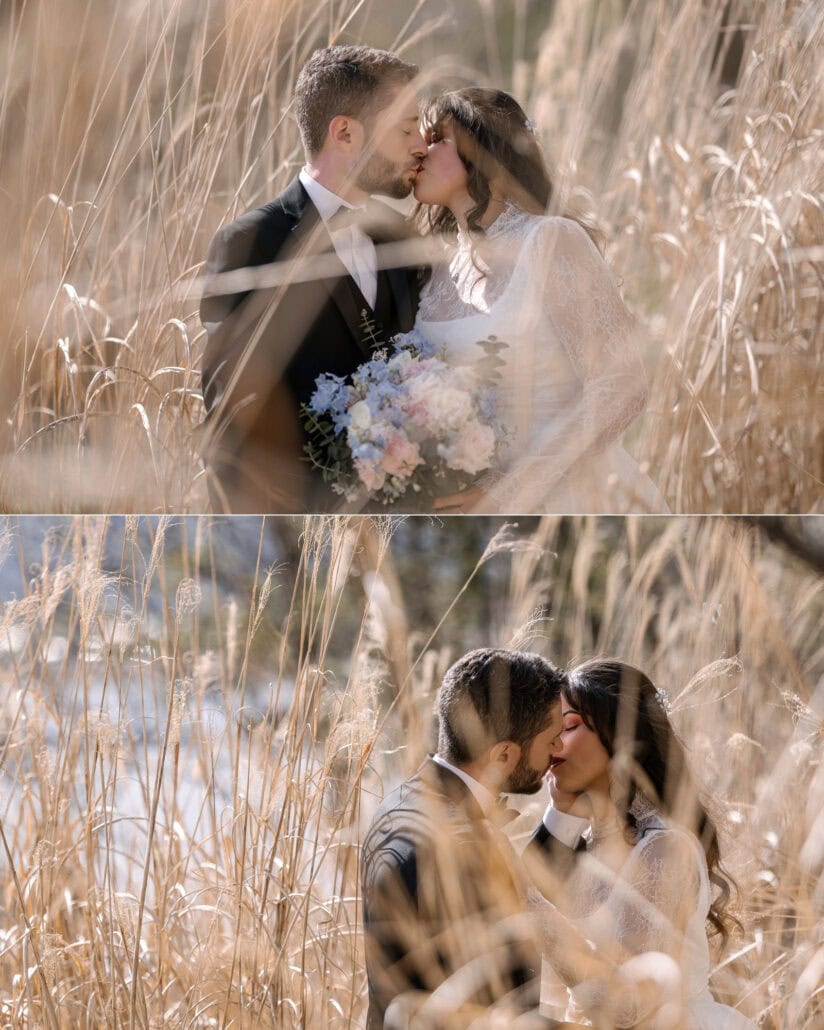
Spring at Fuji Is Allowed to Be Itself
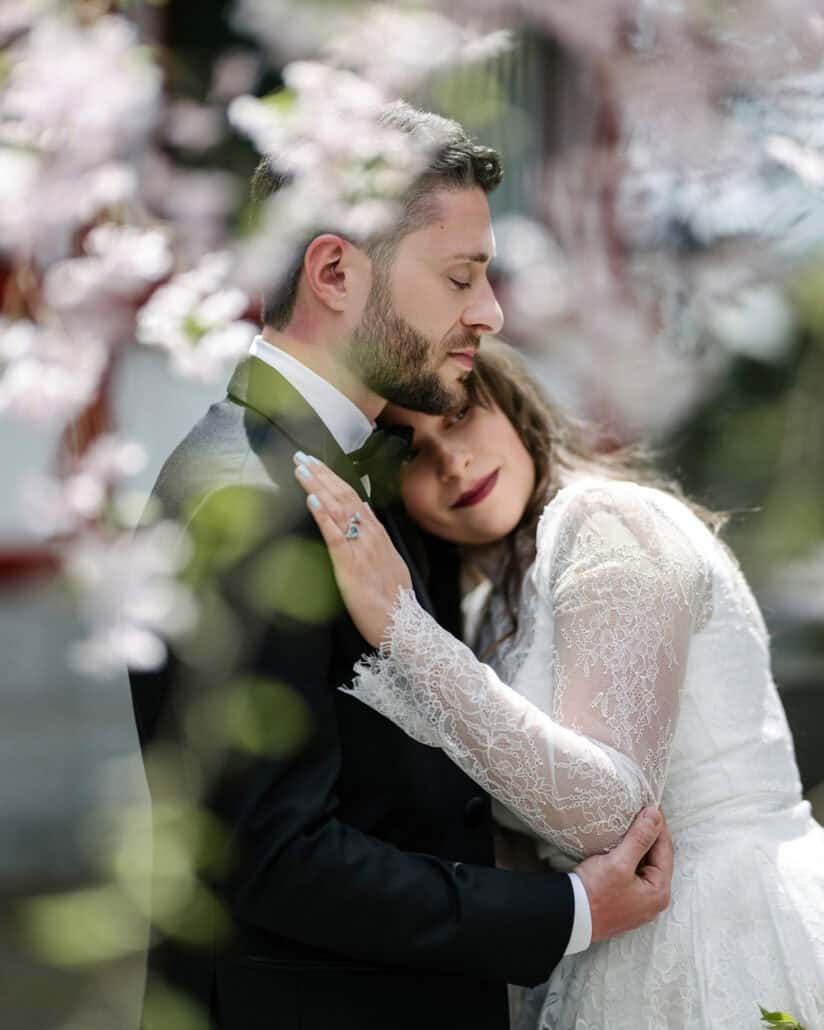
They’d hoped for blossoms. They hoped for Fuji. They got both. And we’ll never treat that casually.
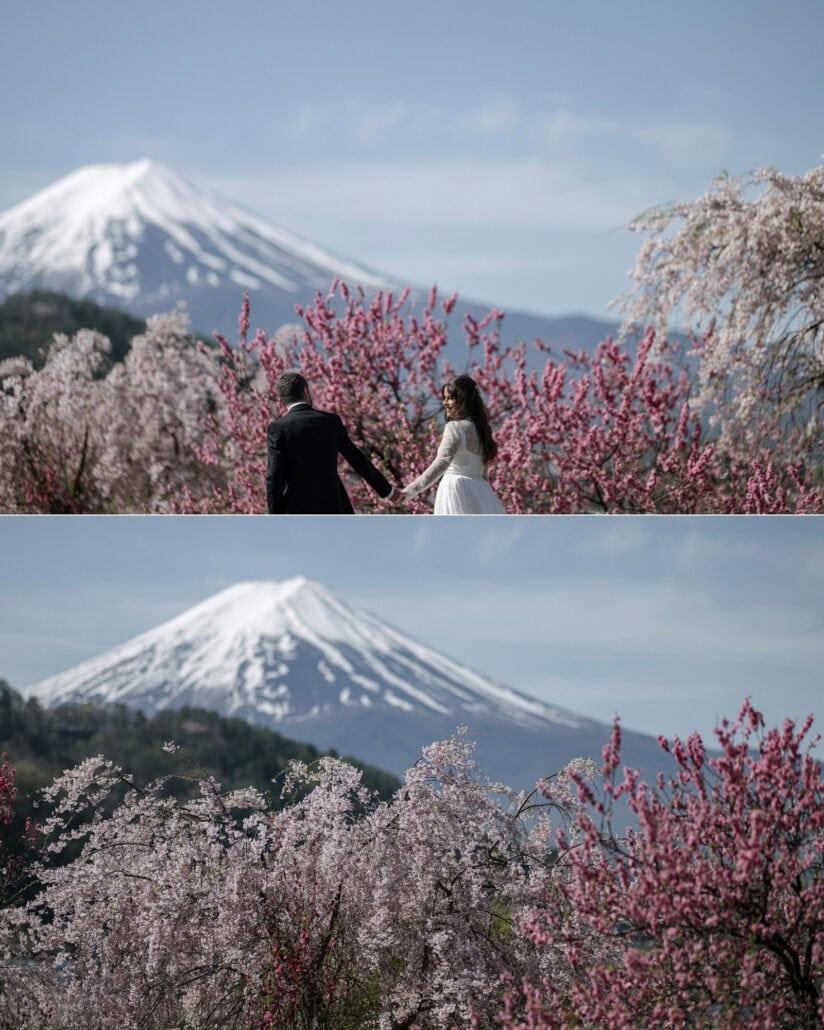
Spring is alive around the mountain. Trees move through their own bloom cycles. Weather crosses the lakes. Fuji decides when she wants to be seen clearly. The point isn’t to force the landscape into a photograph you’ve already imagined. It’s to celebrate the version of the place that becomes yours.
On this morning, theirs had dawn light, cherry blossoms and Fuji. So that’s the spring they get to remember. Uniquely theirs.
Their Film
The photographs hold the pauses. The film gives the landscape its sound back.
Their film keeps their voices: both sets of vows, read by the lake while the cloud came off Fuji. A piano version of “A Sky Full of Stars” sits under the first look and the vows, and the original carries everything after.
A photograph can keep one fraction of that forever. Film lets the fraction continue. Neither replaces the other. Together, they remember differently.
And for a couple who came to Japan wanting to explore rather than simply arrive somewhere and pose in front of it, movement was part of the story.
Simple Leaves Room for the Remarkable
By the end of the day, their original brief had expanded without losing its clarity. Fuji and cherry blossoms. Vows. Photographs.
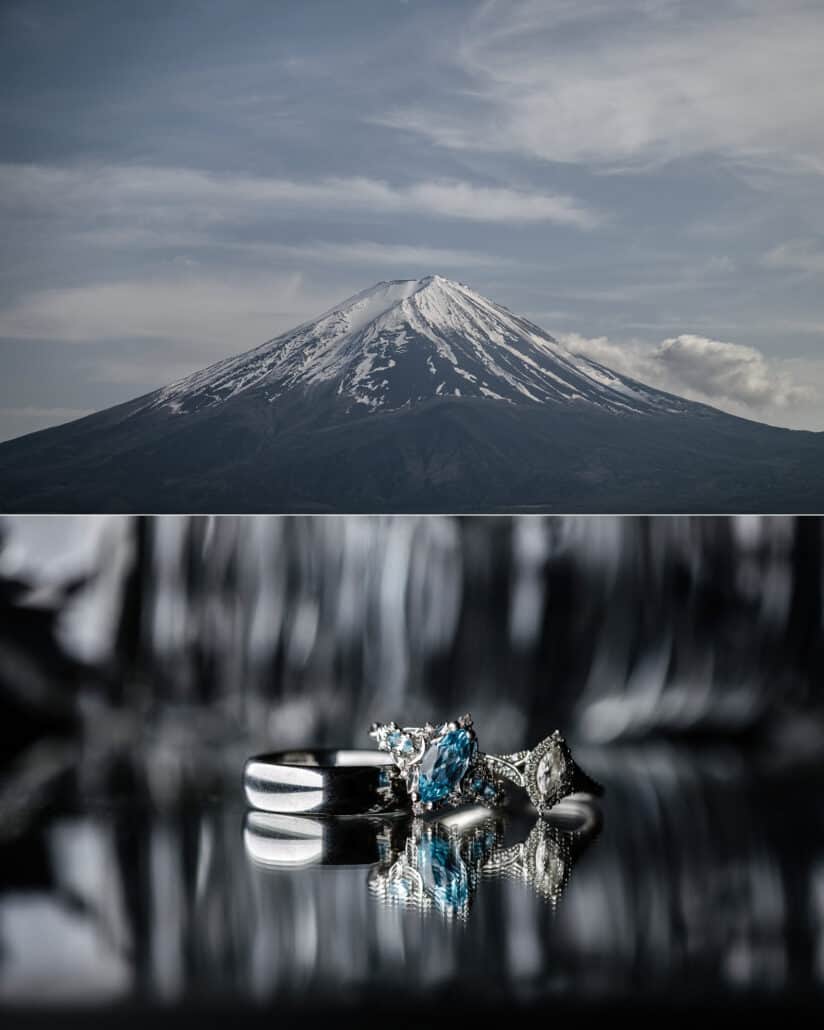
Then a shrine welcomed them. Lunch happened when lunch was needed. A sake barrel found its way to the lake. The landscape changed as the light moved across it. Nothing needed to compete.
That’s what we mean when we say simple can be remarkable. Simple never means less complex.
To make all of those things align can require more thought than anyone experiencing the day should ever have to know. Seasons, permissions, travel, timing, light, weather, food, ritual, photography and film all sit underneath what eventually feels effortless. That work belongs before the day. The couple should get the space.
There’s ma again. The pause that lets one thing finish before another begins. The space that allows the things around it to matter more.
They came to Japan asking for a few things that mattered enormously to them. We gave those things room. And Japan kept adding to the day. A mountain. Blossoms. A shrine. Hōtō. Sake beside the lake.
Remarkable, in the end, didn’t require more. It required enough space for the right things to matter.