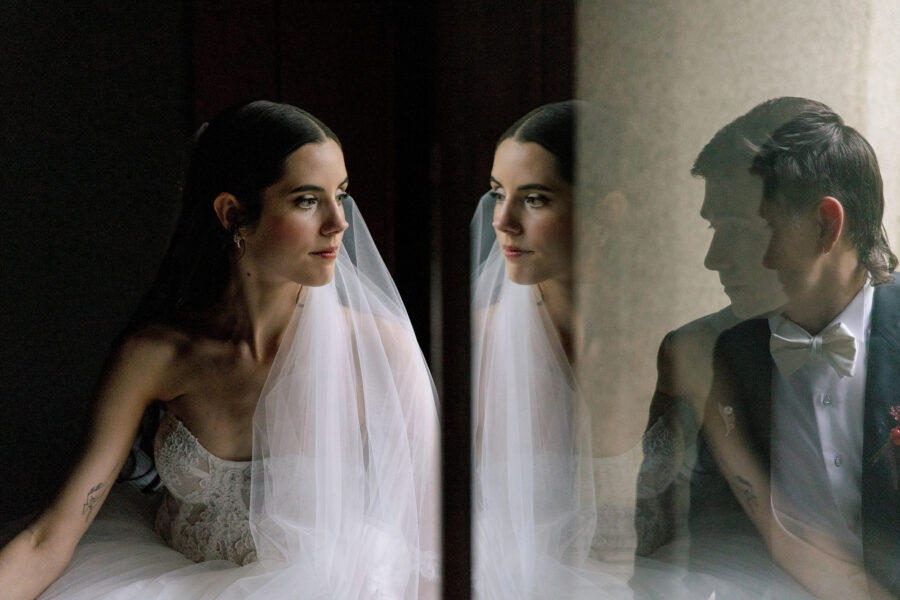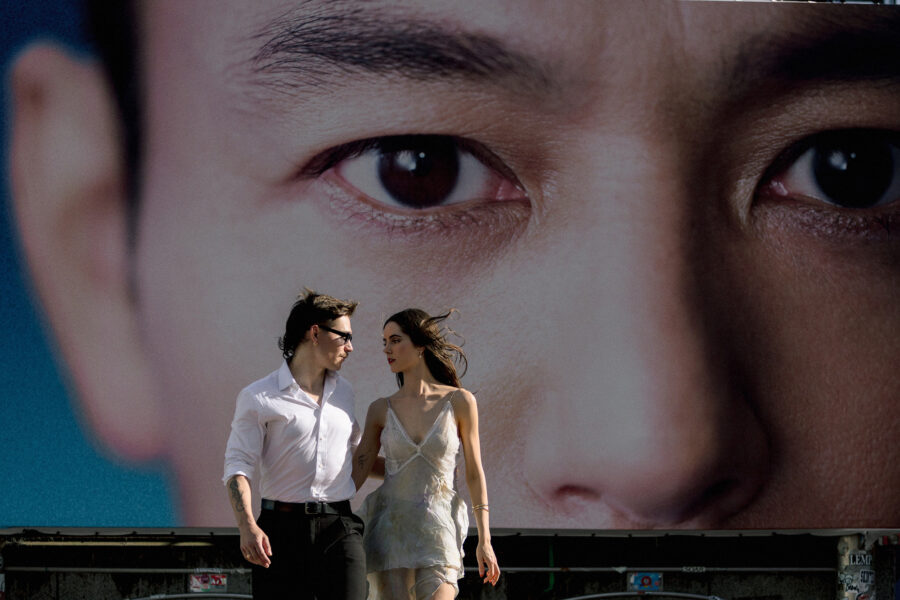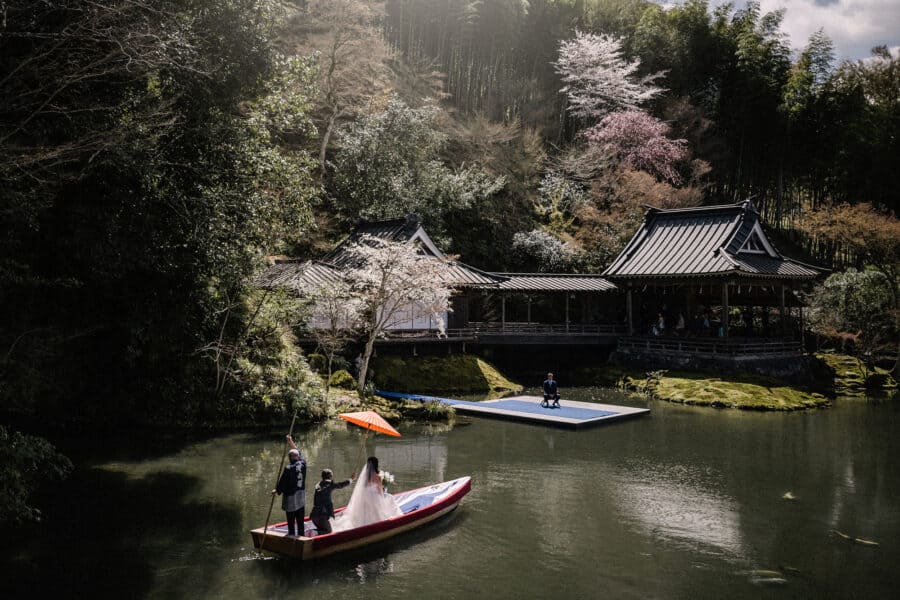
They could have gone anywhere. When two people can choose any coast or capital in the world for the photographs that open their married life, the choice says a great deal, and theirs was the country they keep coming back to. Japan isn’t scenery to them. It’s part of how they live, a place they return to again and again, and it already holds a good share of the memories they’ve made together.
In the US you’d probably call this an engagement session. Japan has its own word for it, maedori, the photographs taken before. This Japan pre-wedding photoshoot ran over two days in late November, Mt Fuji first and Tokyo two days later, and we planned it with them as something closer to a love letter to the country than a tour of its sights. They came back the following spring to marry in Tokyo.


We liked them from the first conversation. They know their own minds, they’re warm with everyone around them, and they carry Japan lightly, the way people do when they know a place rather than admire it from a distance. A month before the shoot, after her hair and makeup trial in Tokyo, the thing she said she was most looking forward to was the kimono.
The Wind Became Everything
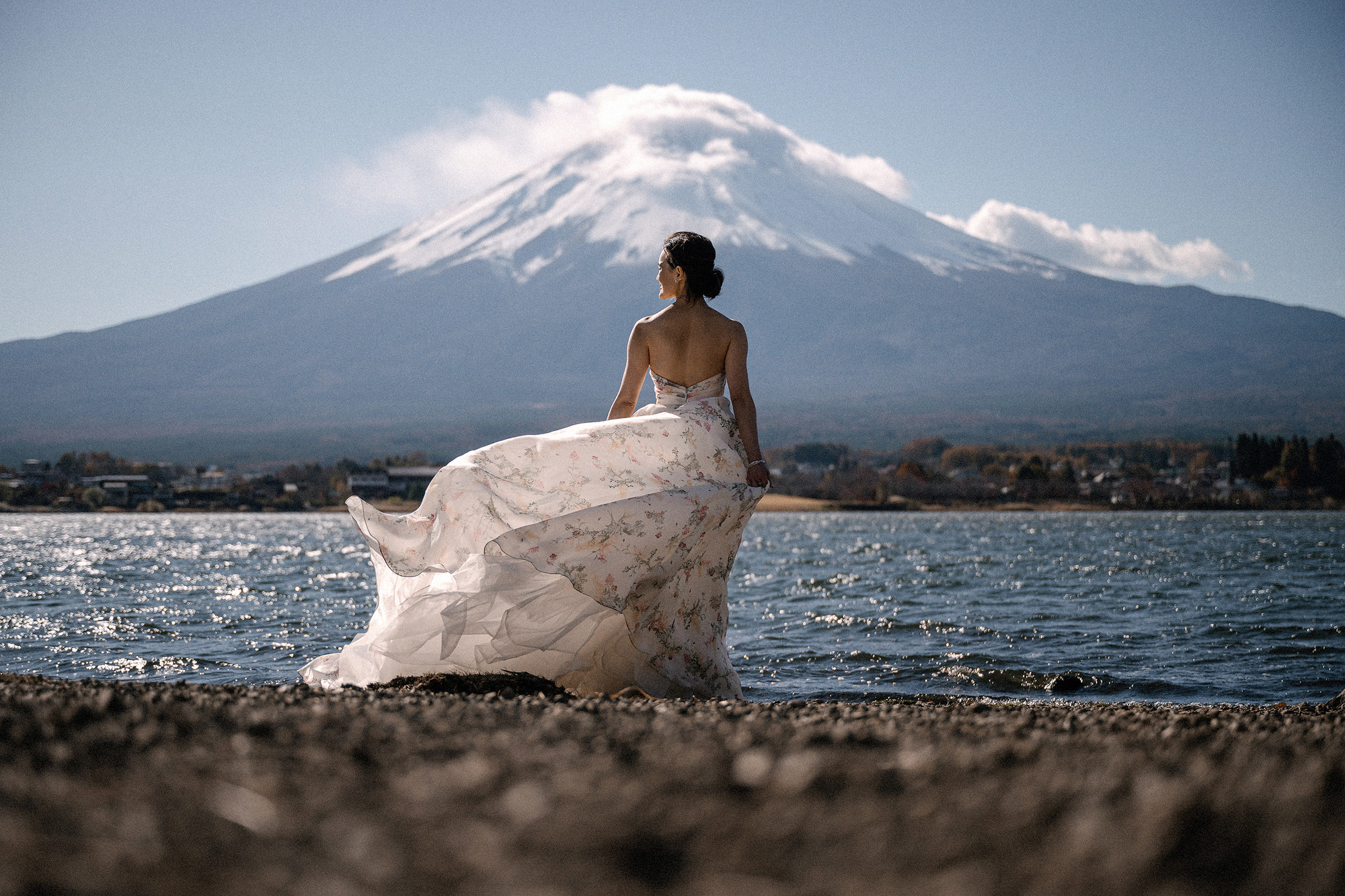
They asked for one thing above all: the mountain. Fuji keeps its own hours, so we held a second day in reserve in case it stayed hidden. On the morning of the twentieth it was there, and it was wearing a cloud.
The Japanese call it kasagumo, a hat cloud. It forms when moist wind runs into the mountain and is forced upward, cooling into cloud around the summit, mostly above the eighth station at more than 3,000 metres. On the far side the air sinks and warms, and the cloud dissolves. So the hat only looks still. It’s being made and unmade continuously, held in place because the wind never stops arriving. There’s a Japanese word for the pull of something shown only in part, yūgen, and a summit veiled by its own weather is about as close to it as a mountain gets.


That wind was the day. It was extraordinarily cold and it didn’t let up. It drove whitecaps across Lake Kawaguchi and bent the silver grass along the shore, and it took a floral Monique Lhuillier gown, made in Los Angeles, and moved it like weather. It was one of the most cinematic scenes we’ve ever stood in. From the shore, the hat cloud looked permanent. It’s a fair picture of a good marriage: what seems settled from a distance is being renewed all the time, by something nobody else can see.


A Gate Built for Greeting a Mountain
The morning began at a torii standing alone on a hillside above Lake Kawaguchi, with nothing behind it but Fuji. It belongs to Kawaguchi Asama Shrine, and it’s far younger than it looks. In 2019 the shrine cleared the slope behind it as a yōhaisho, a place for worshipping the mountain from afar, so that visitors could share in the old practice of Fuji worship. With no tall trees around it, the gate seems to float.


The shrine itself is ancient. In 864 Fuji erupted, and lava poured into a great lake on its northern side and split it in two; the halves are Lake Sai and Lake Shōji today. The following year an imperial order founded the shrine to honour the mountain’s god on this spot. Its seven cedars are counted at 1,200 years old and protected as a natural monument of Yamanashi.

It changes how you see the view. People here haven’t simply admired Fuji for more than eleven centuries. They’ve lived beside it, feared it and kept faith with it, and they still build gates so the mountain can be greeted properly. Couples who love Japan rarely love its scenery alone. They love that relationship, the care people take with the places they live beside, and it felt right that their photographs began at a threshold made for looking.


Flowers at the Crossroads
Before the kimono, there was a museum devoted to it. Itchiku Kubota was 20 when he saw a scrap of tsujigahana cloth at the Tokyo National Museum. Tsujigahana was a dyeing technique of the Muromachi period that died out in the early Edo period, when Yūzen dyeing gave artists a freer, faster way to work. Kubota was called up in the war and held in a camp in Siberia for years after it ended. He came home and gave the rest of his life to bringing the lost technique back in his own form, and held his first exhibition of it in 1977.

In 1994 he opened his museum on the shore of Lake Kawaguchi, with a carved wooden door he’d bought in India at its entrance. His life’s work, Symphony of Light, was envisioned as eighty kimono placed side by side as one canvas: the four seasons, Mt Fuji above them, and the cosmos above it all.
That’s what devotion to a culture looks like at its fullest: a whole life spent bringing back something the world had lost. It was a fitting place to walk through on the day she would put on a kimono of her own.


A Historical Kimono at the Foot of Fuji
The kimono she’d waited a month for was a historical piece. It’s an uchikake, the long outer robe a bride wears open over her kimono, trailing on a padded hem, in the palest pink with flowers and bands of gold. The groom wore crested black montsuki and striped hakama, the most formal dress a man can wear in Japan. An impeccable hair and makeup team turned a ball gown into a kimono in the space of a lunch, and made it look unhurried.


We photographed them in the garden of a ryokan in Fujiyoshida, under maples at the height of their colour. To wear a historical kimono is to be trusted with something. It has outlived the people who first wore it, and for one afternoon it’s yours to carry, carefully, before it’s folded away for whoever comes next. It’s the same instinct that keeps bringing them back to Japan: to be part of something older than themselves, and to treat it with care.


The Summit, Cleared
By the time they reached one of the Sengen shrines at the foot of the mountain, the shrines that, like Kawaguchi Asama, honour Fuji’s own god, the wind had finished its work. The hat was gone. Fuji stood clear to the summit in the last of the light.


Most people who come to see Fuji get one version of it, veiled or bare, and count themselves lucky either way. They had both in a single day, and the same wind gave them each: it built the cloud in the morning and blew it off by evening. Nobody could have planned that. What planning does is make room for it. When we plan a day like this, the structure is the point: a day held in reserve, permissions arranged weeks ahead, a route that keeps the couple near the mountain whatever it decides to do. That’s how weather becomes a gift rather than a gamble.


Tokyo, Two Days Later
Tokyo asked something different of them. Their day began at the old gates of Edo Castle, now the grounds of the Imperial Palace, among the black pines of the outer garden. Before the castle was built, this ground was an inlet, and black pines grew wild on the hills above it. Some two thousand stand on the lawns today, planted from 1888 onward, so the city’s most formal open space is, in its way, a memory of the shoreline it replaced.

A pre-wedding photoshoot in Tokyo works best when it follows the city’s own grain: its oldest edges first, then the quiet gardens tucked between its towers, where the maples were turning as they had been at Fuji. Tokyo rewards people who already know it, and they moved through it like two people at home.


Shibuya at Dusk, and the Lights
As the light went, they walked into Shibuya Crossing, where crowds pour in from every corner at once and almost nobody collides. It’s Tokyo in a single junction: a city of strangers held together by an unspoken consideration for one another. For two people whose love of Japan goes well beyond its views, it was the right place to end the afternoon.


By dark, the trees were lit. Tokyo’s winter illuminations begin in November and wrap whole avenues in light, and they gave the two days their last scene: after a morning at a mountain wearing its own weather, a city that dresses its trees for the season.

Why Here
These photographs were made the year before they married, and that’s what makes them precious to us. They weren’t a rehearsal for a wedding. They’re a record of a relationship with a place, made by two people who could have gone anywhere and keep choosing here. Our photography and film are made for exactly that kind of memory: the deliberate kind, made in a country you love, with the people you love.
When couples ask us where their pre-wedding photoshoot should be, we tell them to start with the place that means something to them, not the one that photographs best. For these two, those were the same place. The wind did the rest.