Before they had an autumn elopement in Japan, Japan had already helped them find each other. A dating app made the introduction. Fushimi Inari did some of the work.
She had travelled through Tokyo, Kyoto and Osaka in March 2019. He visited the same three cities a few months later. When her profile appeared on his screen, he recognised Fushimi Inari in one of her photographs. That gave them something to talk about. Then rather a lot to talk about.
Japan became part of those early dates, alongside everything else they discovered they had in common. Cooking. Board games. Series. A certain shared geekiness. A sense of humour.
Years later, when they began talking seriously about getting married, they already knew they wanted something small. Her explanation was wonderfully straightforward. “Japan was the only logical choice for us.” Sometimes the answer really is that simple.
Japan Was Already Part of the Story
We’re interested in what makes somebody choose a destination rather than simply liking how it looks. There is a difference. Japan wasn’t a mood board they discovered while planning a wedding. It was already attached to the beginning of their relationship.
They loved the landscapes, the culture, the food and anime. They’d both travelled here before they ever met each other. Their earliest conversations had Japan running through them.
They wanted privacy. Autumn colour. Traditional Japanese architecture. Personal vows. Good food. Cake mattered too. And, as they rather apologetically wrote in their planning kit, “Unfortunately, we are both small details people.” We understood the assignment.
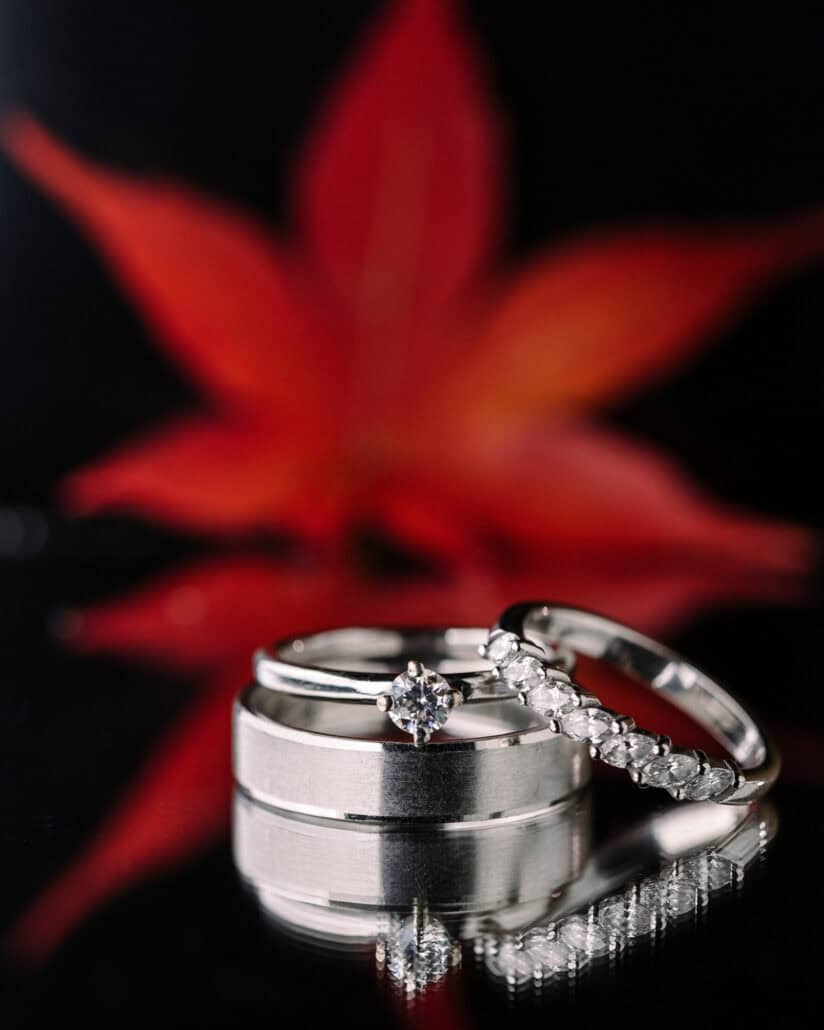
Their preferred snacks, incidentally, included small chocolates and “mini melon bread (if that is a thing).” It is a thing.
Their proposal had happened somewhere else that already carried history for them: at sunset in Veli Lošinj, Croatia, a place connected to childhood summer holidays and somewhere they now return together. That tells you something about how these two choose places. The setting matters. Not because it needs to be famous, but because once something important happens there, you have another reason to go back. Japan was about to get one too.
Tokyo First
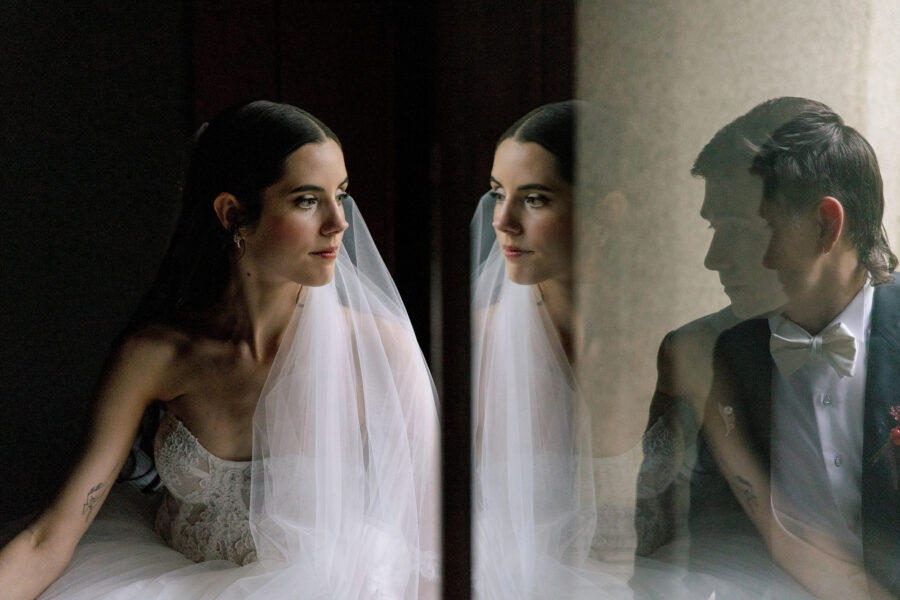
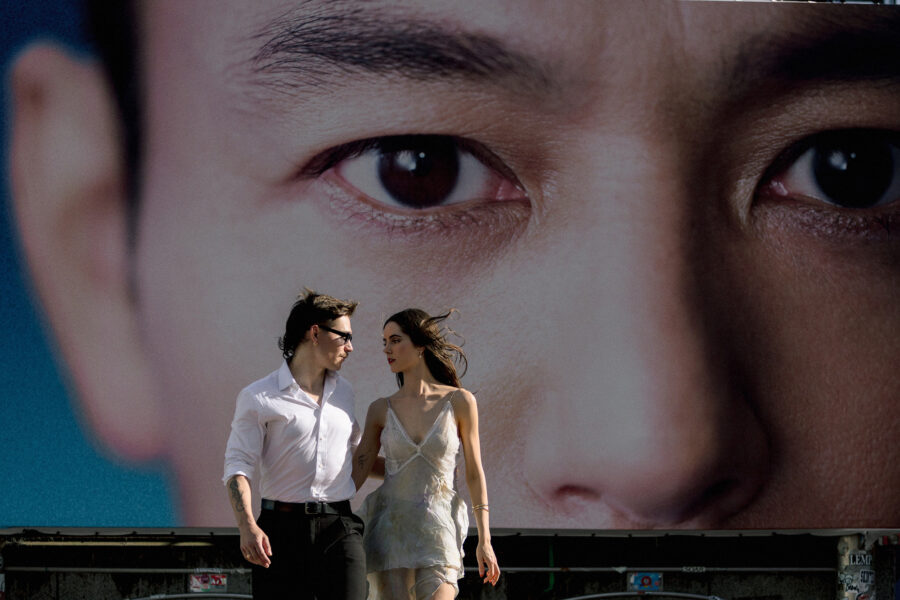
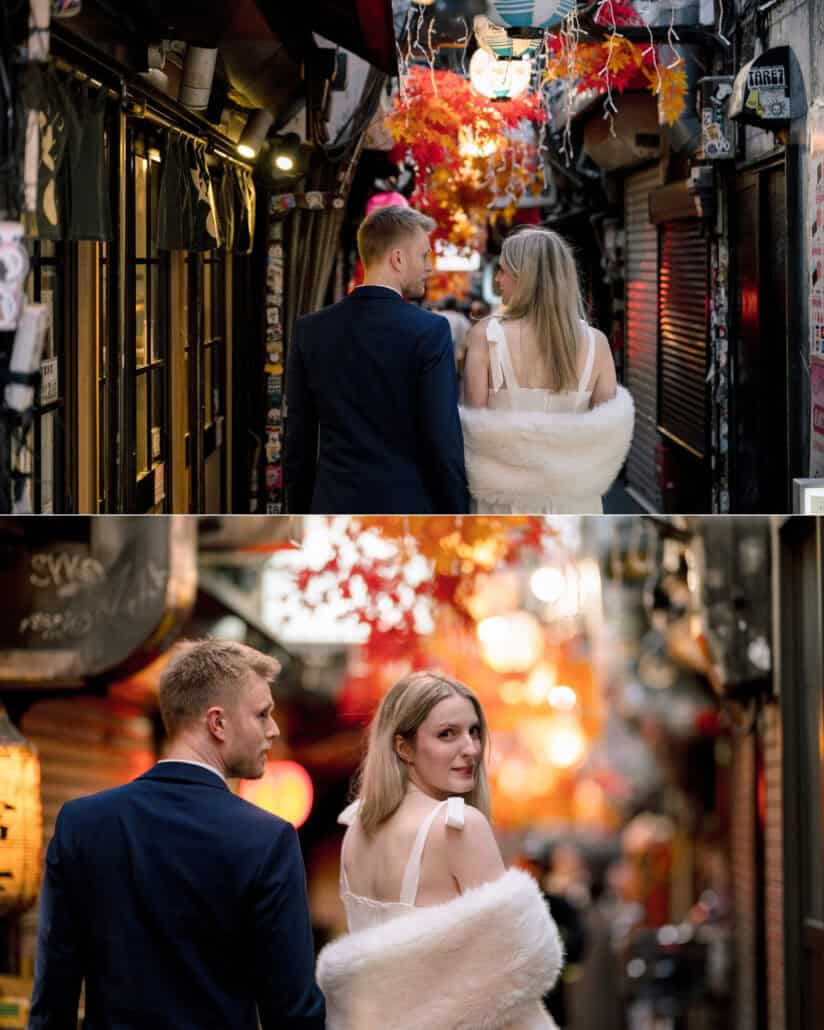
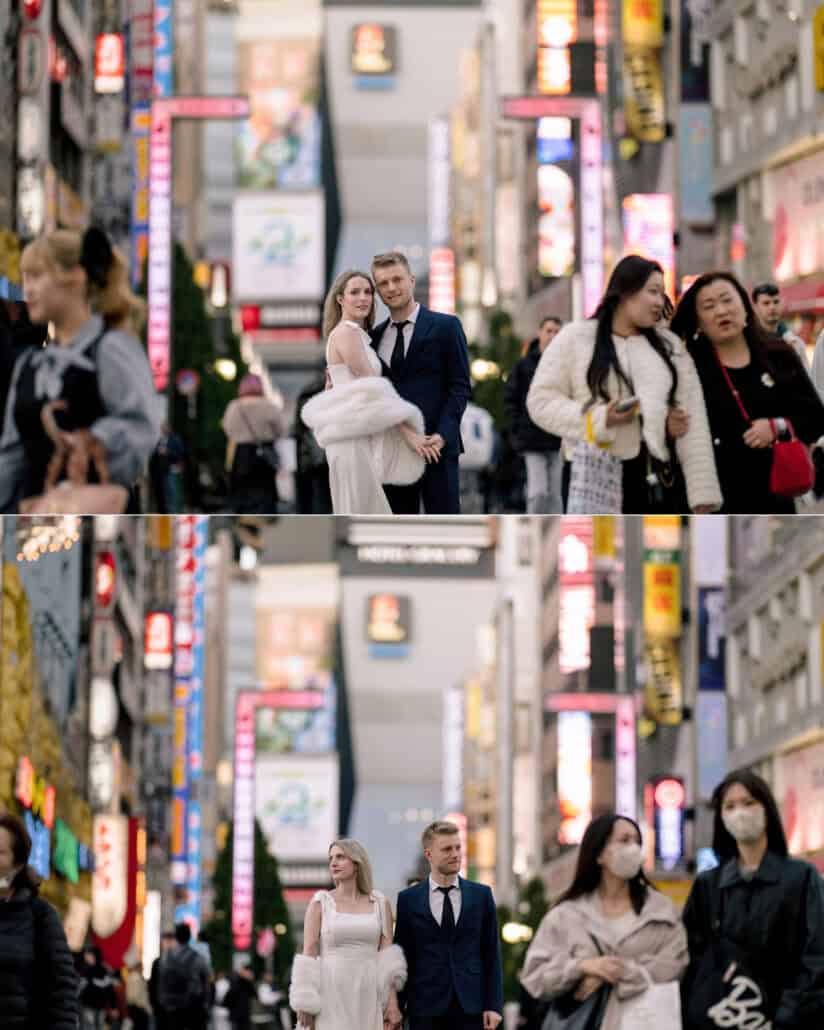
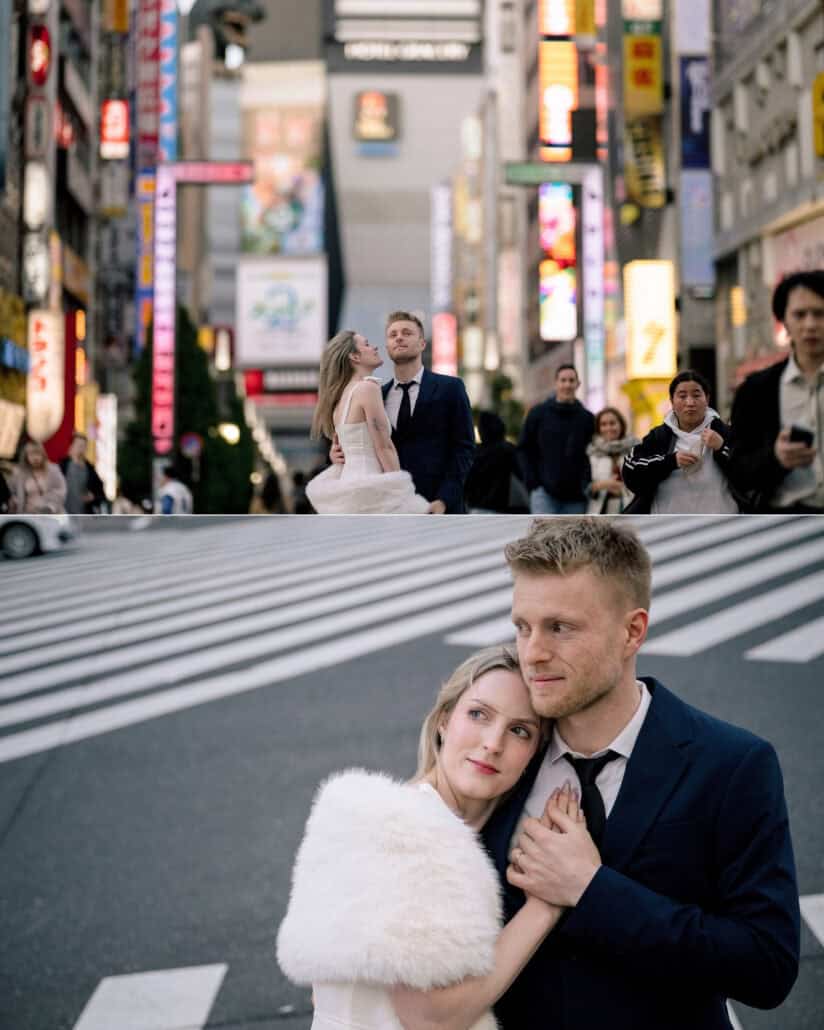
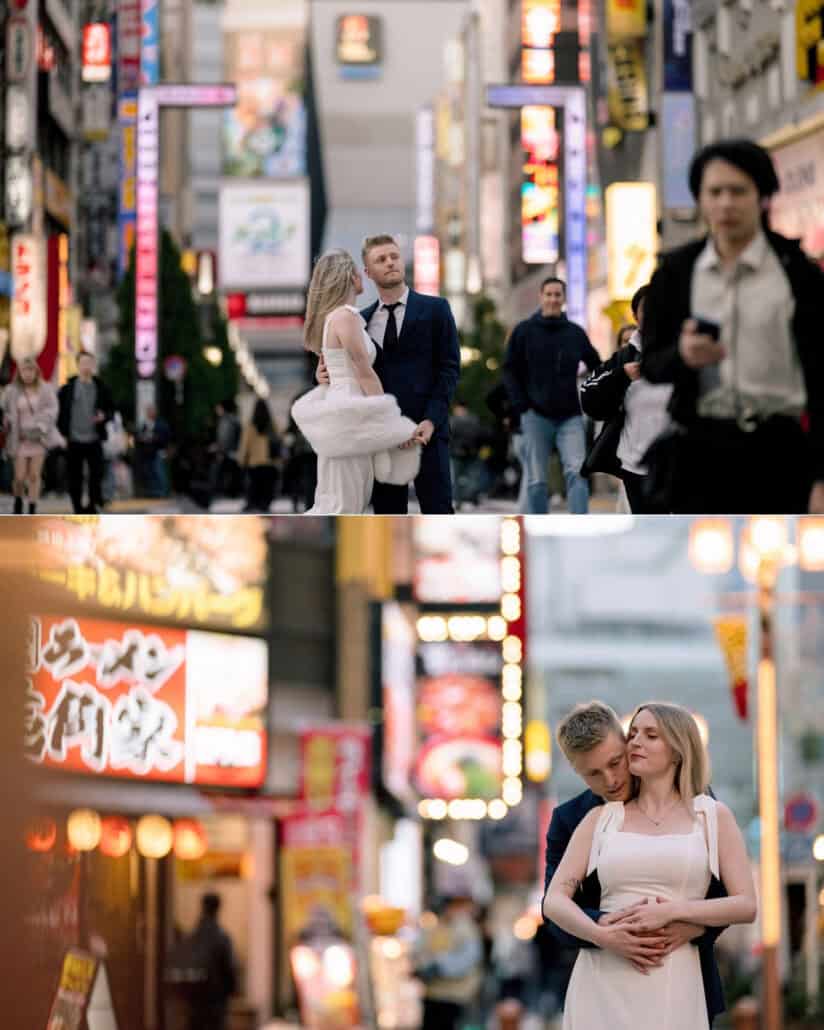
Before the elopement came Tokyo. Shinjuku was the right counterpoint to what would follow. They were stylish enough to carry it. Properly fashion-y. The photographs leaned editorial, with the city doing what Tokyo does best around them: movement, scale, reflections, signs, crossings, people going somewhere.
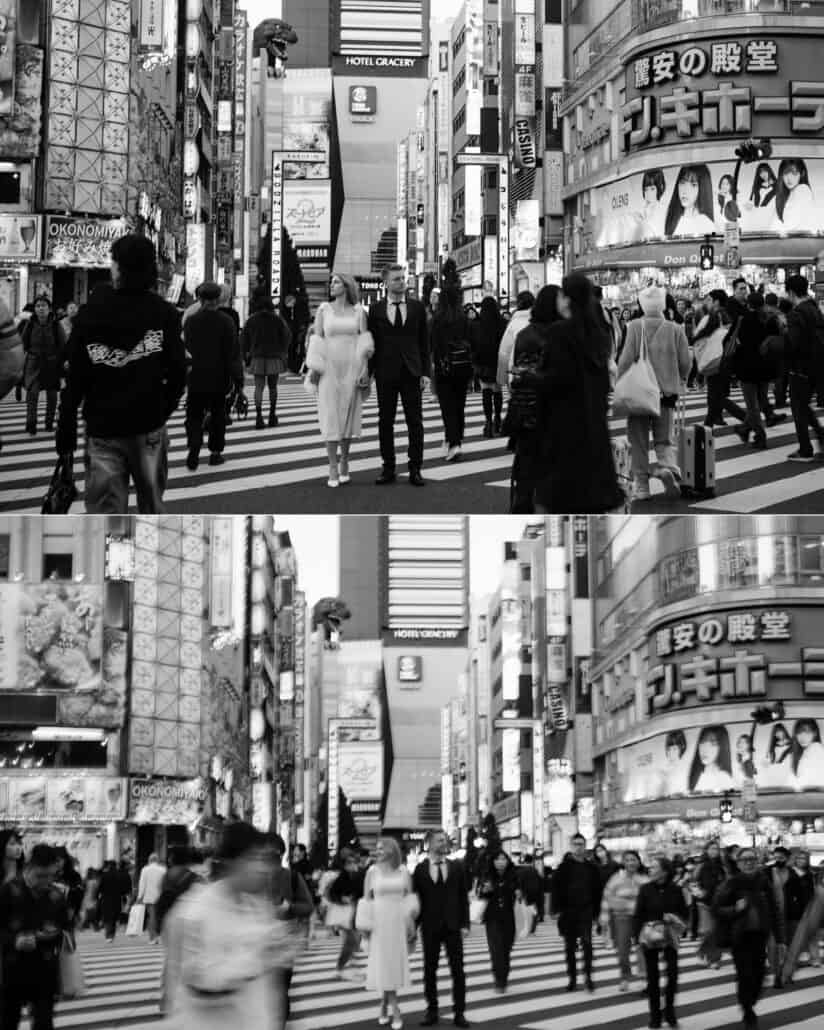
They didn’t disappear into the city. They looked completely at home in it.
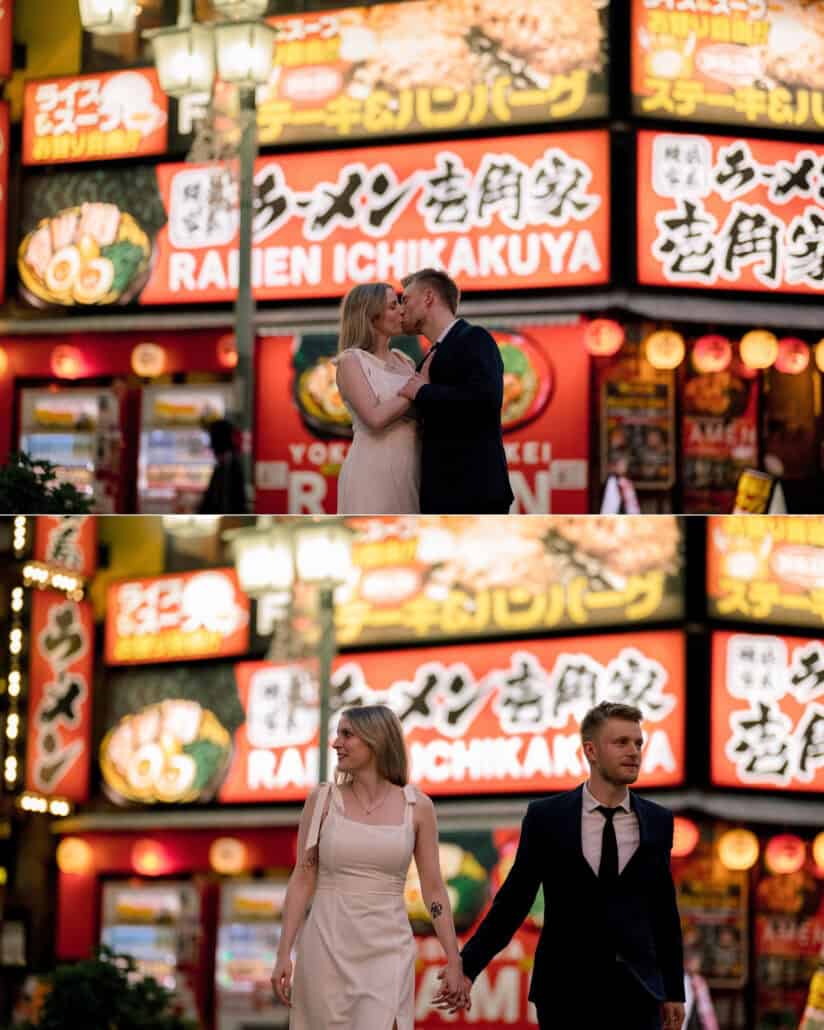
We loved that part of the story because Japan is often flattened into a choice between two visual ideas. Neon Tokyo or old Japan. City or garden. New or traditional. There’s no reason to choose. You can have Shinjuku first and an old ryokan afterwards. In fact, putting those versions of Japan beside one another makes both more interesting.
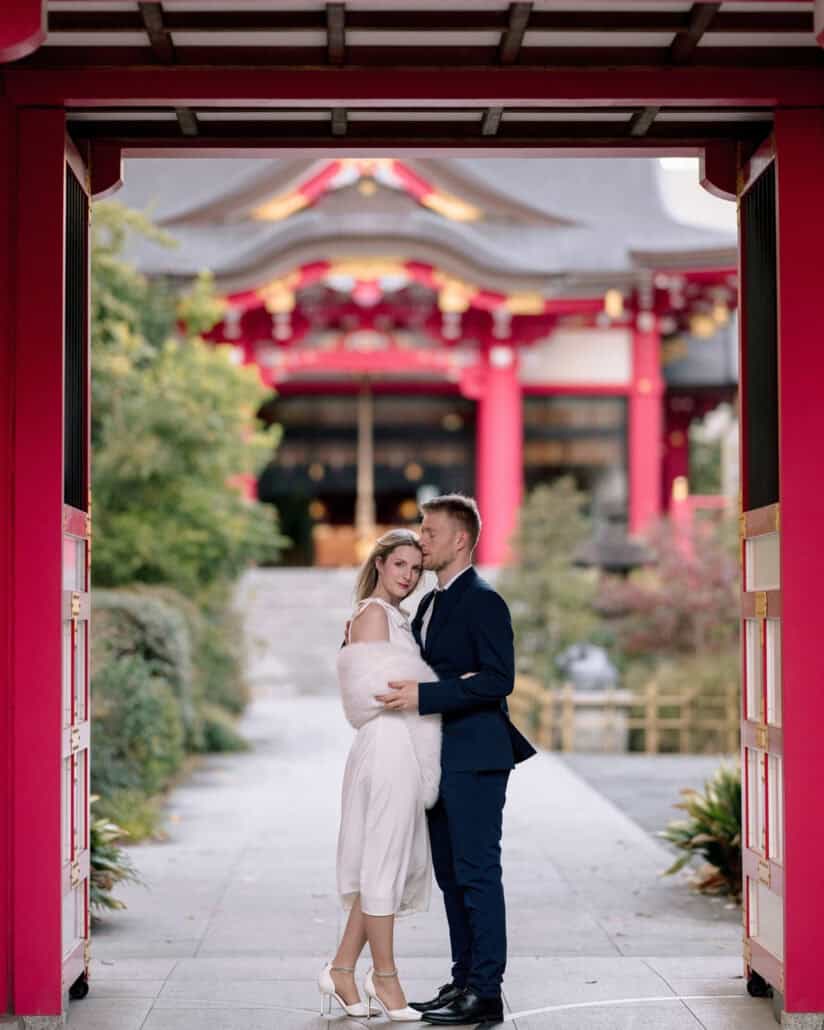
Tokyo gave them pace. Jinya would give them time.
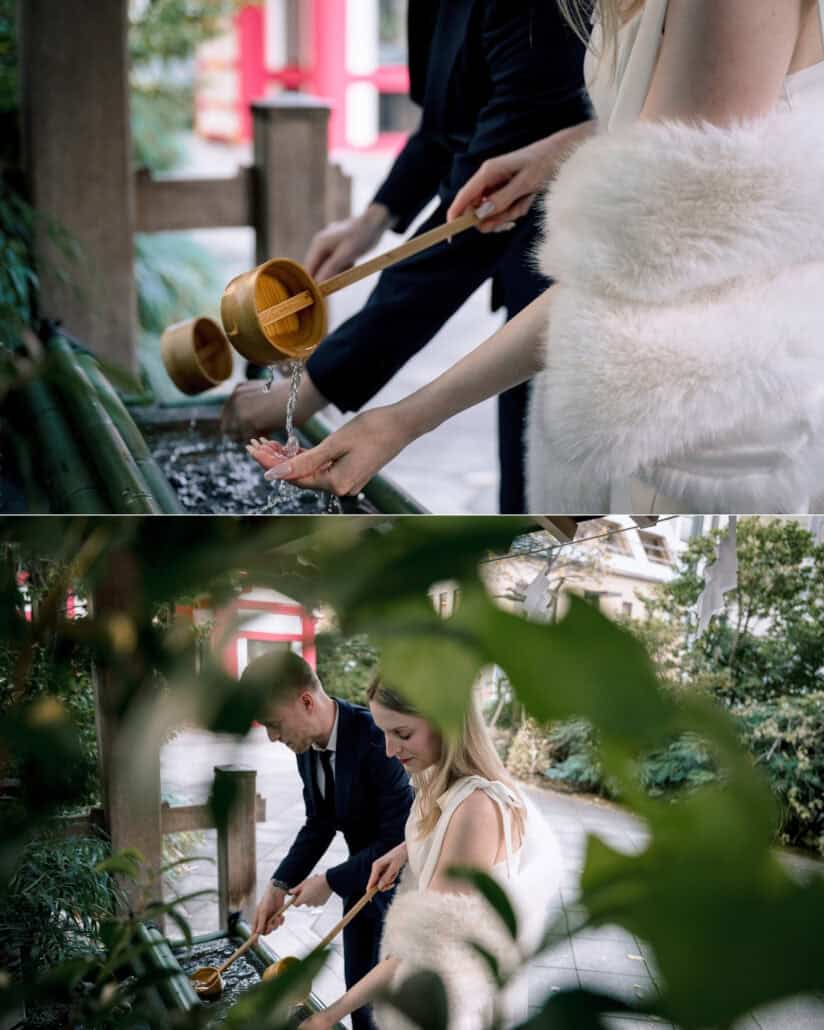
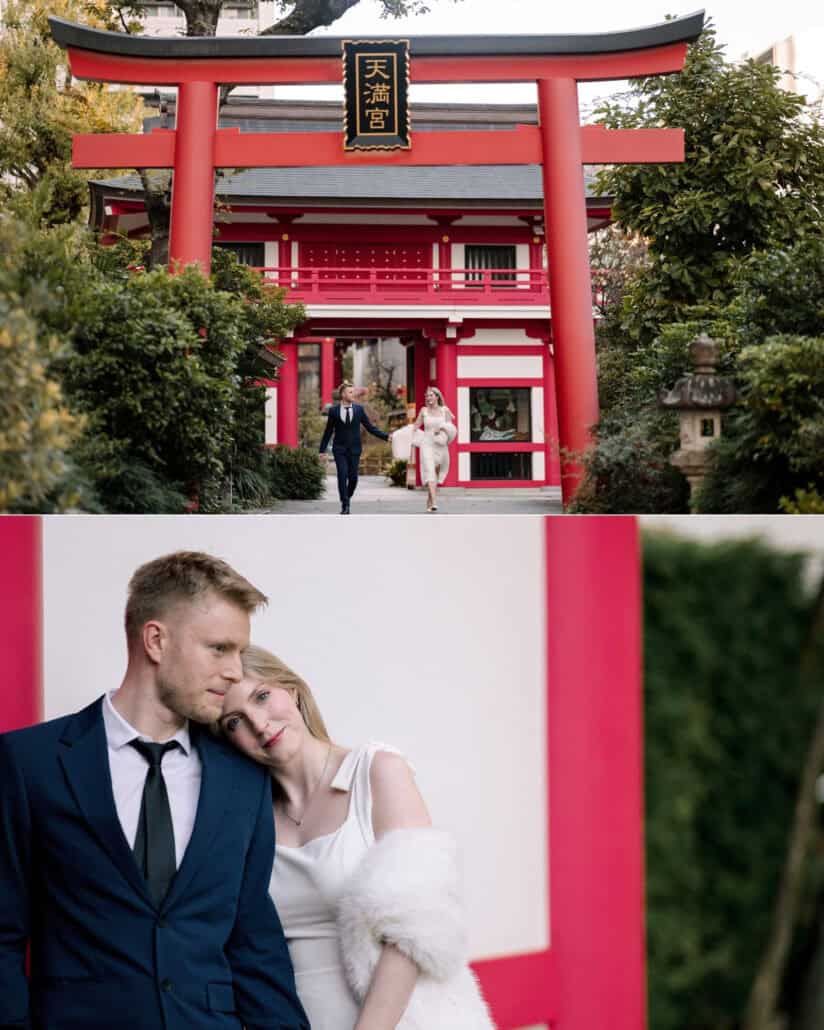
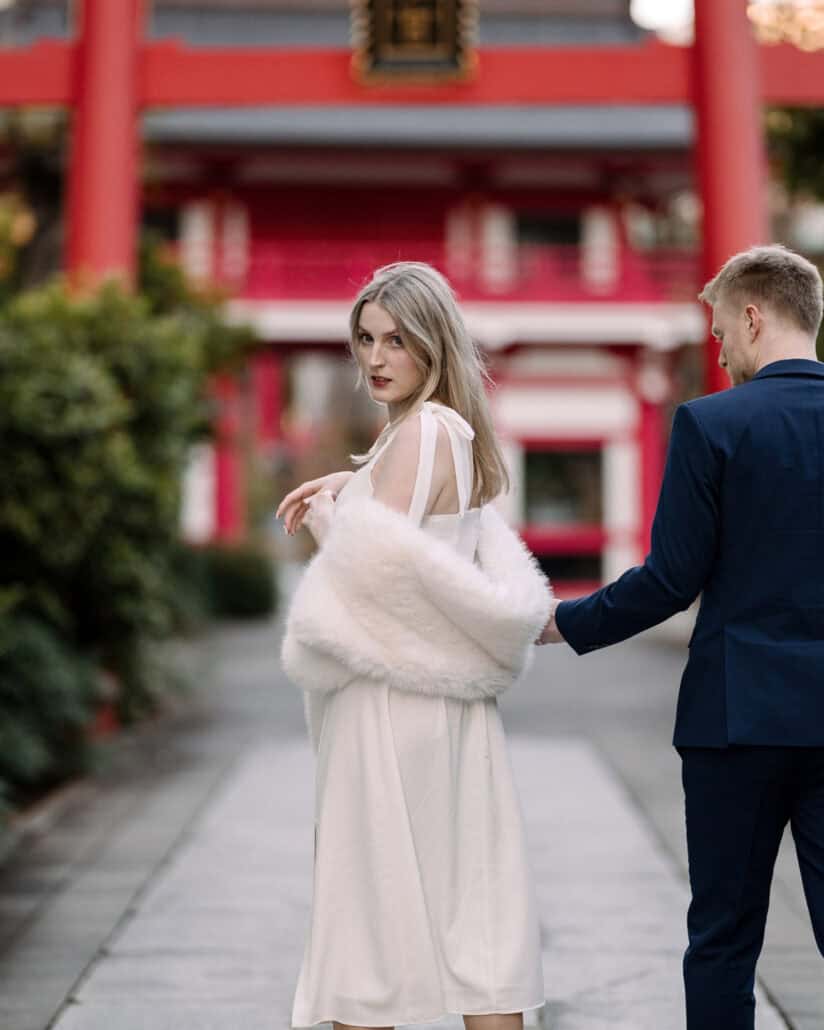
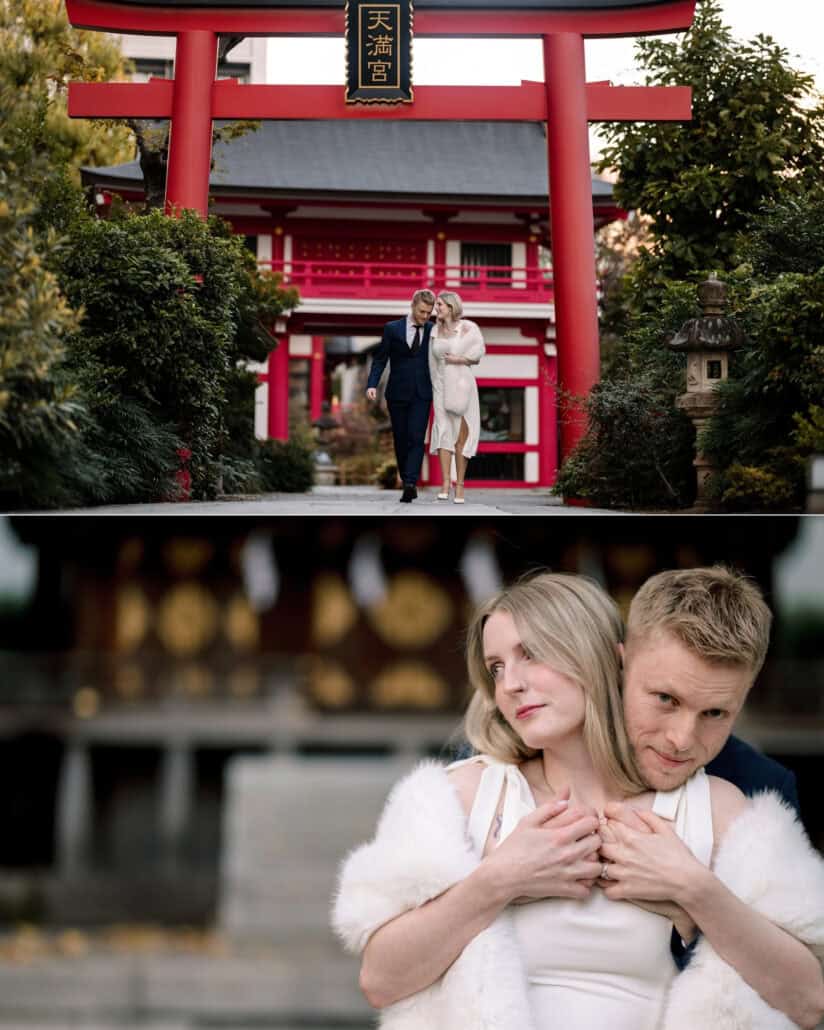
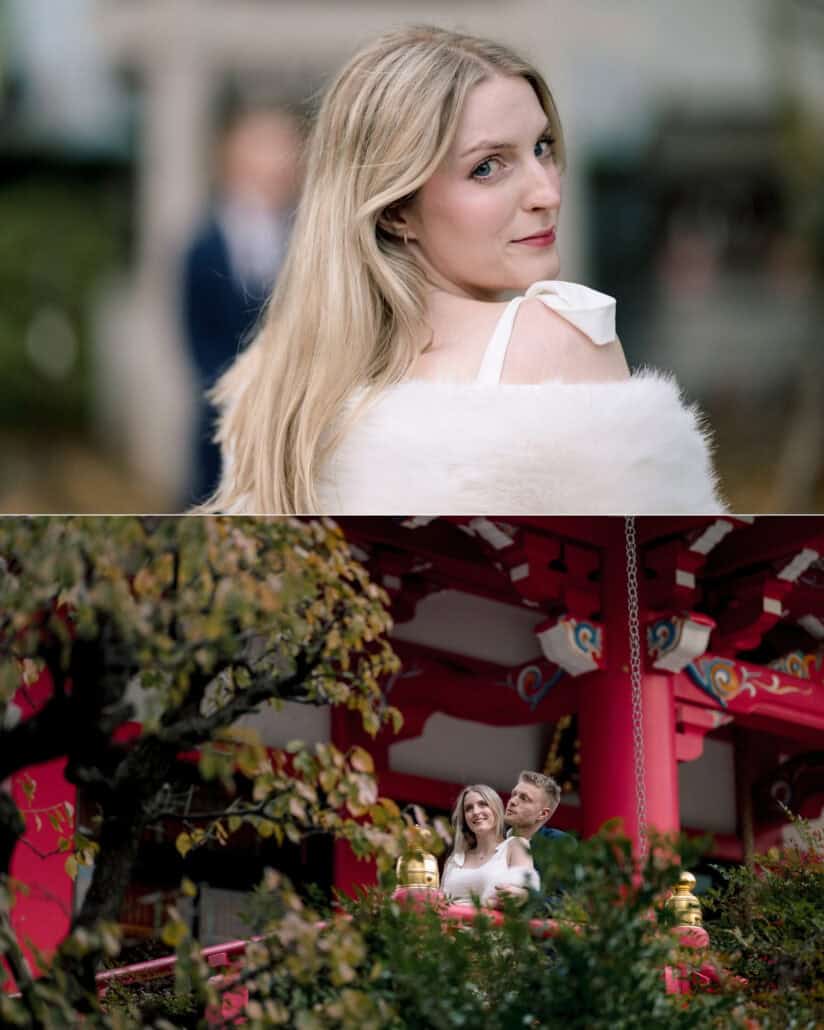
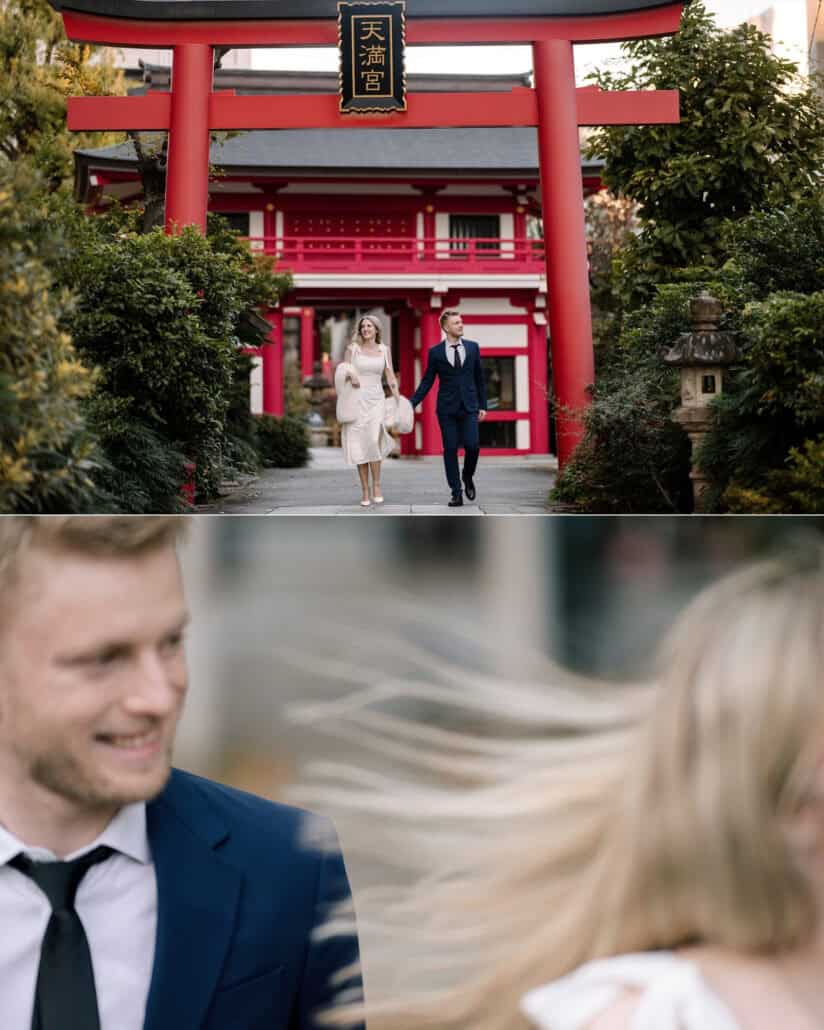
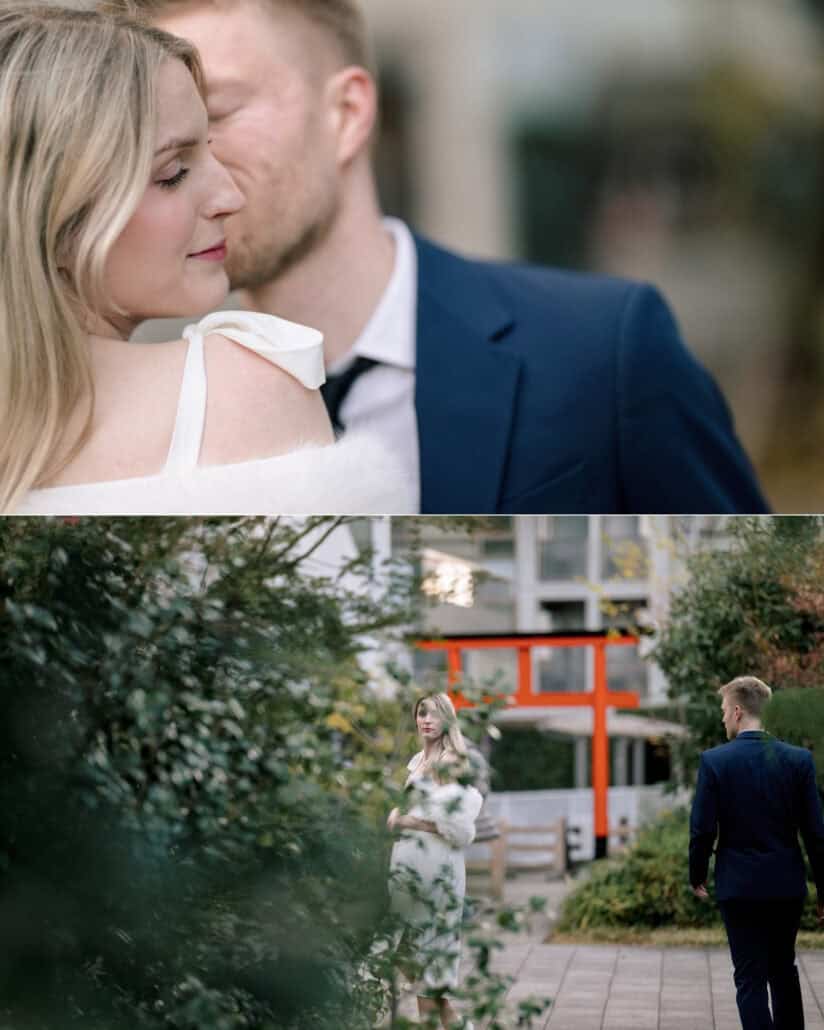
An Elopement at a Ryokan
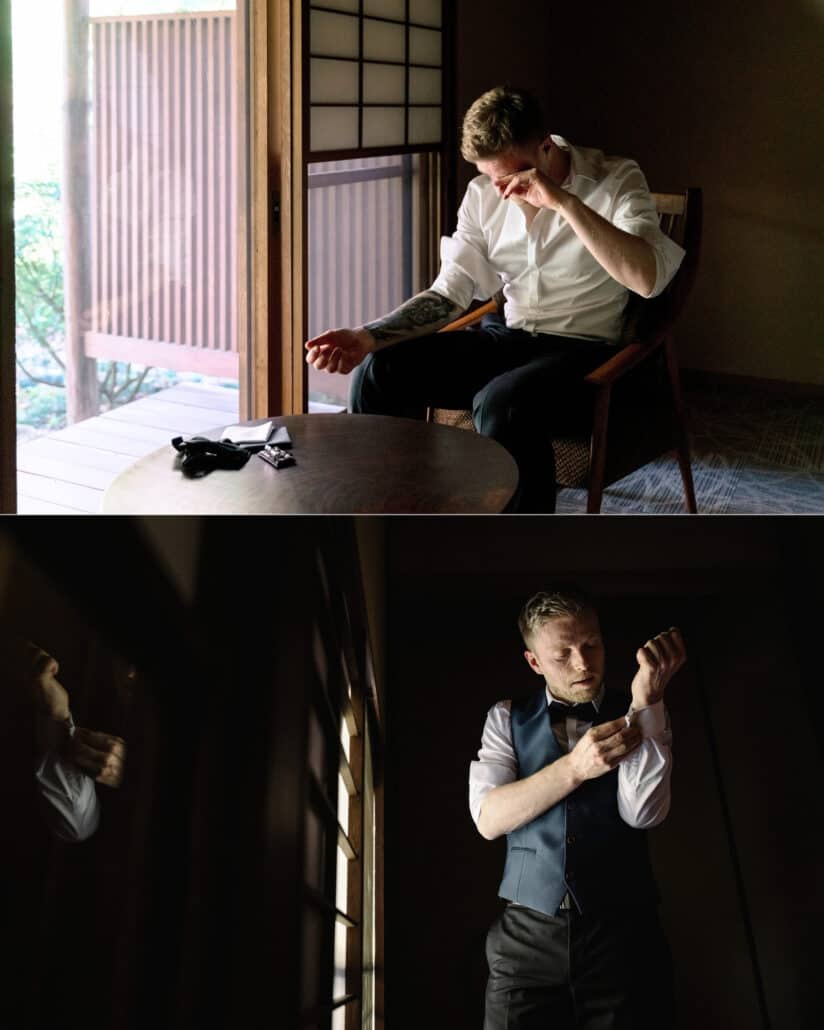
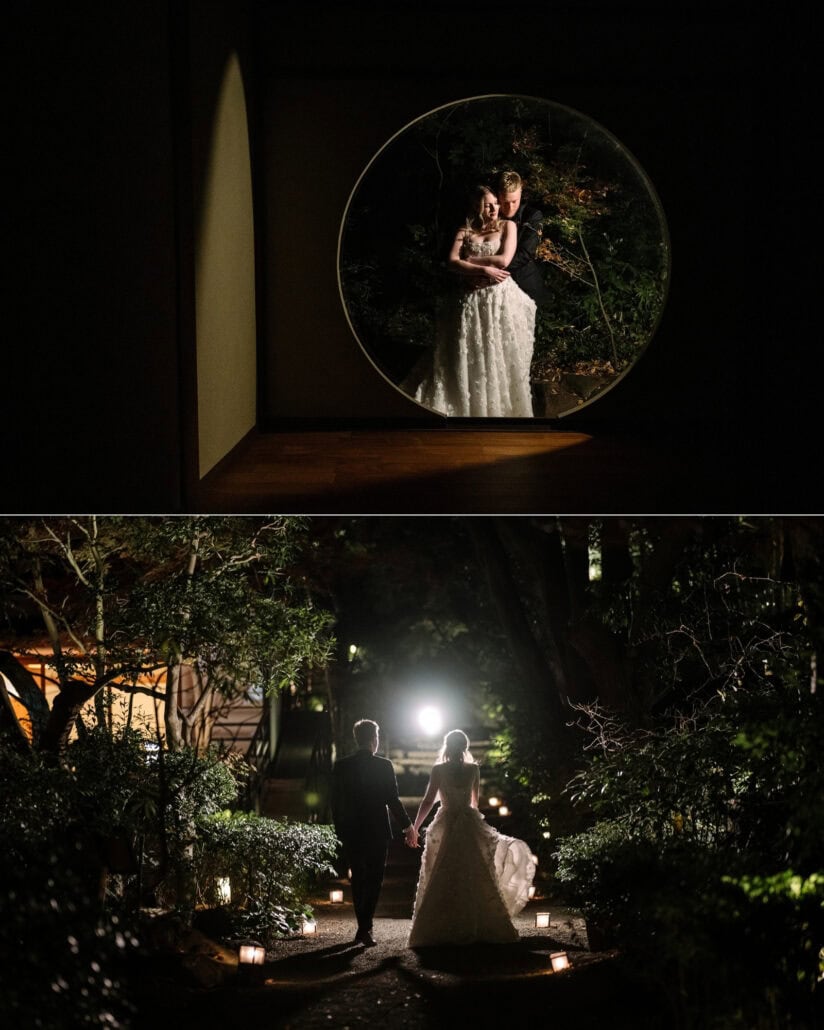
On the last day of November, they went to Jinya in Hadano, against the Tanzawa mountains. Jinya has been gathering people for a very long time.
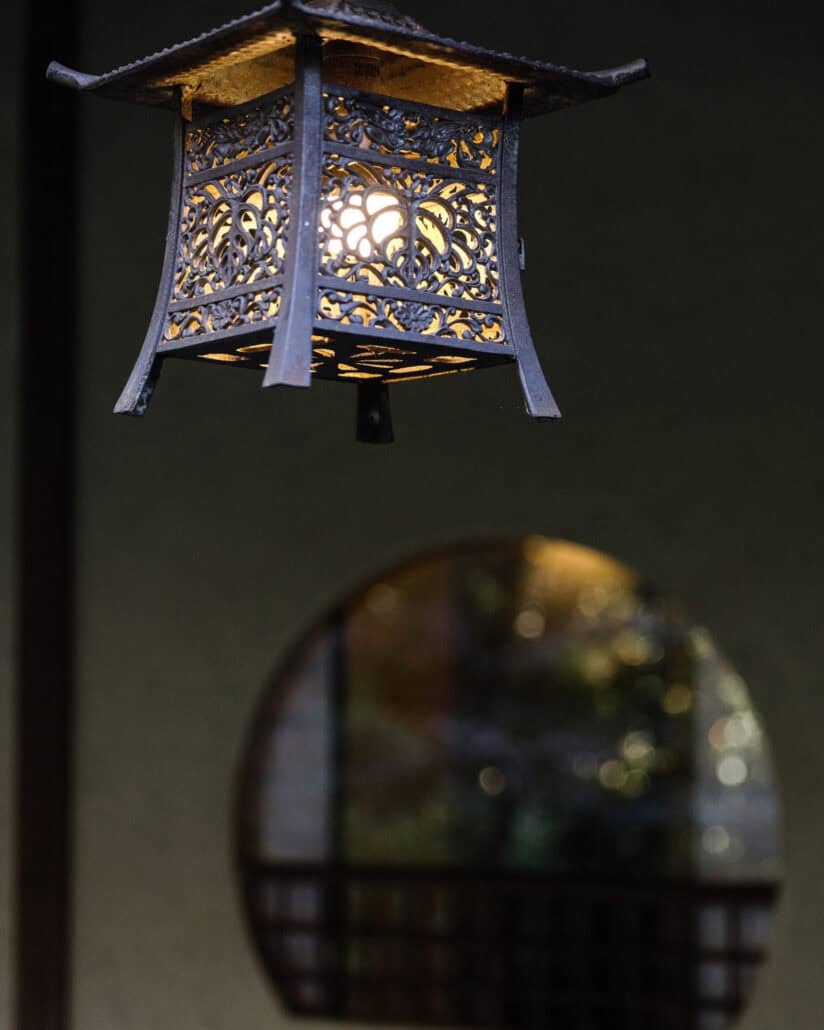
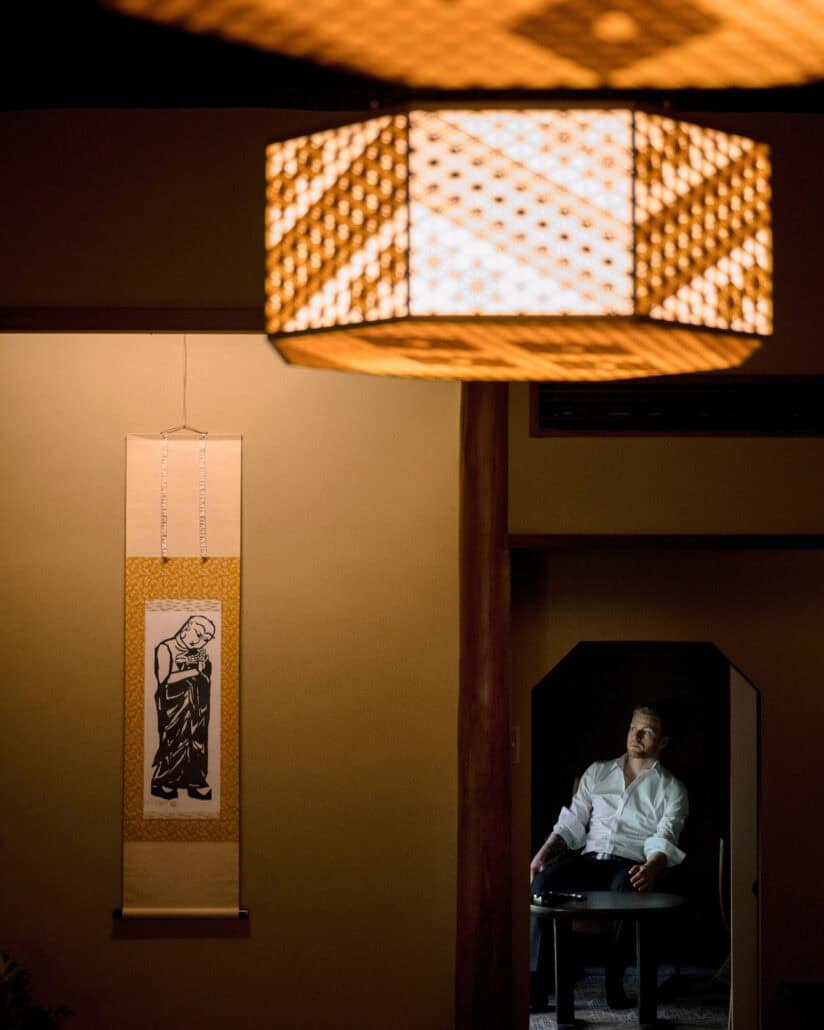
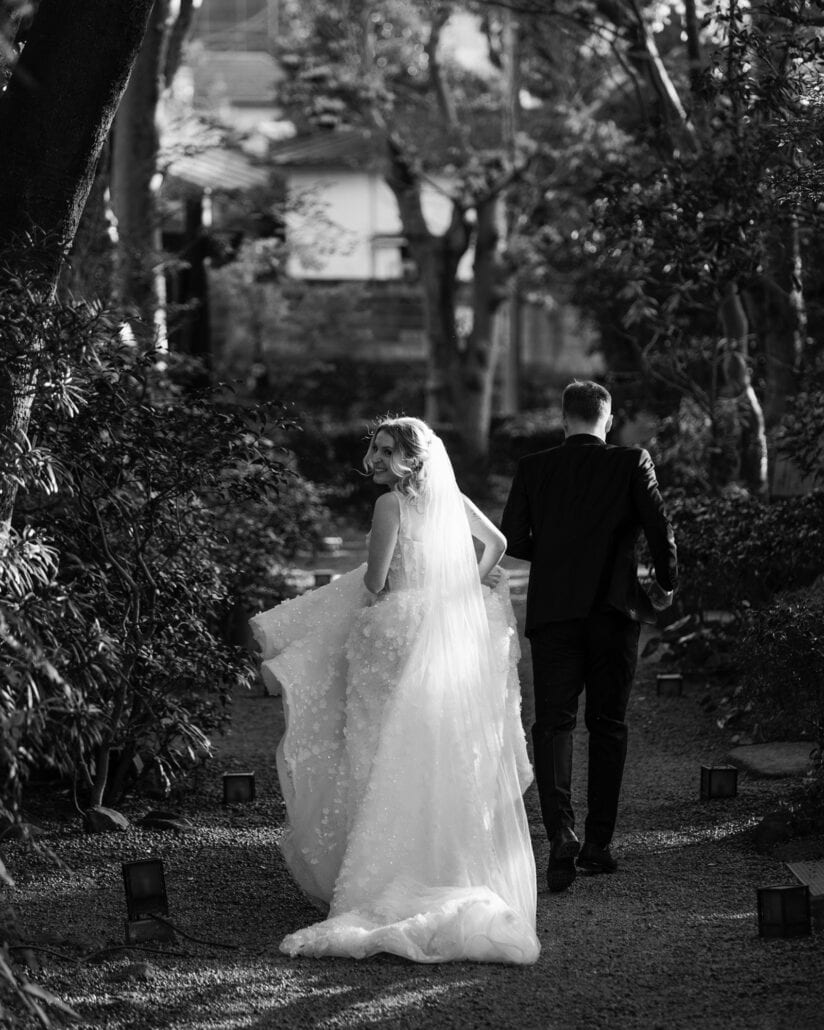
That history is part of what we respond to there. A ryokan doesn’t feel like a neutral event space waiting to be styled into existence. People have already arrived, eaten, bathed, celebrated, slept and left again. The buildings and gardens carry that sense of use. Then another couple arrives and adds their day.
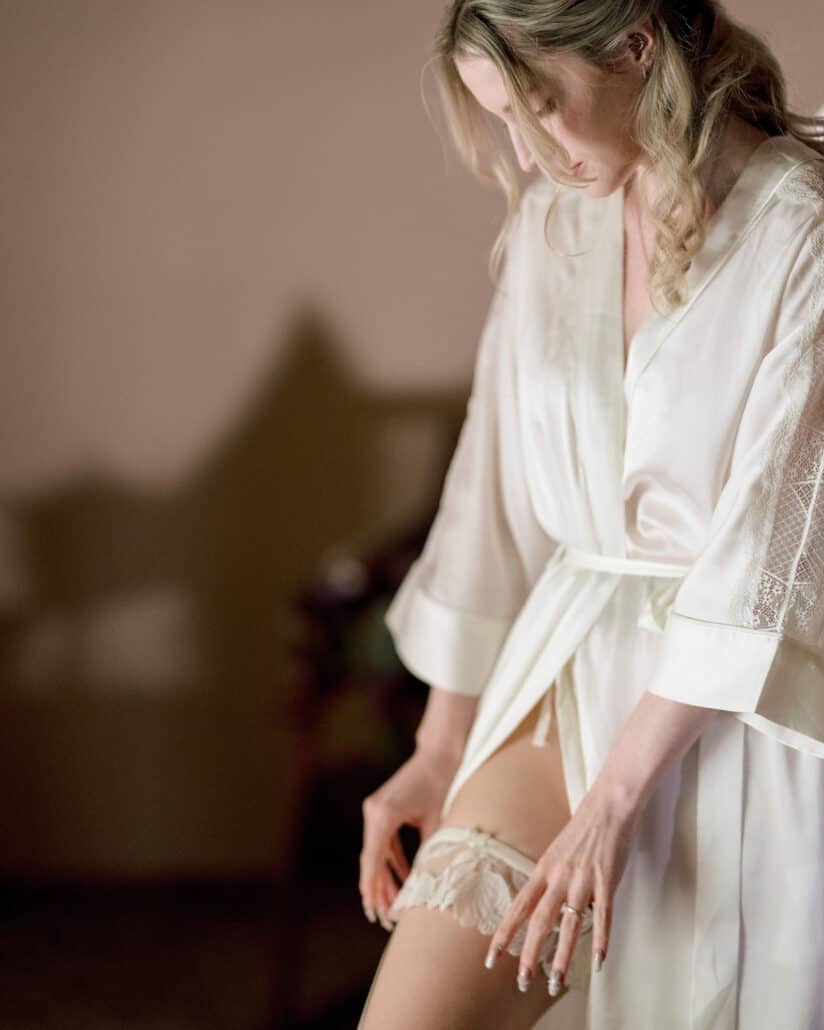
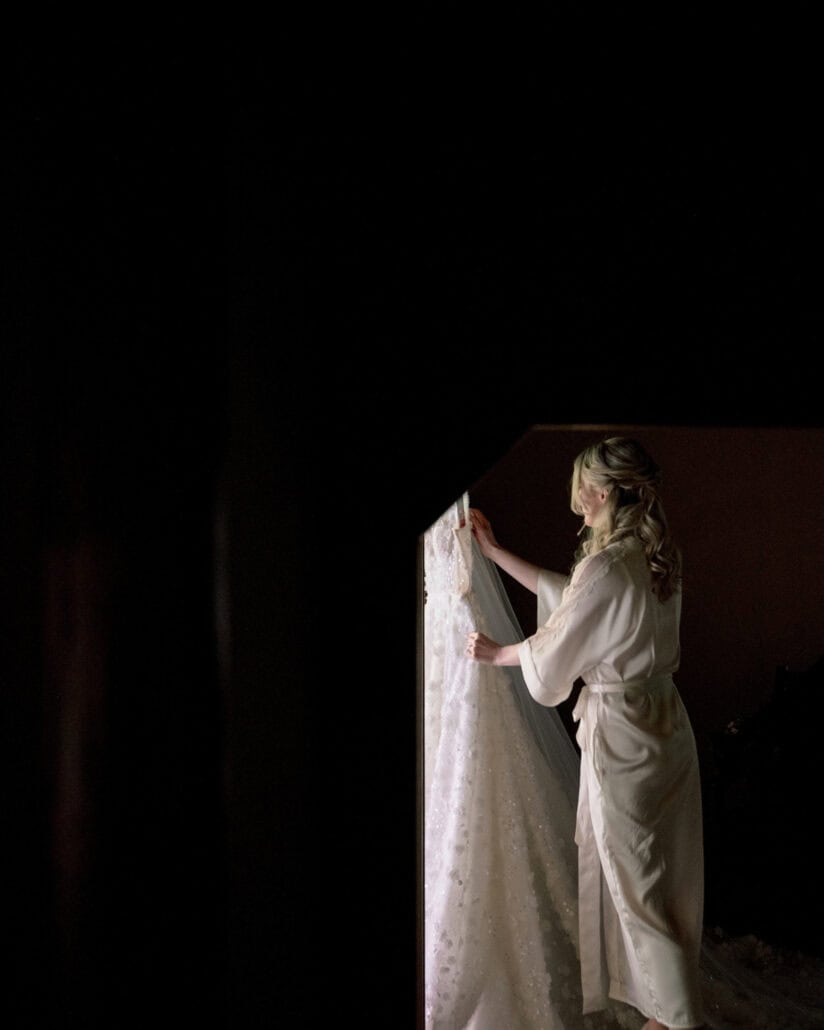
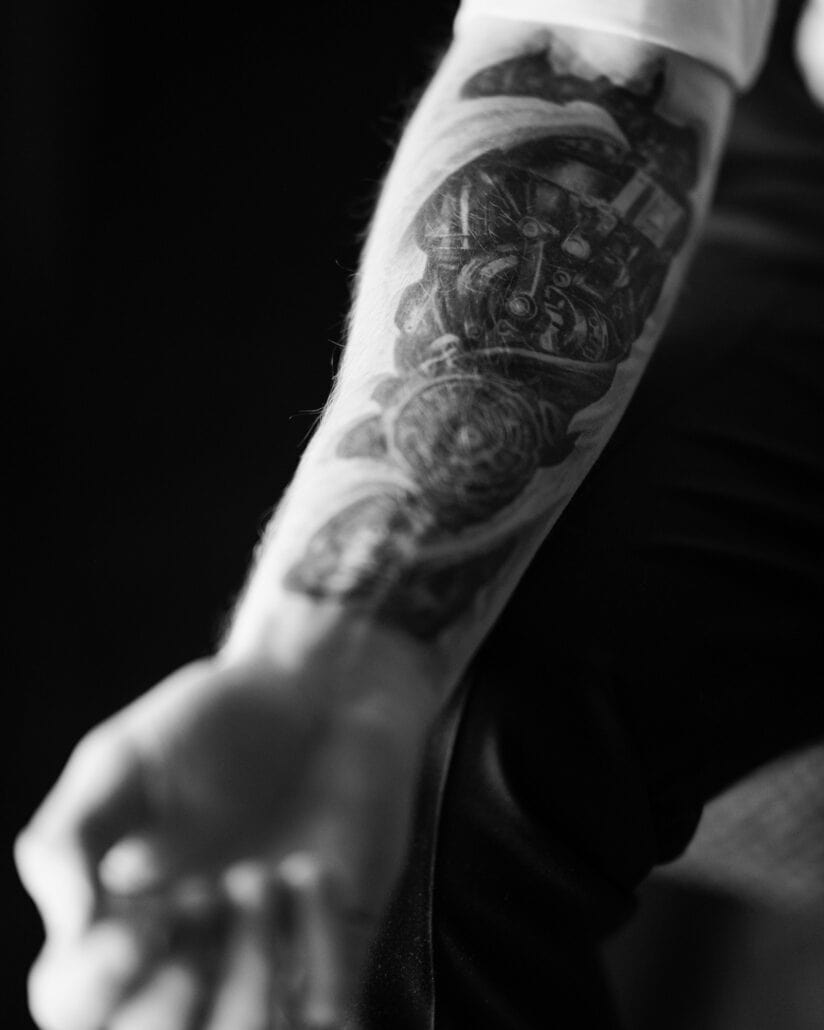
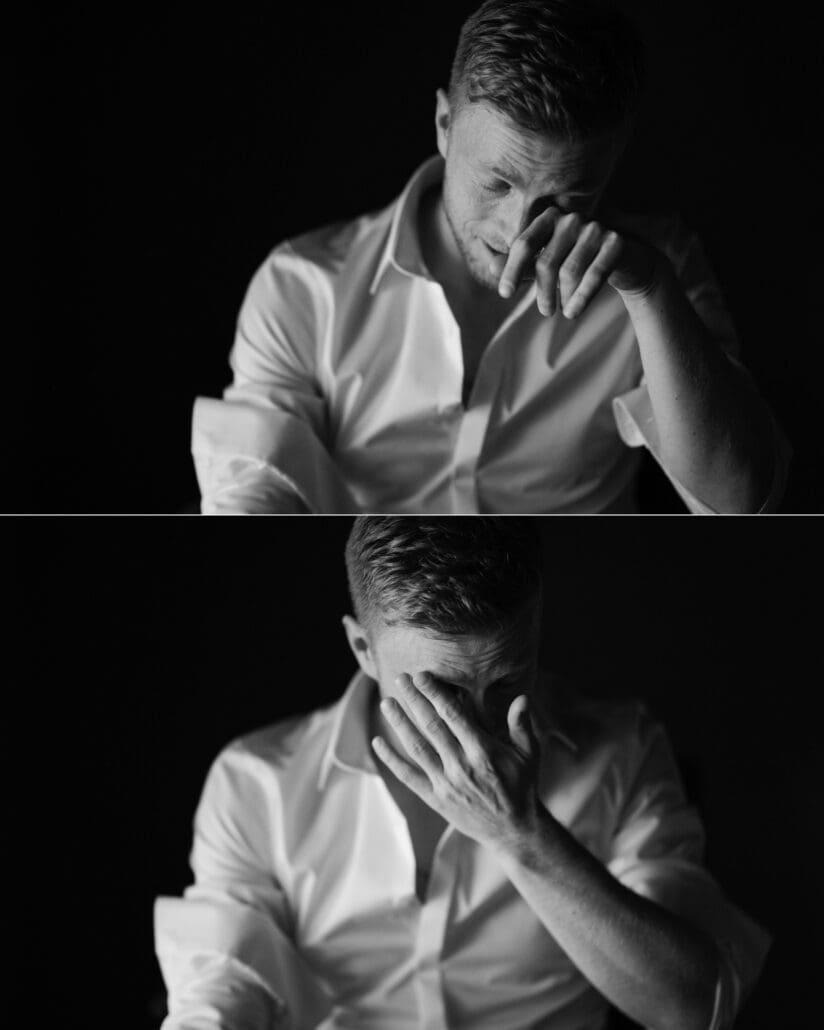
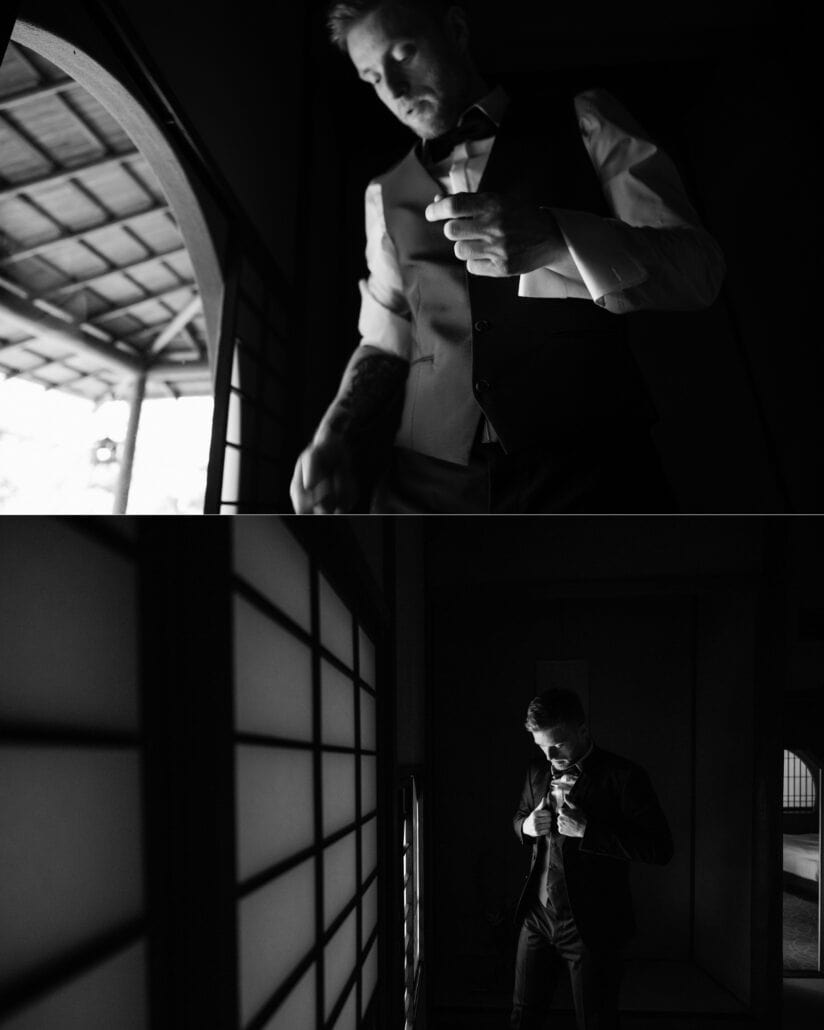
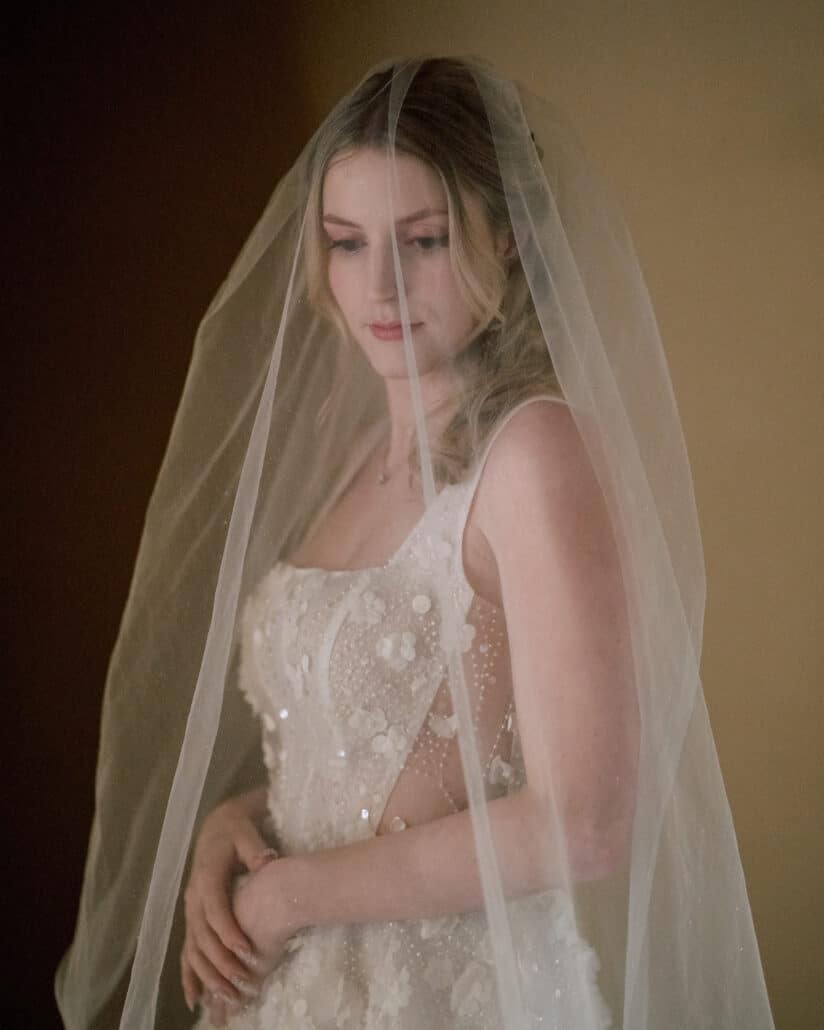
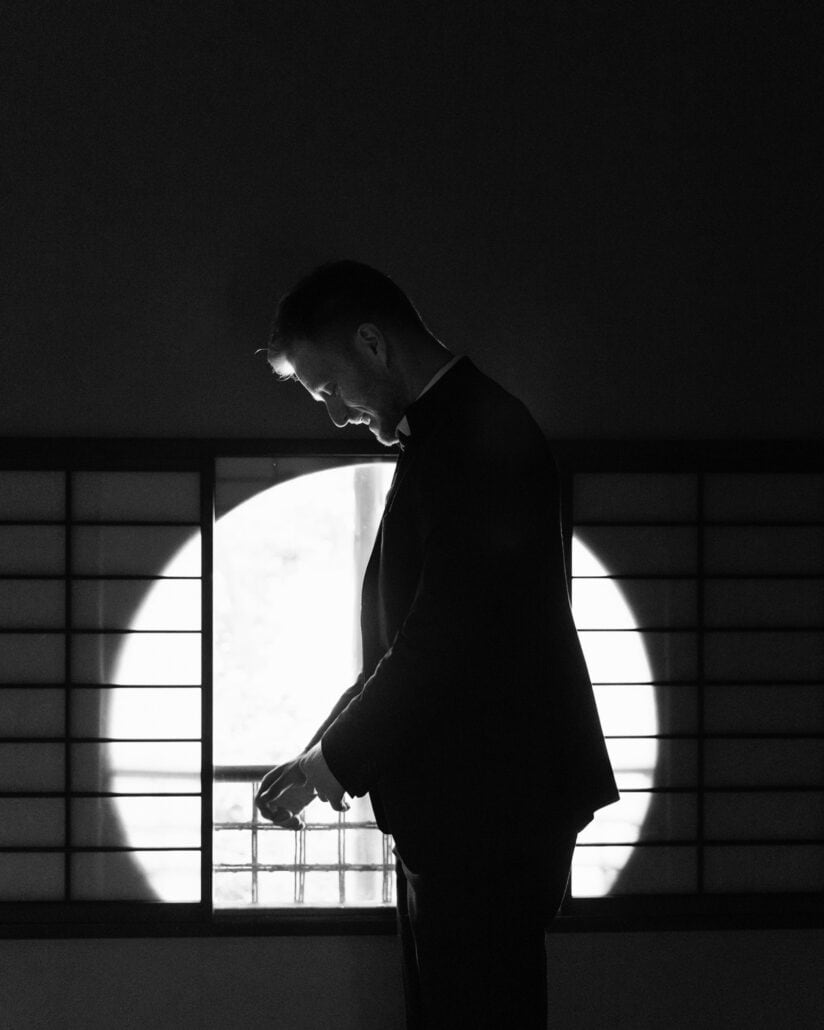
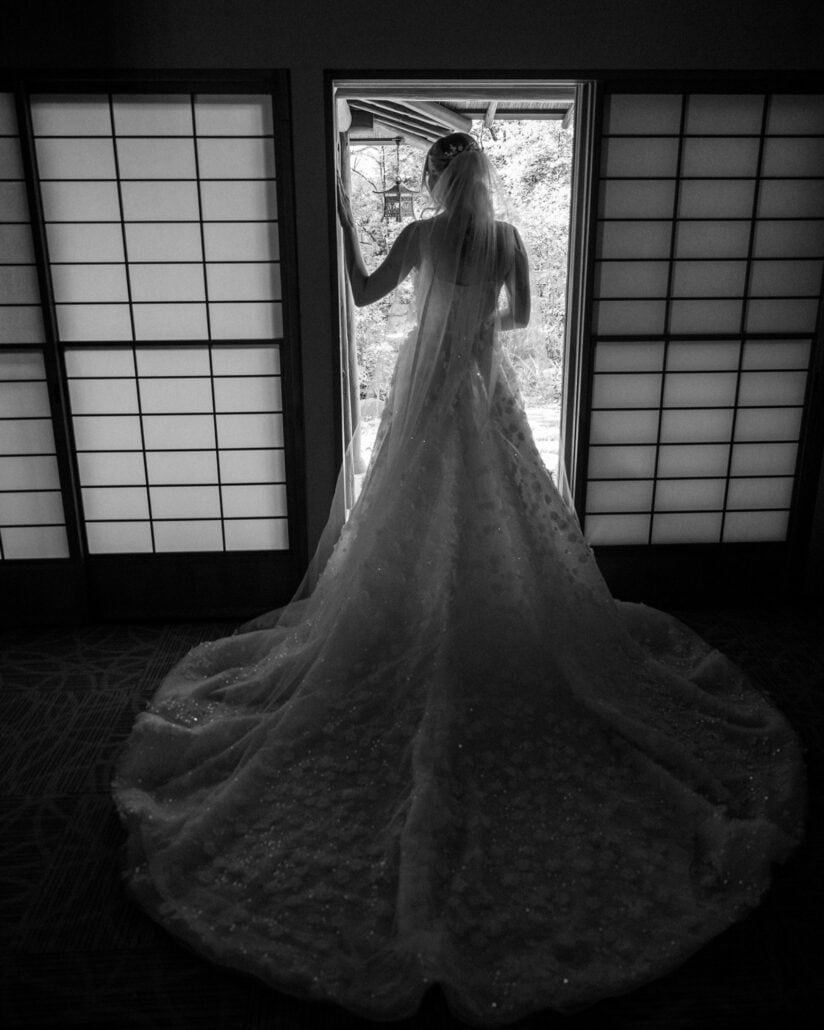
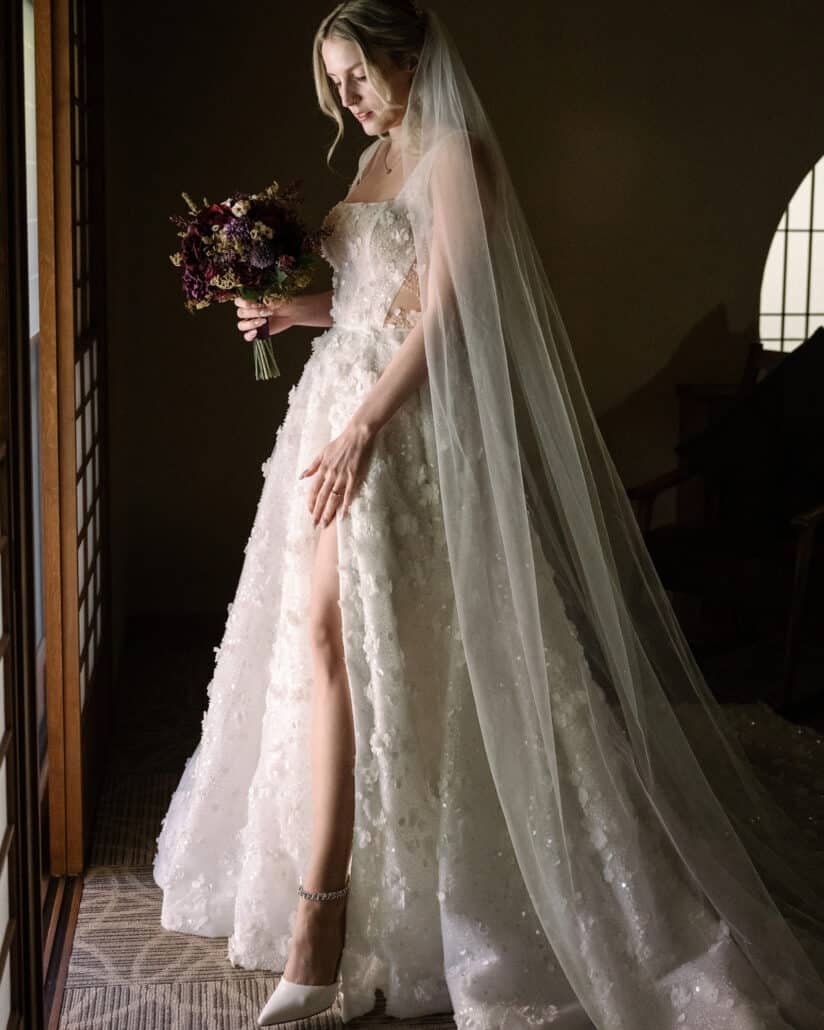
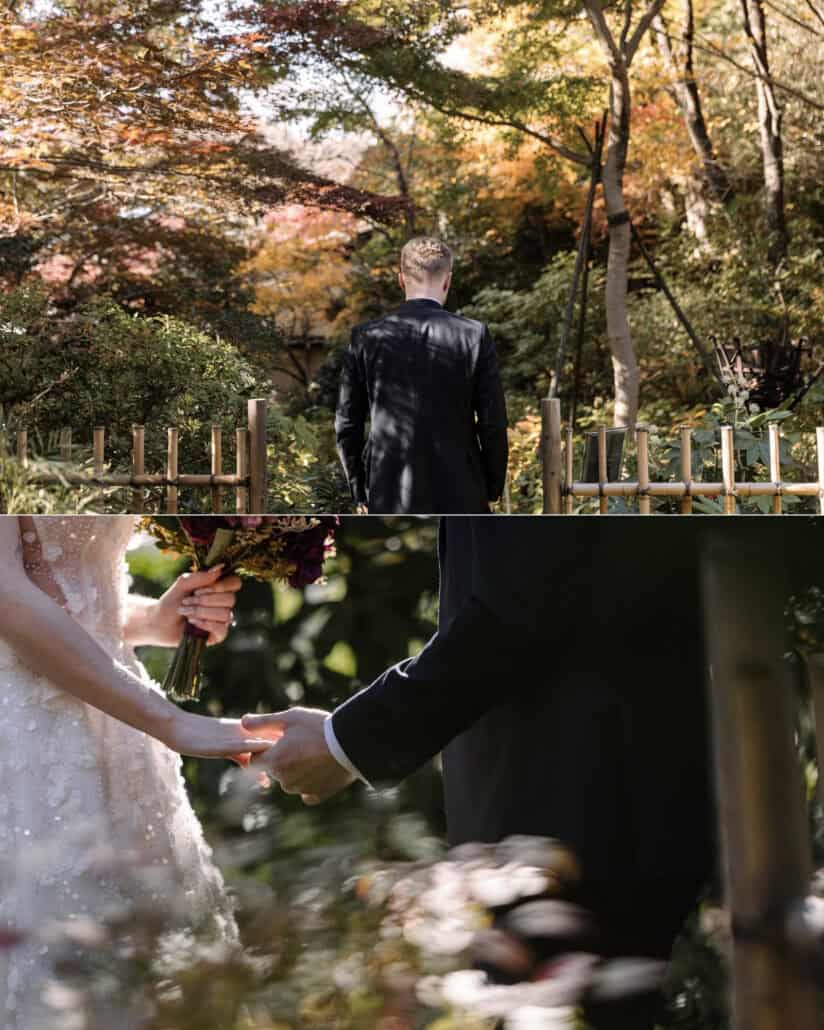
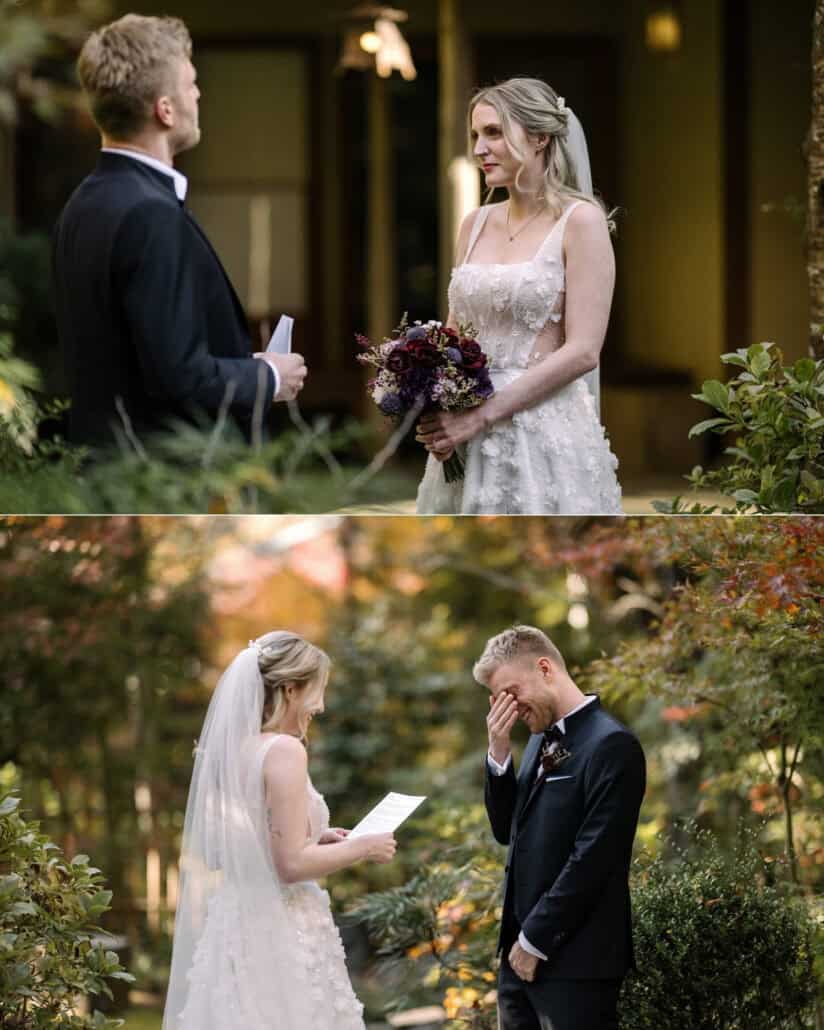
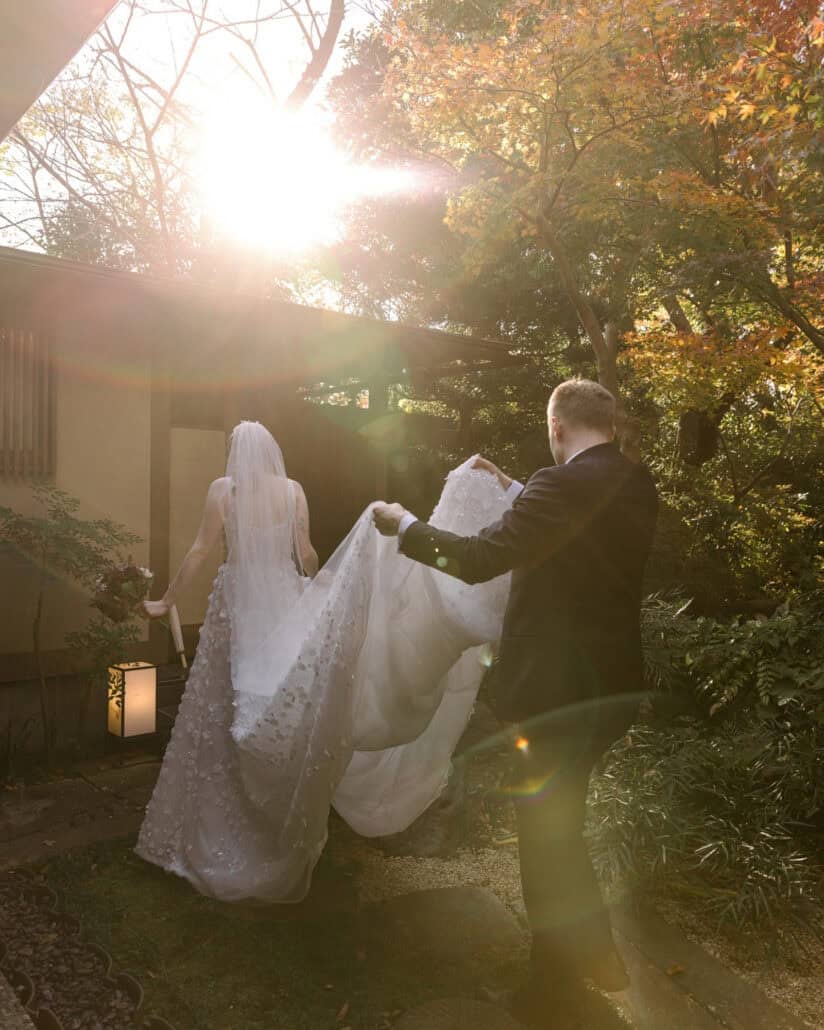
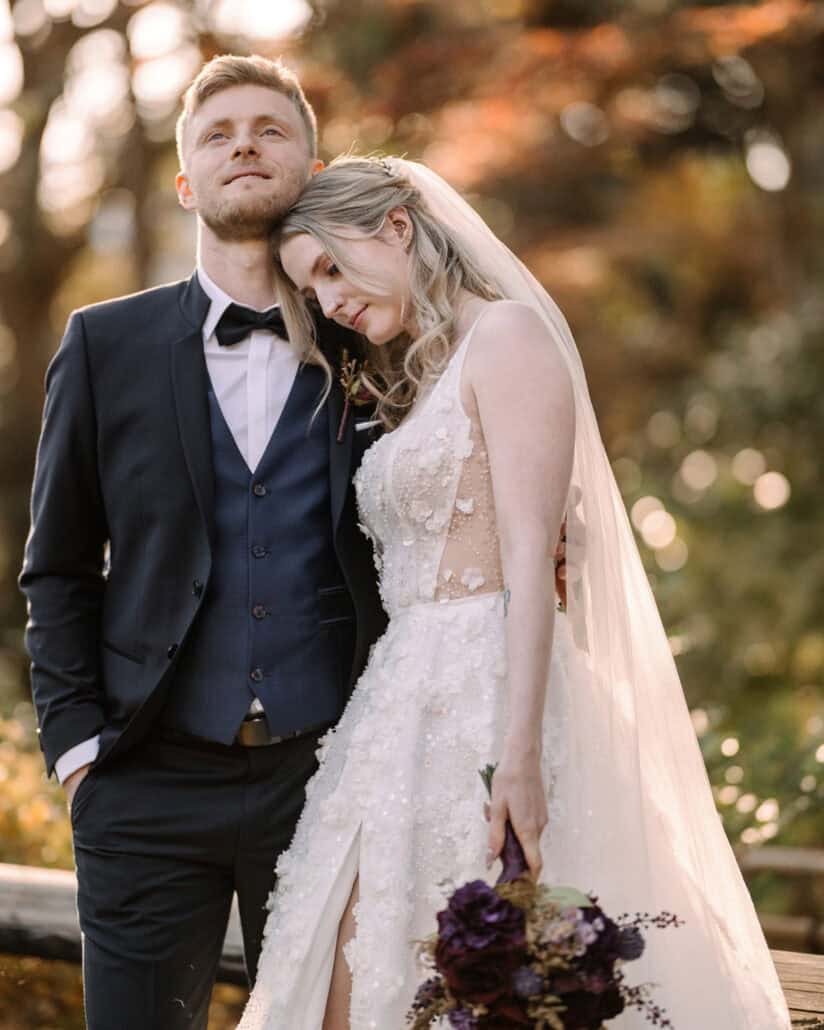
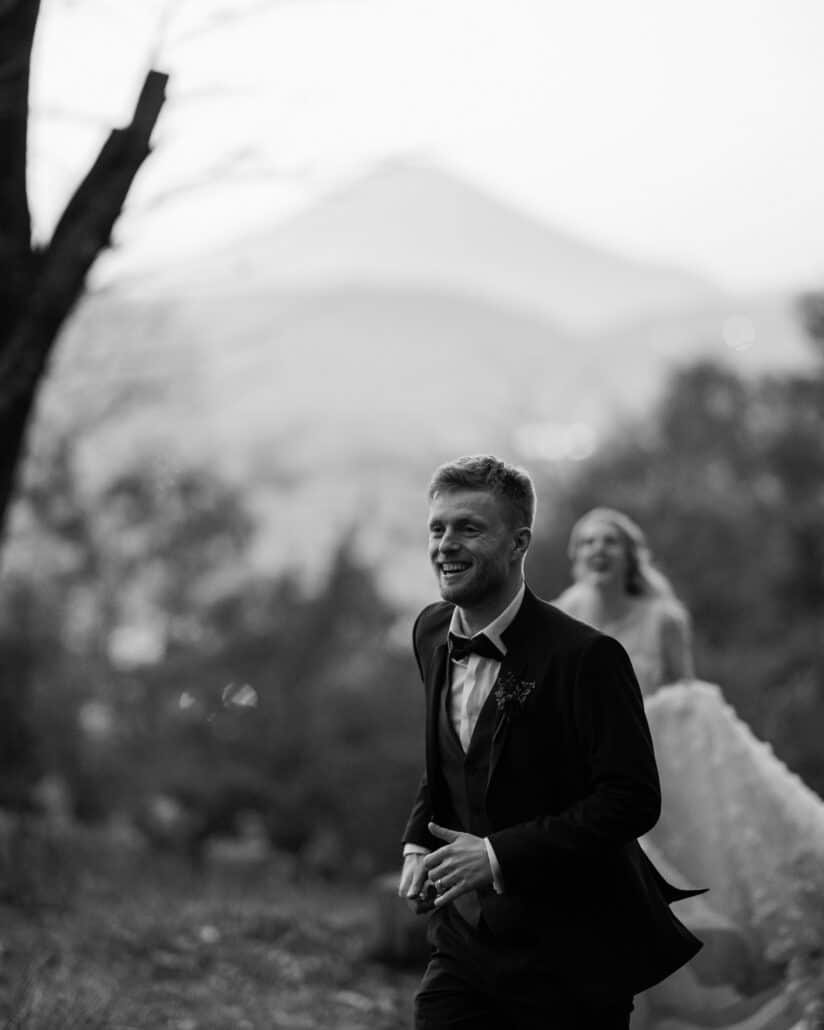
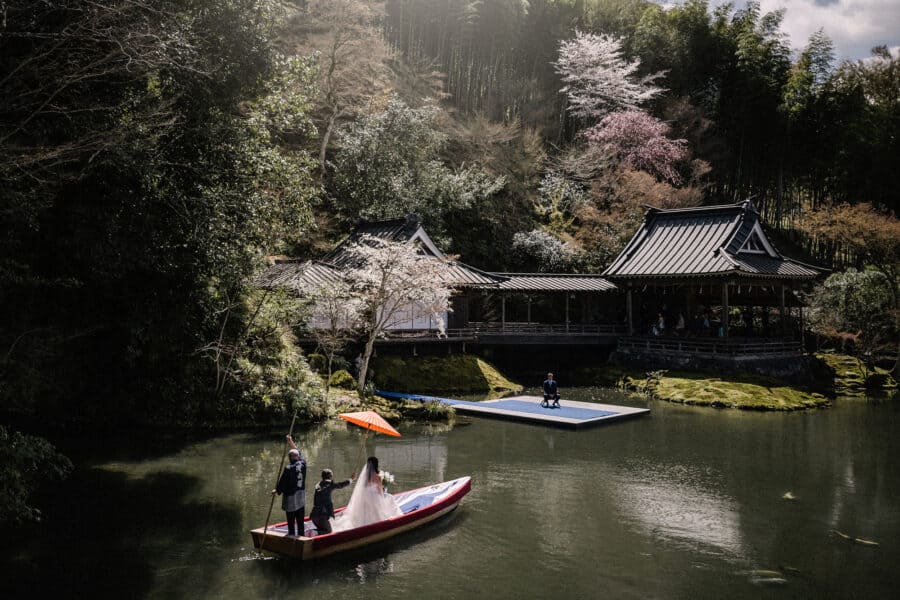
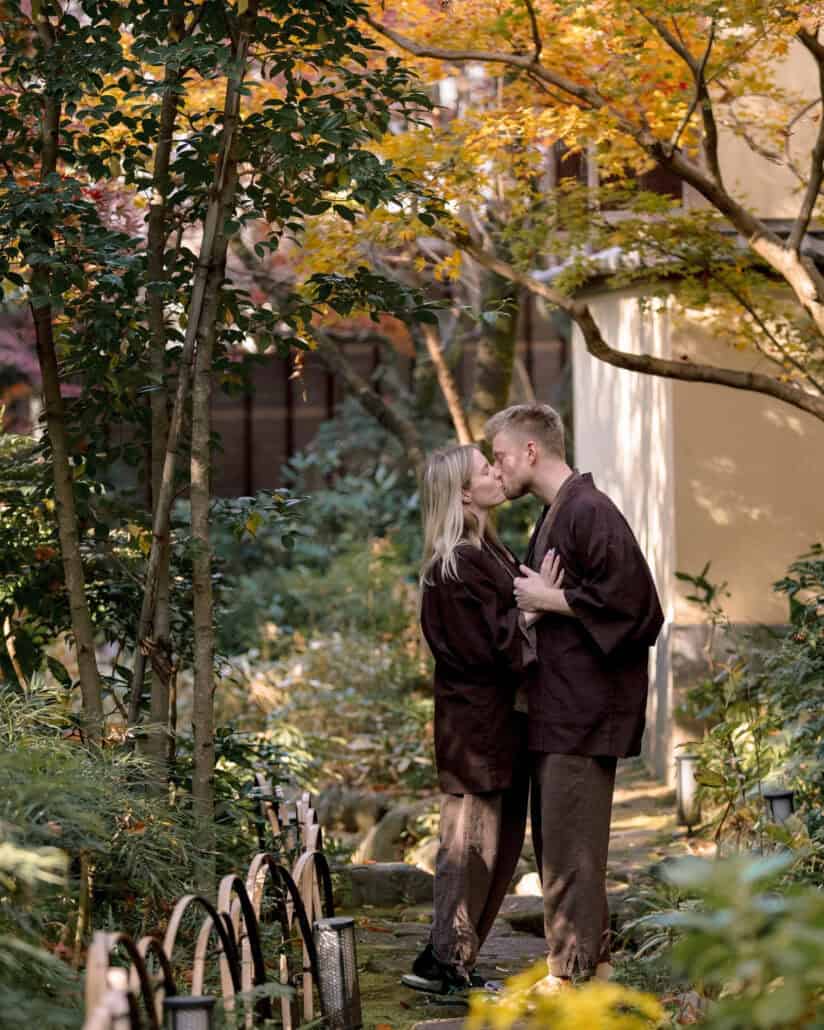
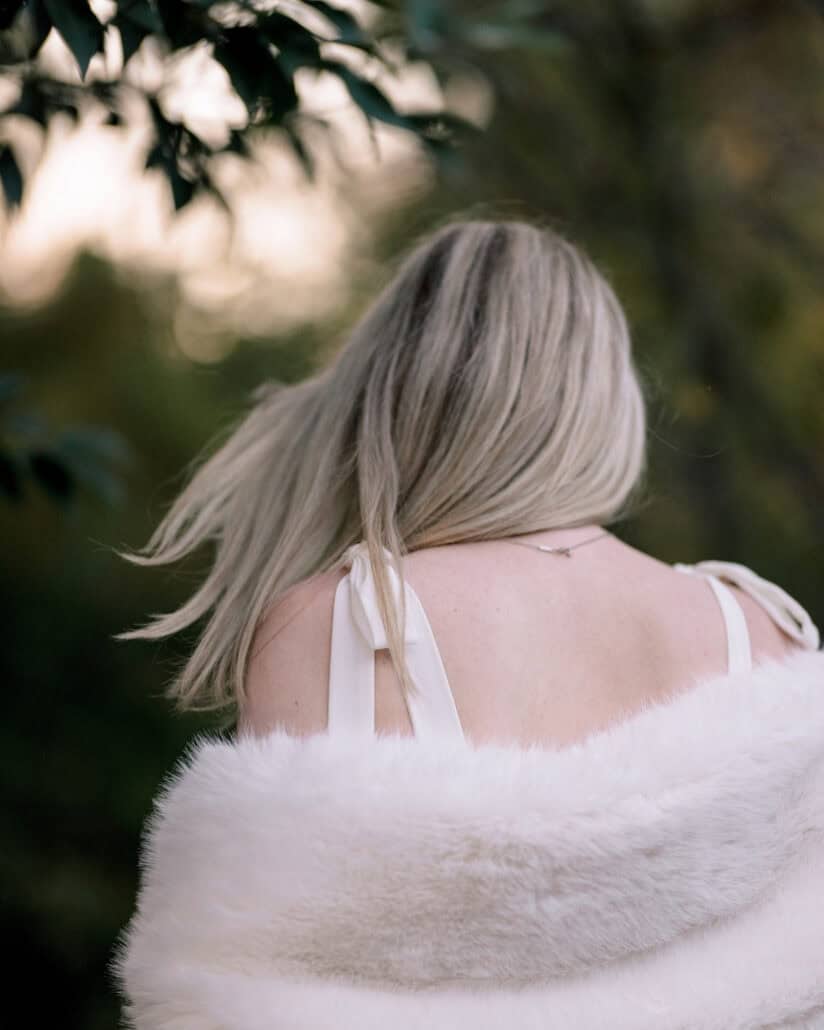
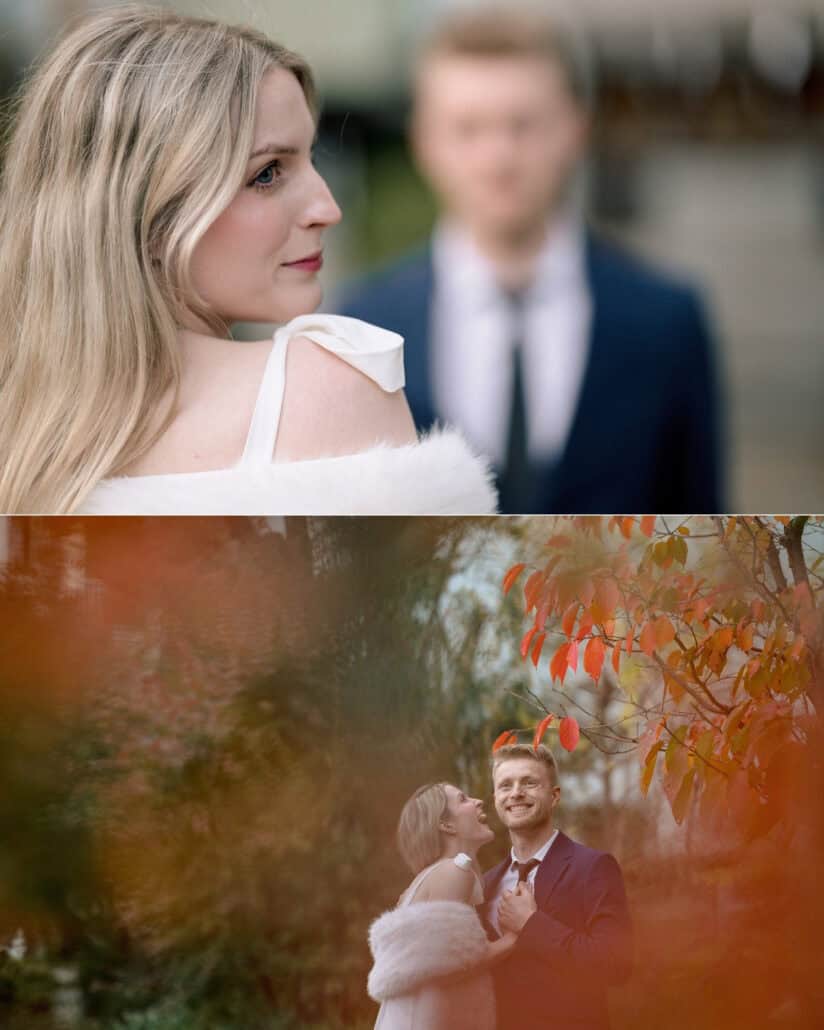
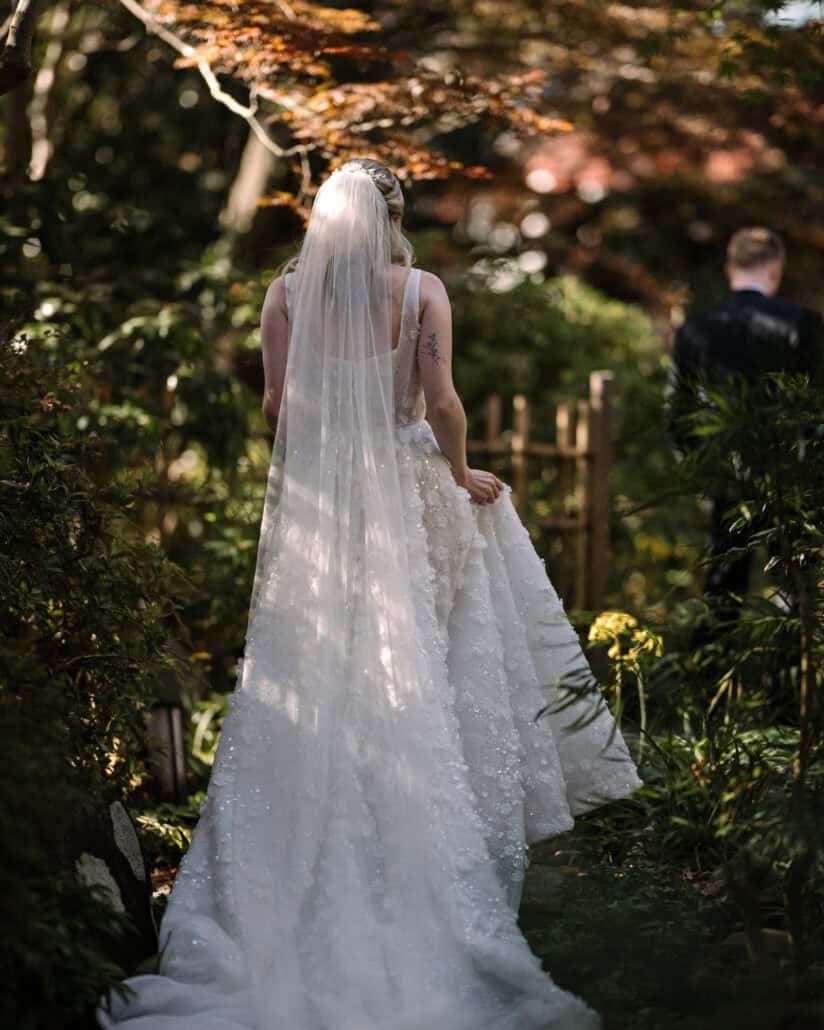
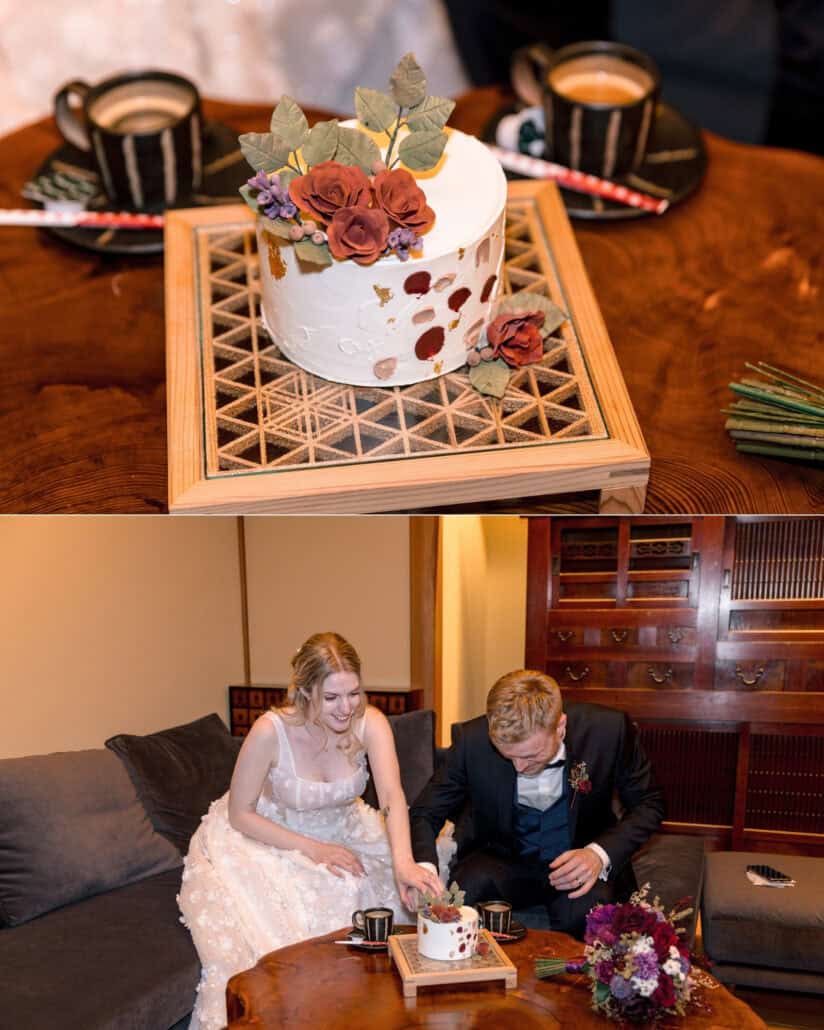
For this elopement at a ryokan, the ceremony happened in the garden of their private villa. Just the two of them. They wore Western wedding clothes: a wedding dress and suit against all that autumn colour and traditional architecture. Her processional was “Merry-Go-Round of Life” from Howl’s Moving Castle.
Then came their vows. There were tears. Quite a lot of them. But they got the words out.
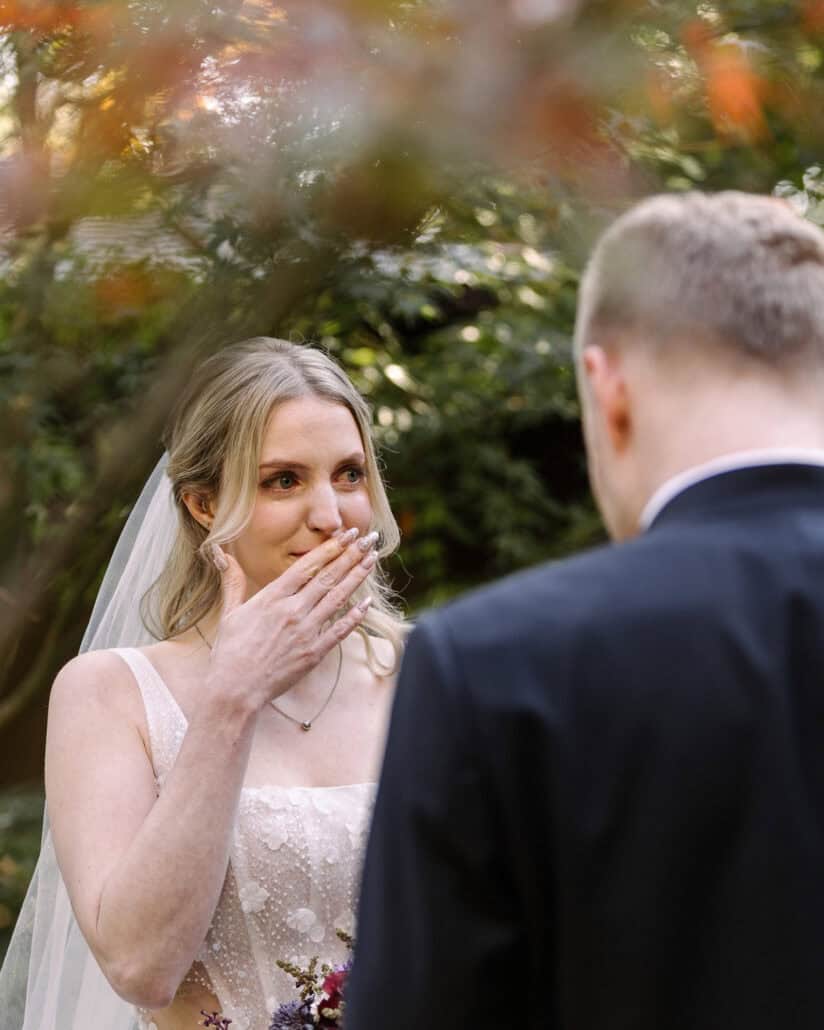
That matters more than saying the vows were emotional. We watched two people stand in a garden they had crossed the world to reach, saying words they had written themselves, stopping when they needed to and carrying on.
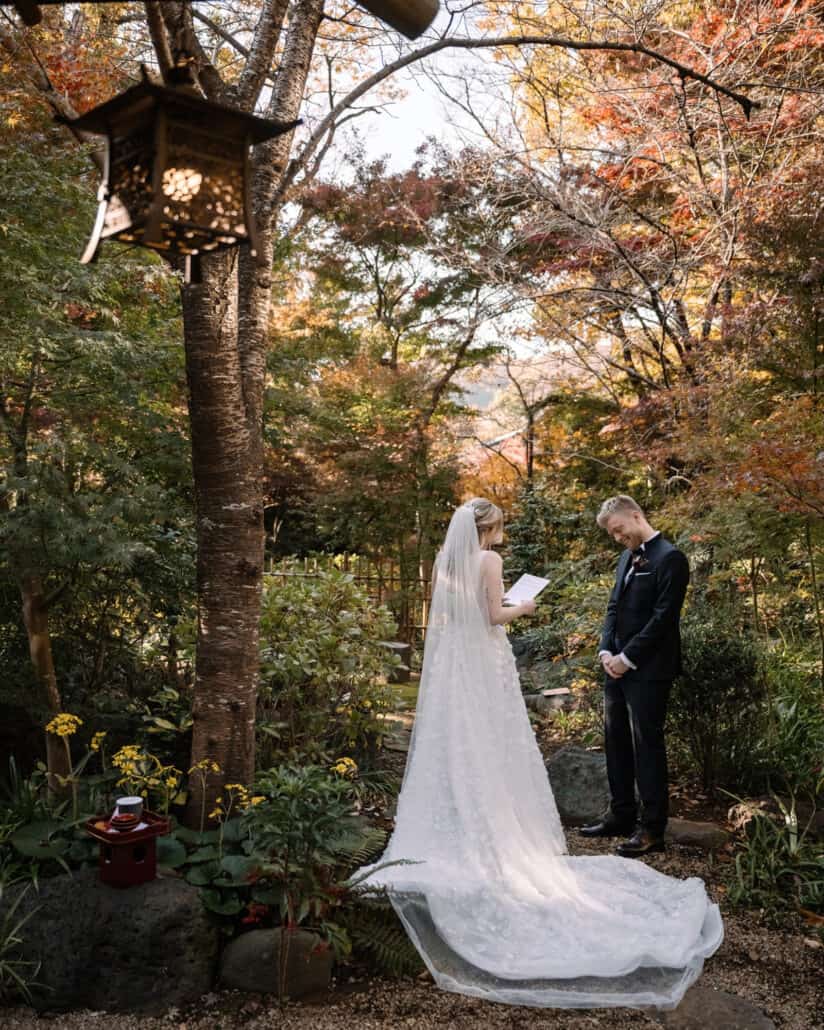
They also included san-san-kudo, the three-by-three sake ritual, in the ceremony. It belonged naturally beside everything else they had chosen. This wasn’t an attempt to stage a version of a Japanese wedding. It was their ceremony, in Japan, with a ritual they wanted to honour as part of it. That distinction matters to us.
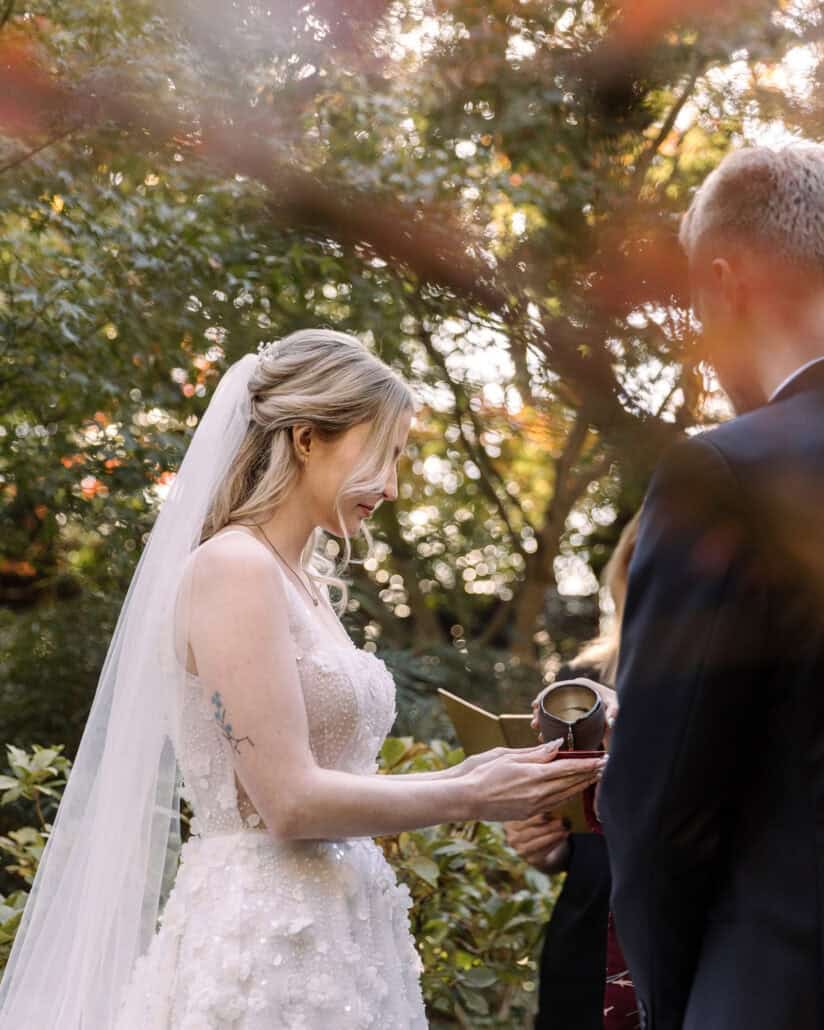
Autumn Leaves in a Japanese Garden
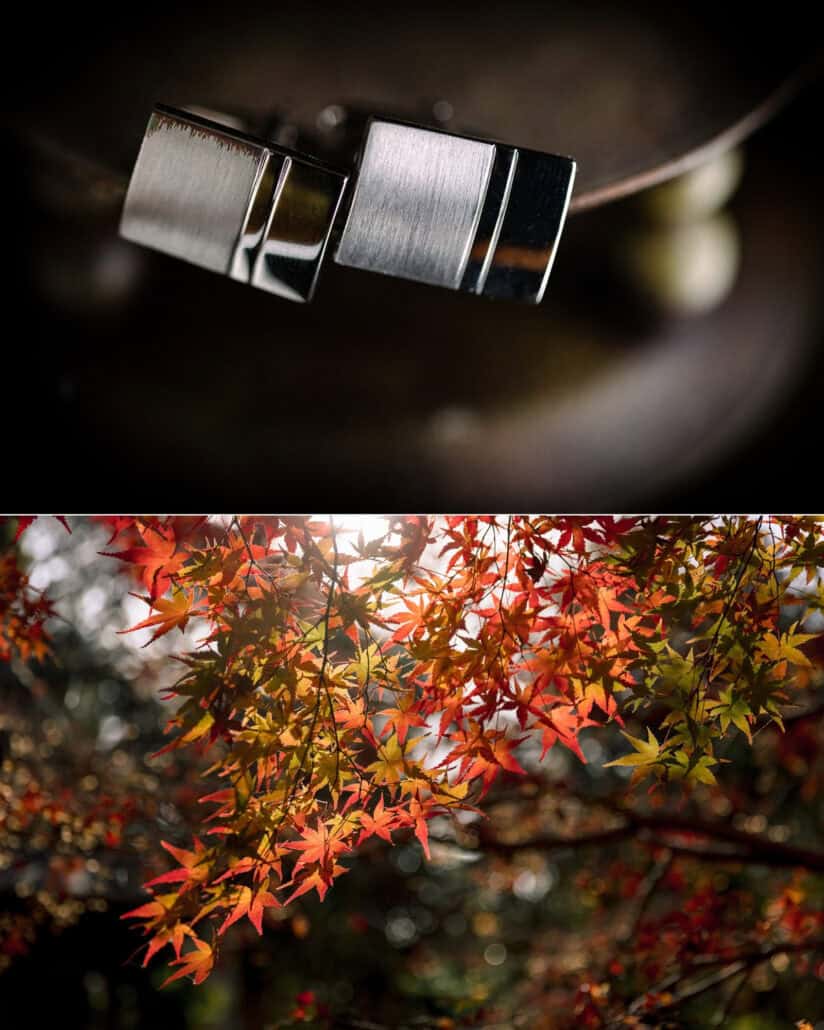
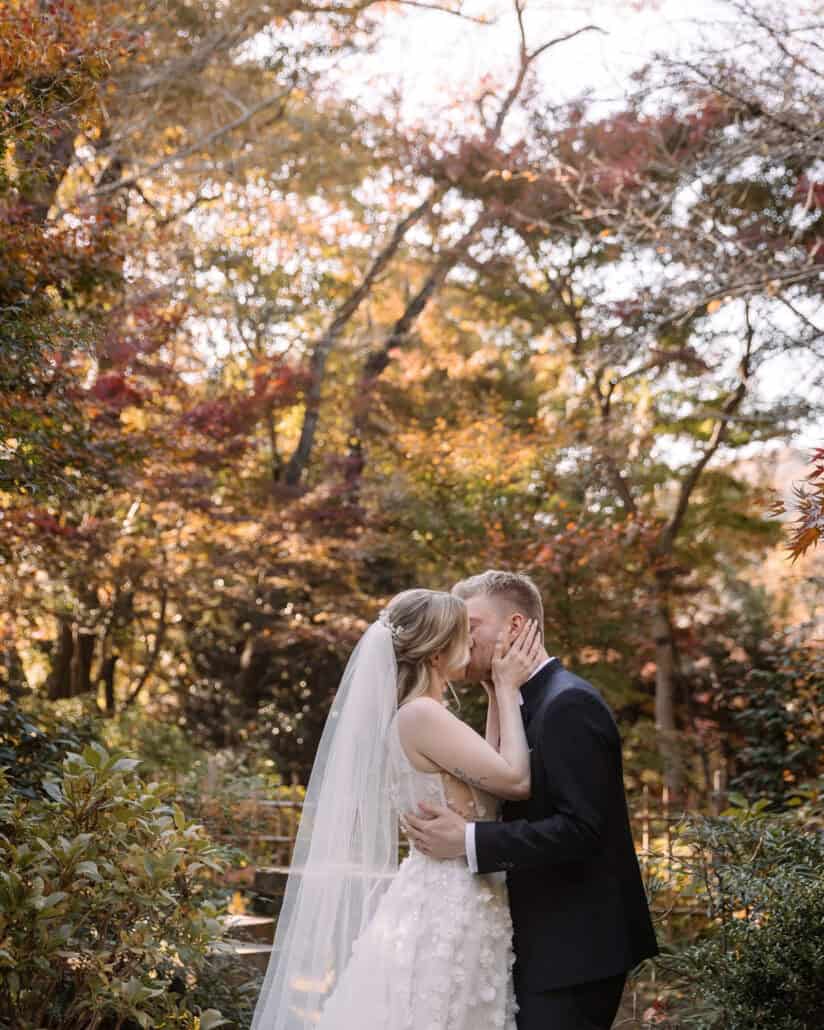
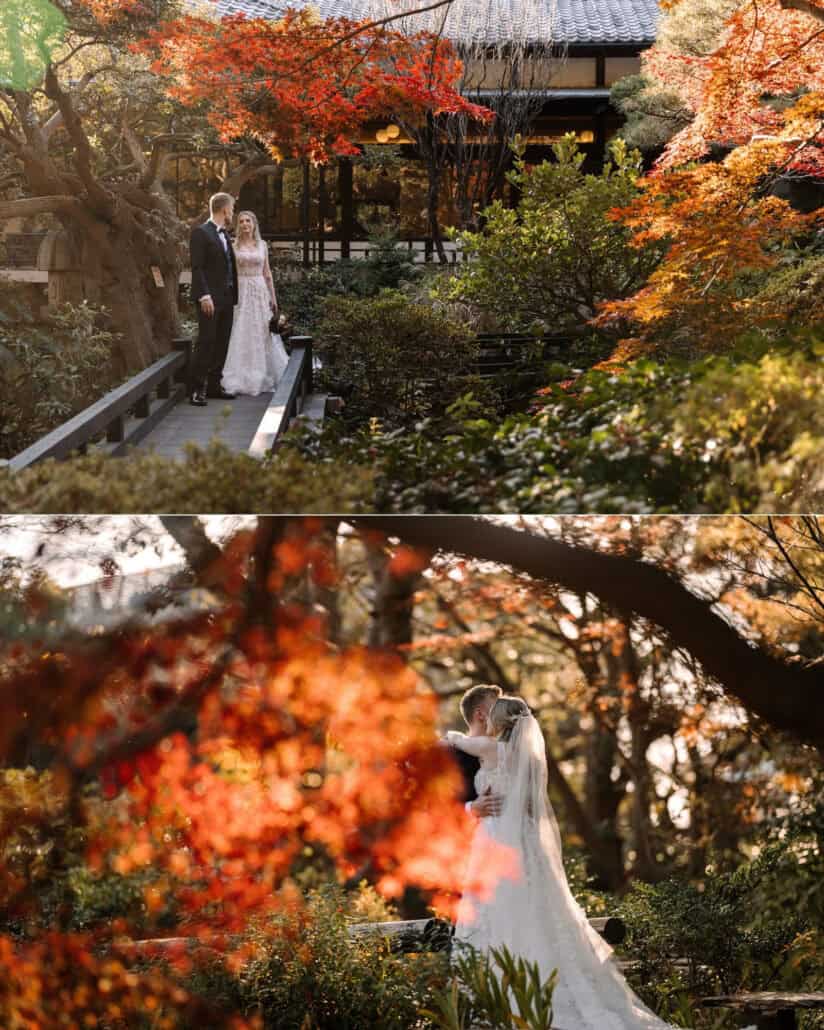
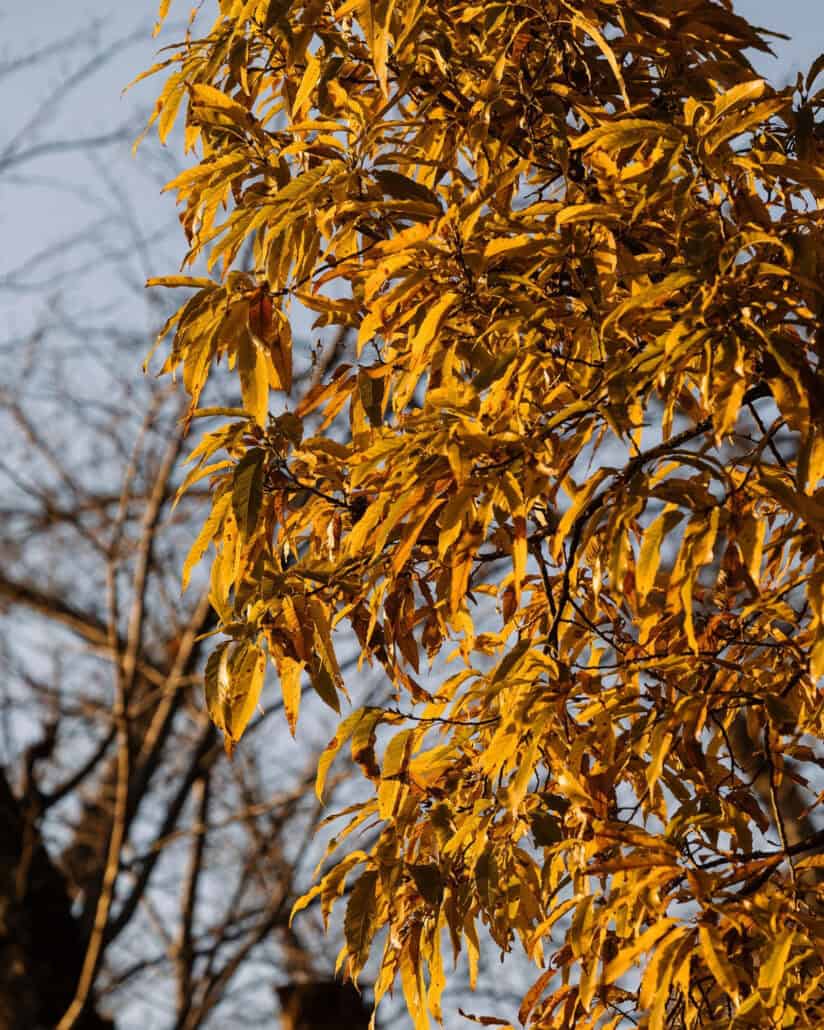
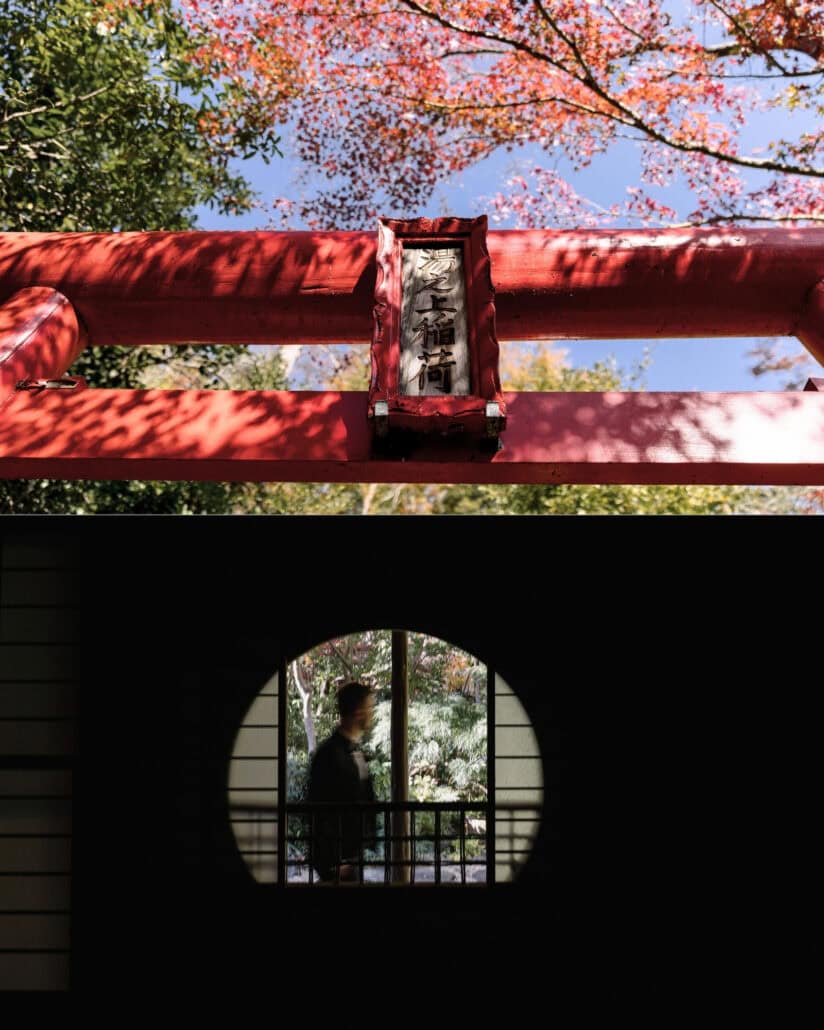
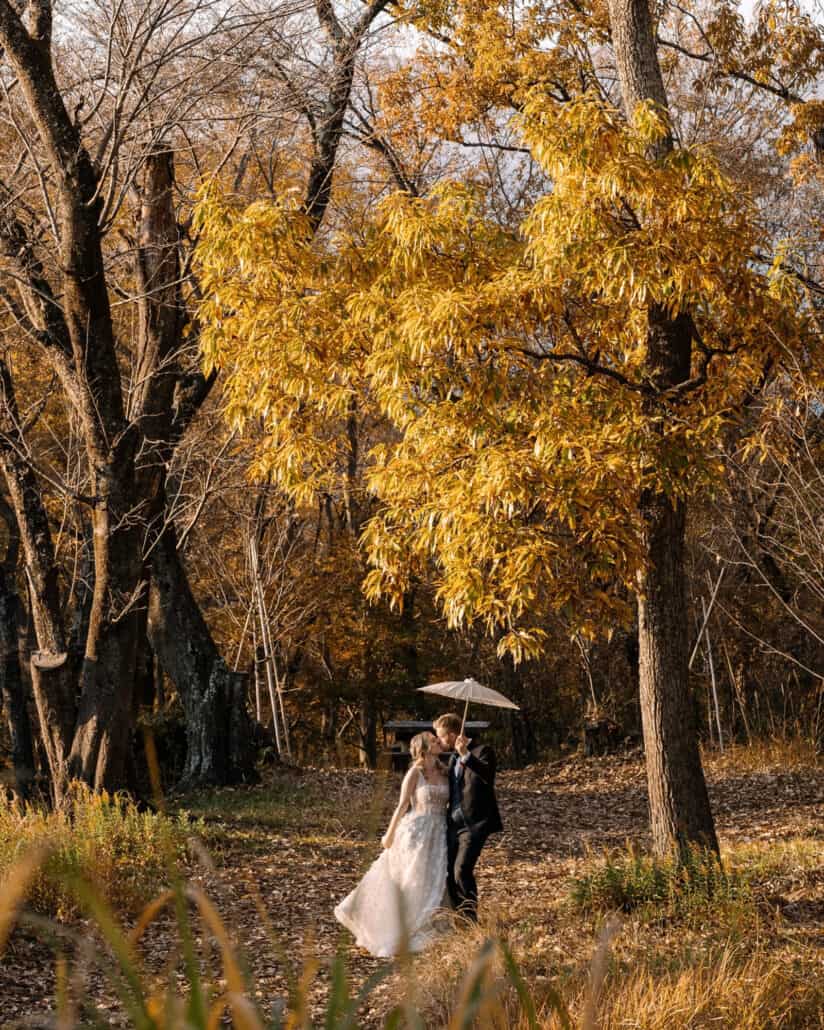
Then there was Jinya in late November. Japanese gardens reward looking closely at any time of year. Autumn changes the conversation. The maples were strong across the property. Red came through the greens and browns of the garden, across old roofs and paths, beside water and stone.
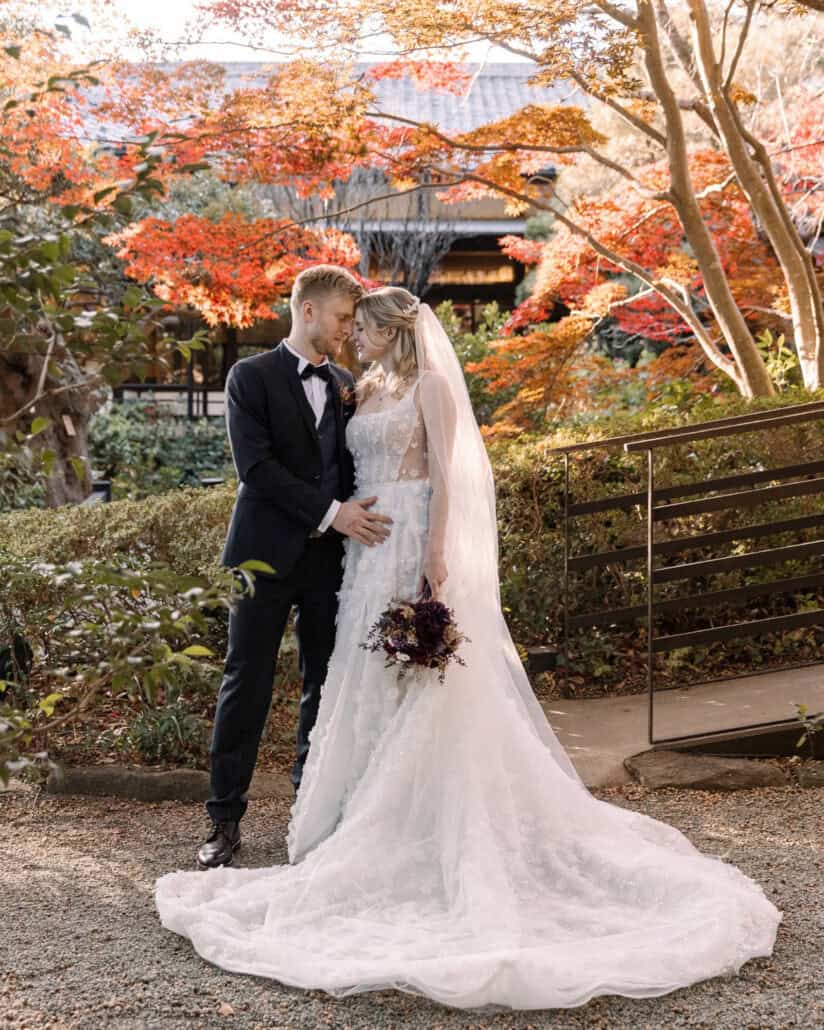
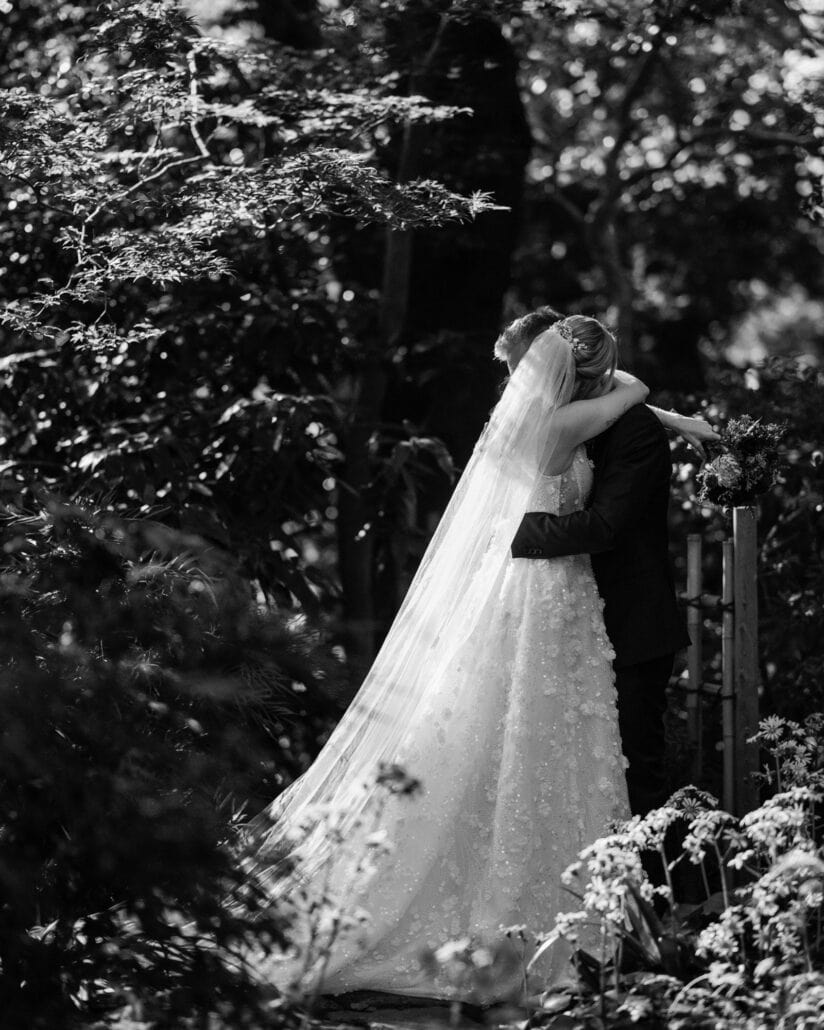
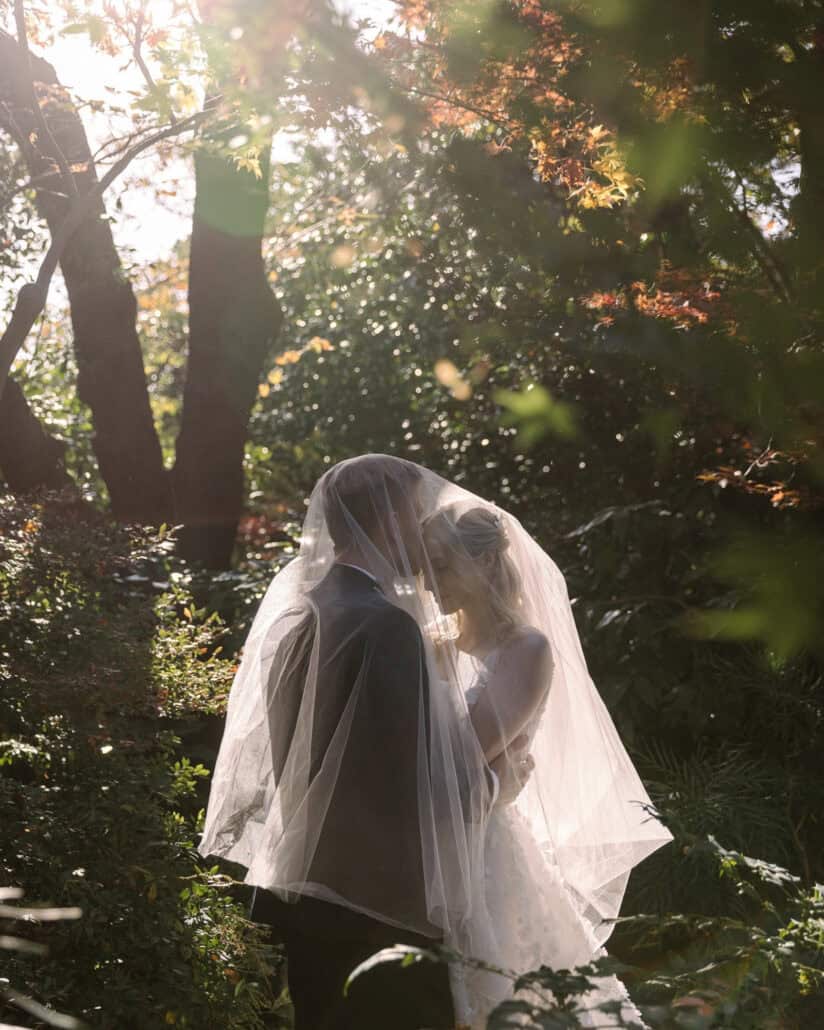
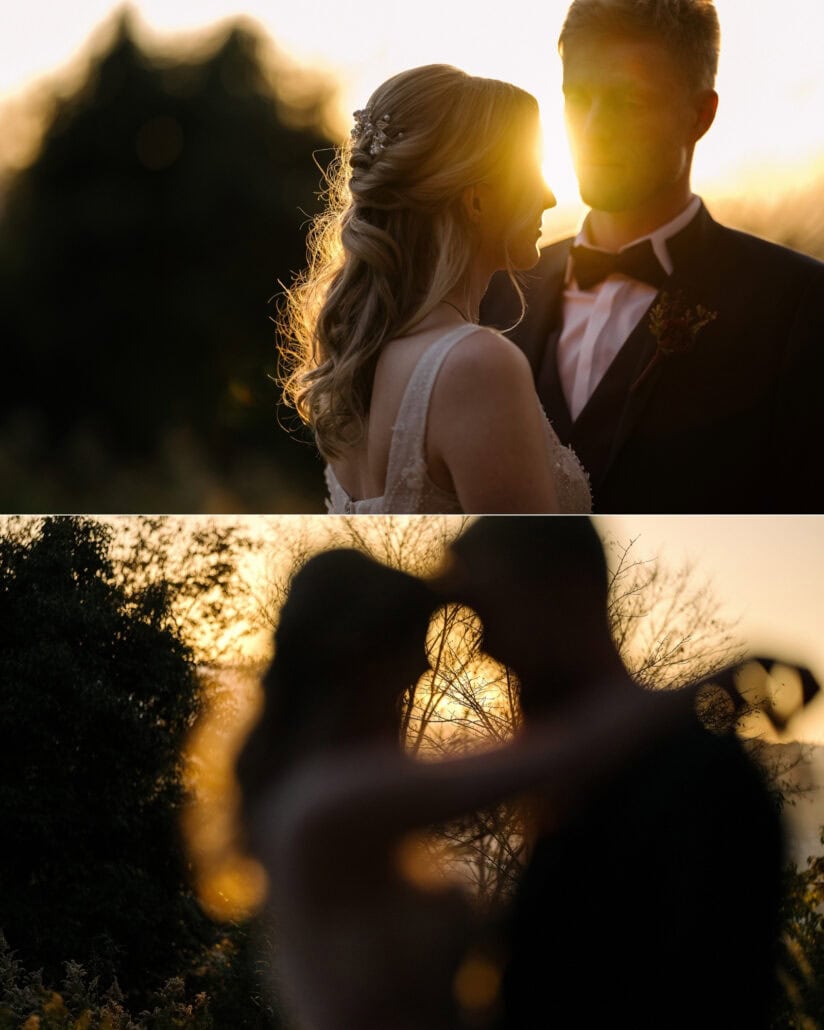
And then there was the light. When we think back to this couple, that’s one of the first things we remember. Sunlight coming through the trees and breaking across them in pieces.
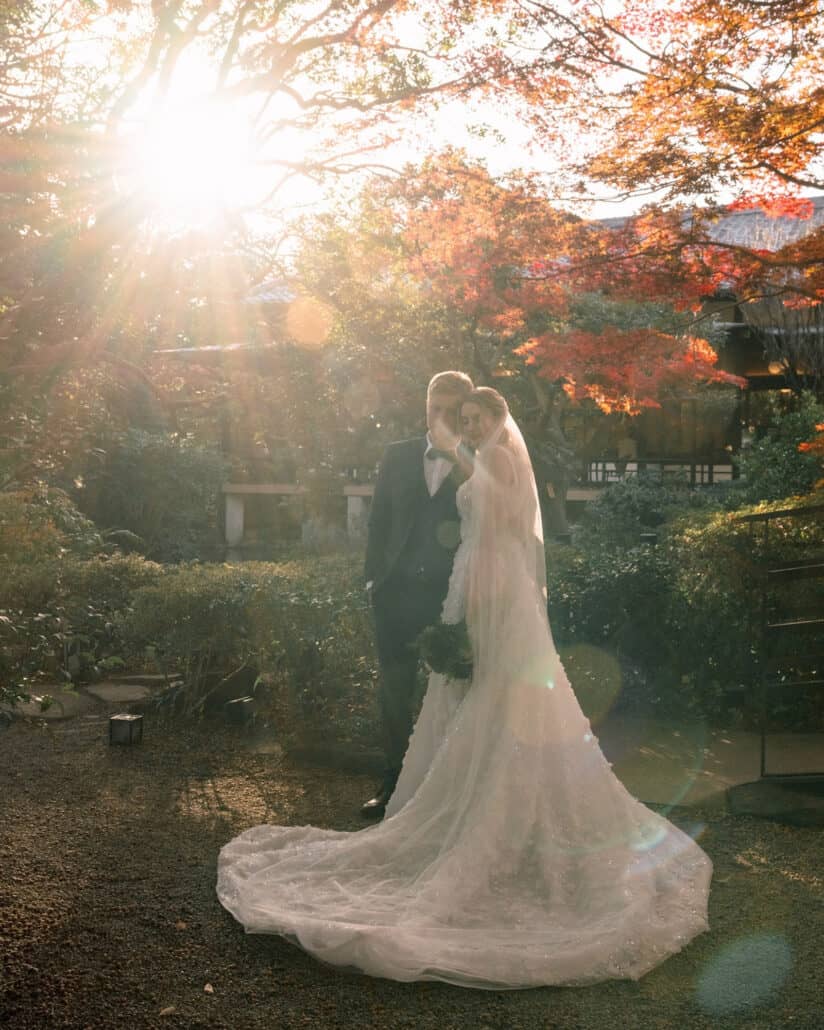
There’s a Japanese word for it: komorebi, the light that filters through leaves. We’ve written about komorebi before because it’s one of those ideas that sounds almost overly poetic until you’re actually standing in it. Then it’s simply descriptive.
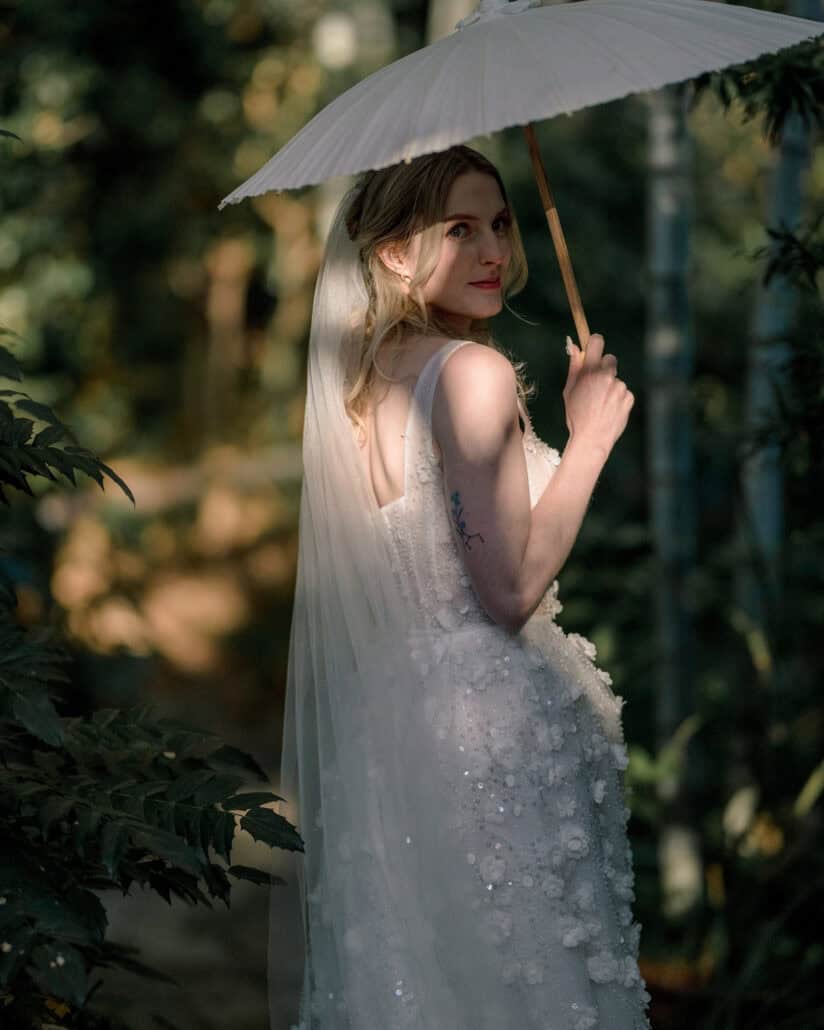
The leaves move. The light moves with them. A face is in shadow and then suddenly isn’t. Photography becomes partly about waiting for the trees to decide what they’re doing.
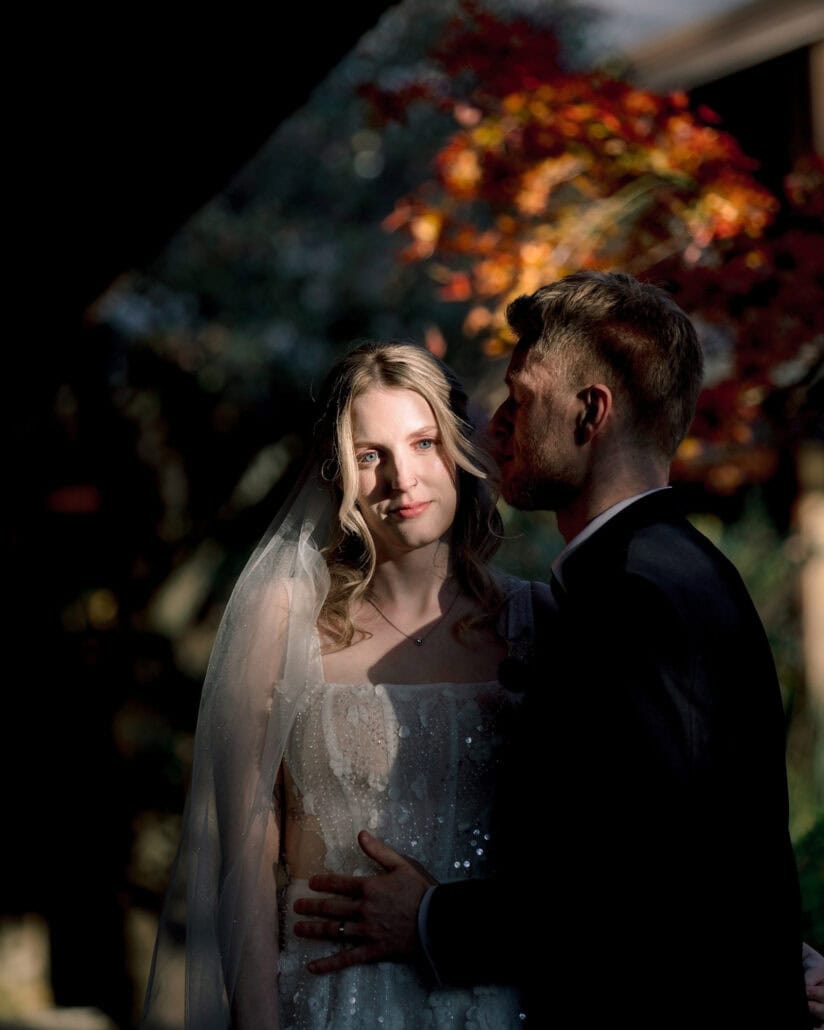
On this day, they were generous. There were moments when the autumn colour was behind them and that broken sunlight found them from the front, and everything seemed to belong to the same season.
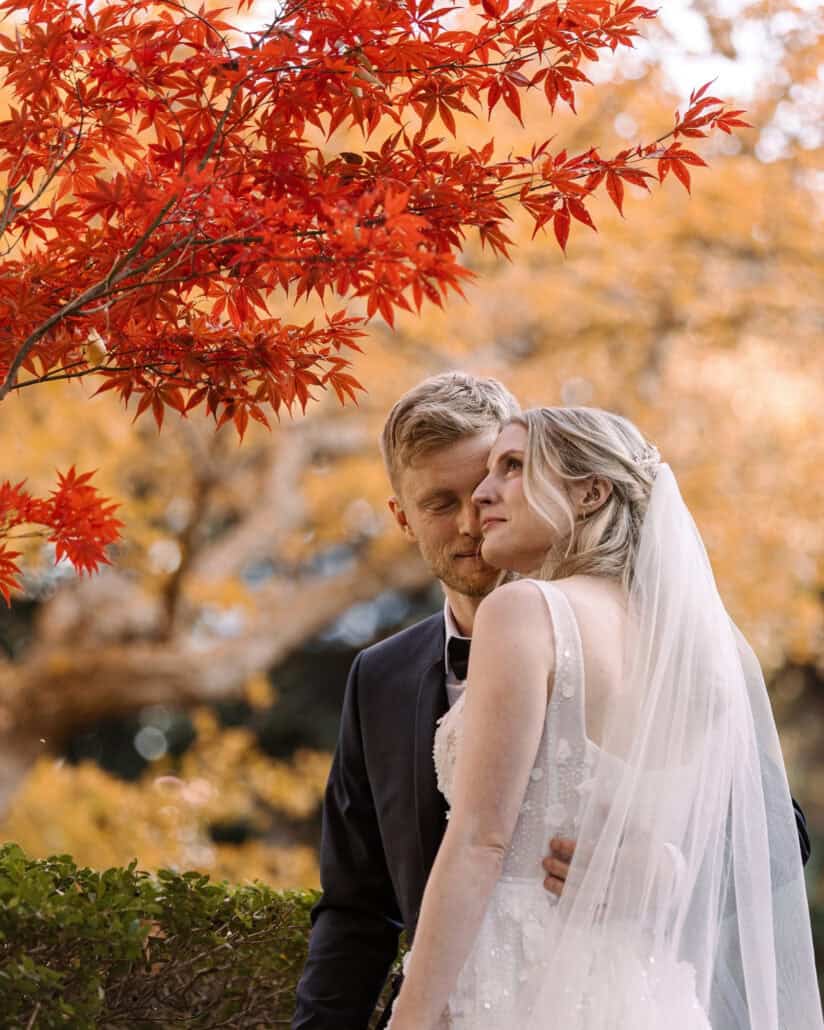
You couldn’t repeat it exactly. That’s why we remember it.
The Freedom of a Day for Two
There’s a particular spaciousness to an elopement when two people have genuinely chosen it because that’s how they want to marry. Nobody is waiting in another room. There isn’t a hundred-person timeline quietly exerting gravity on every decision.
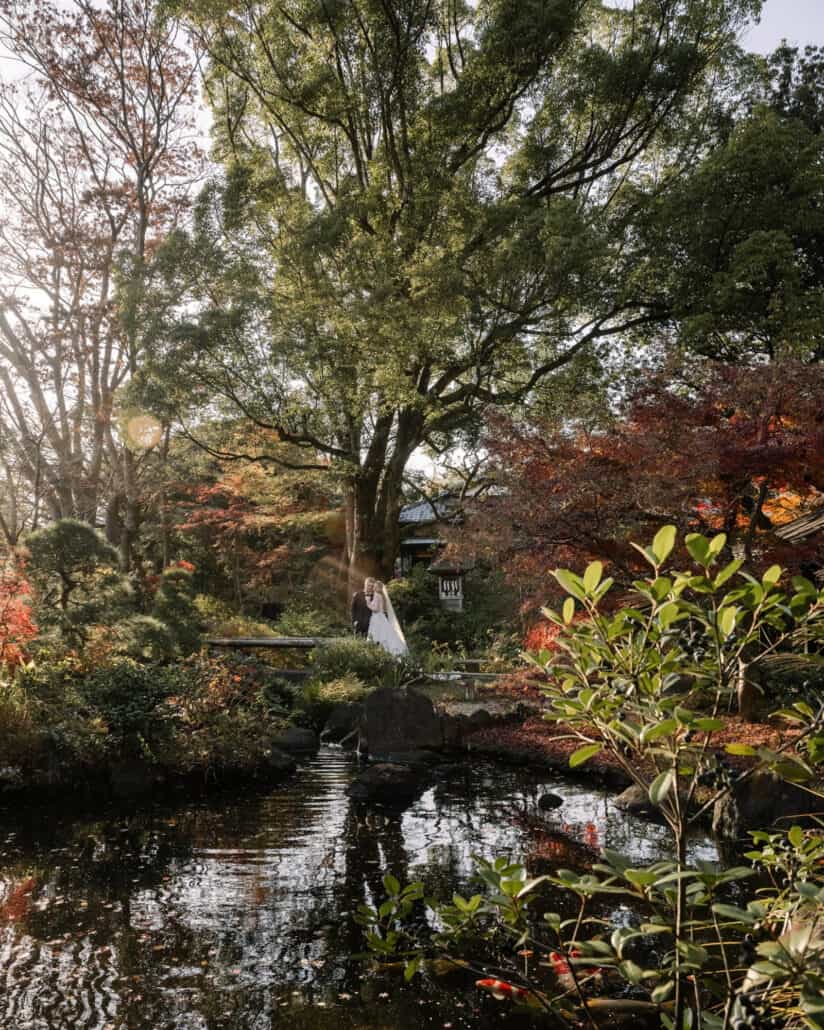
You can stay somewhere longer. Change direction. Let a garden take more time than expected. Go up a mountain because the evening looks promising.
They described themselves as geeky and funny. We’d add adventurous. And full of life. That mattered because this wasn’t a solemn procession through a collection of Japanese locations. They enjoyed it.
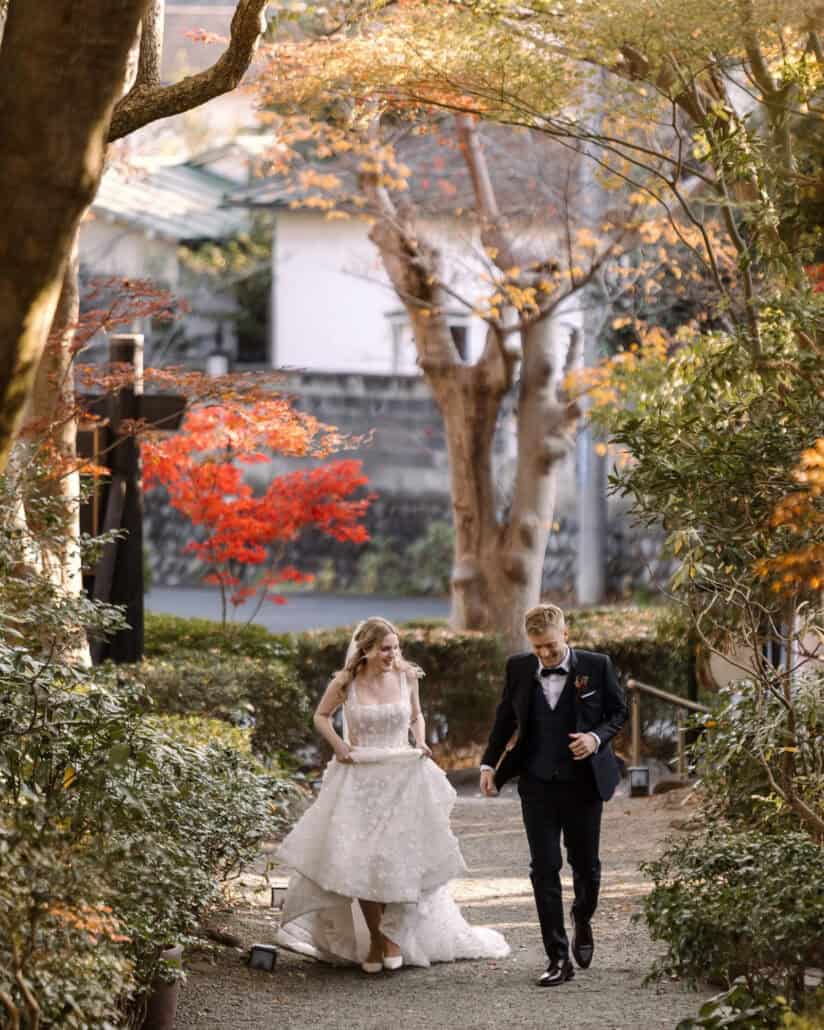
The fashion-y Tokyo photographs belonged to the same two people who cried through their vows in a private garden. The ceremony belonged to the same people who wanted good food and cake and anime and adventure. People contain multitudes. Weddings should be allowed to as well.
Mt Fuji at Sunset
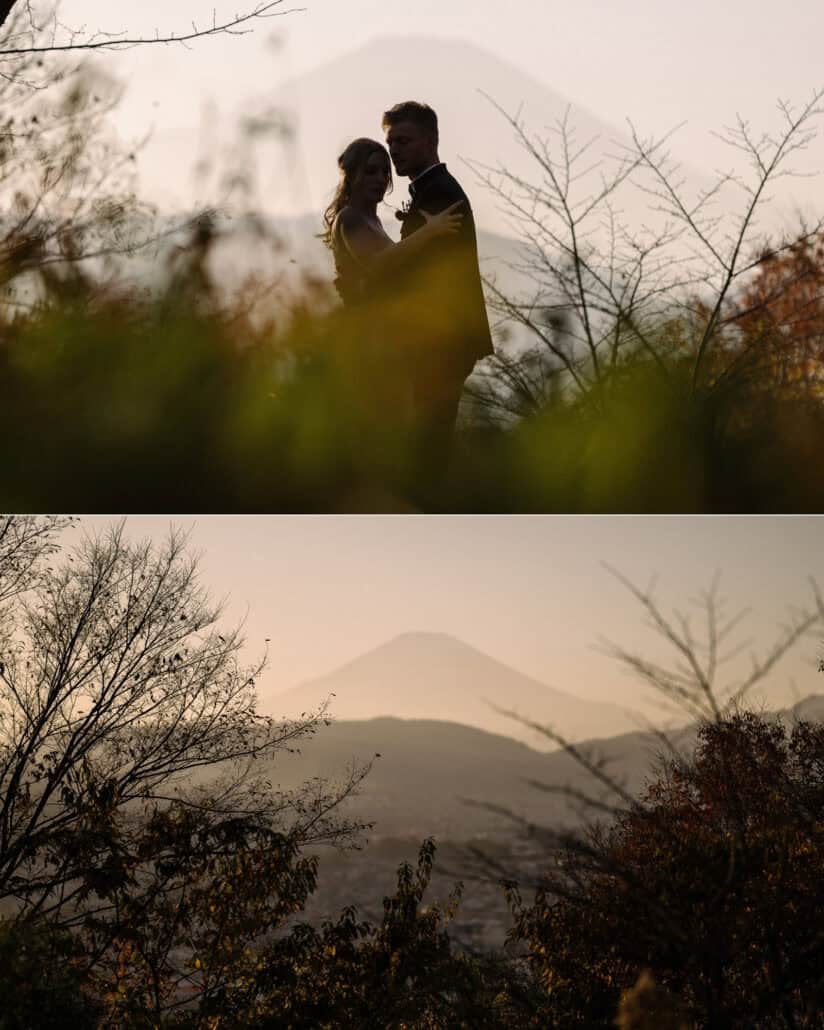
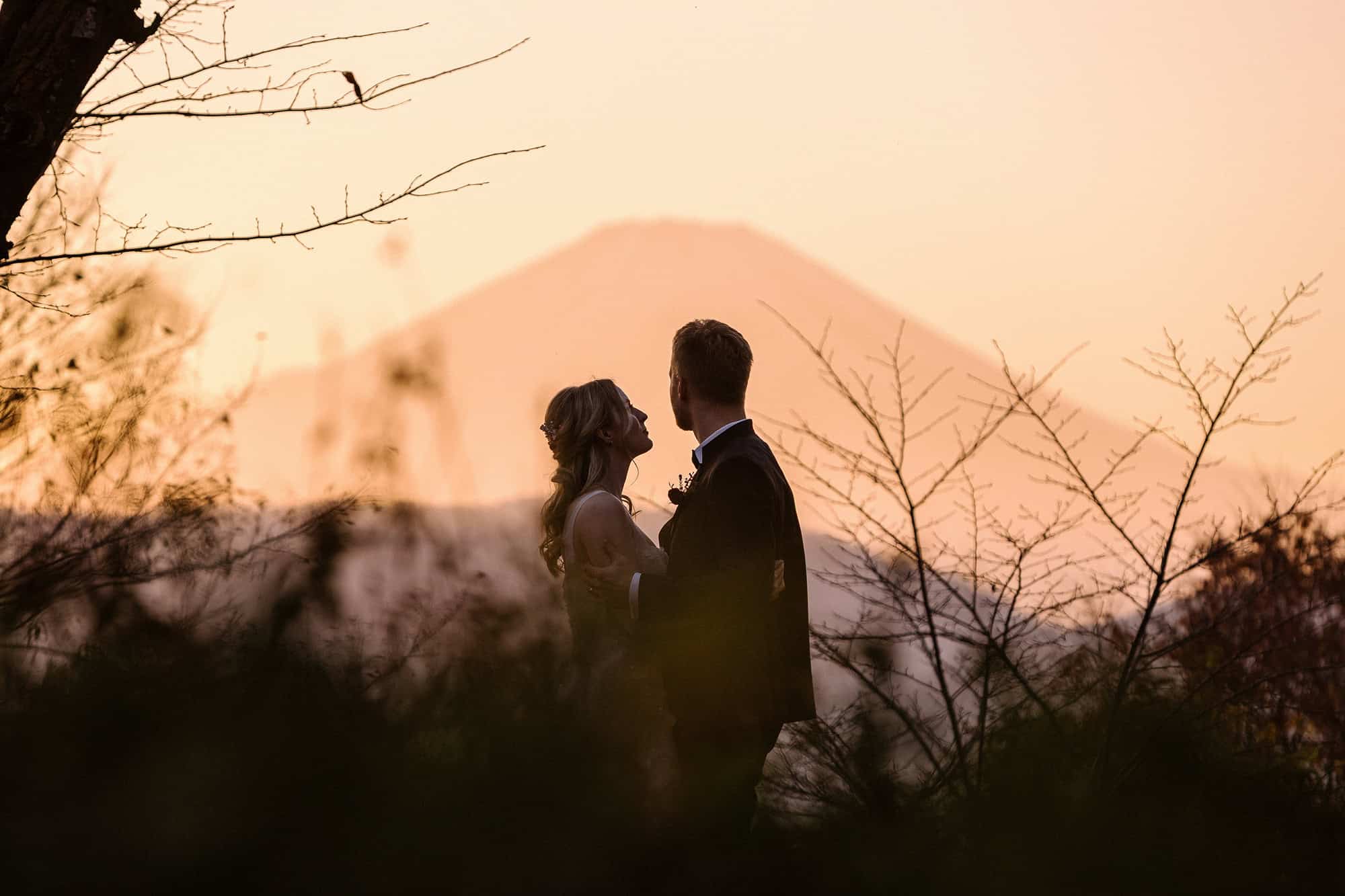
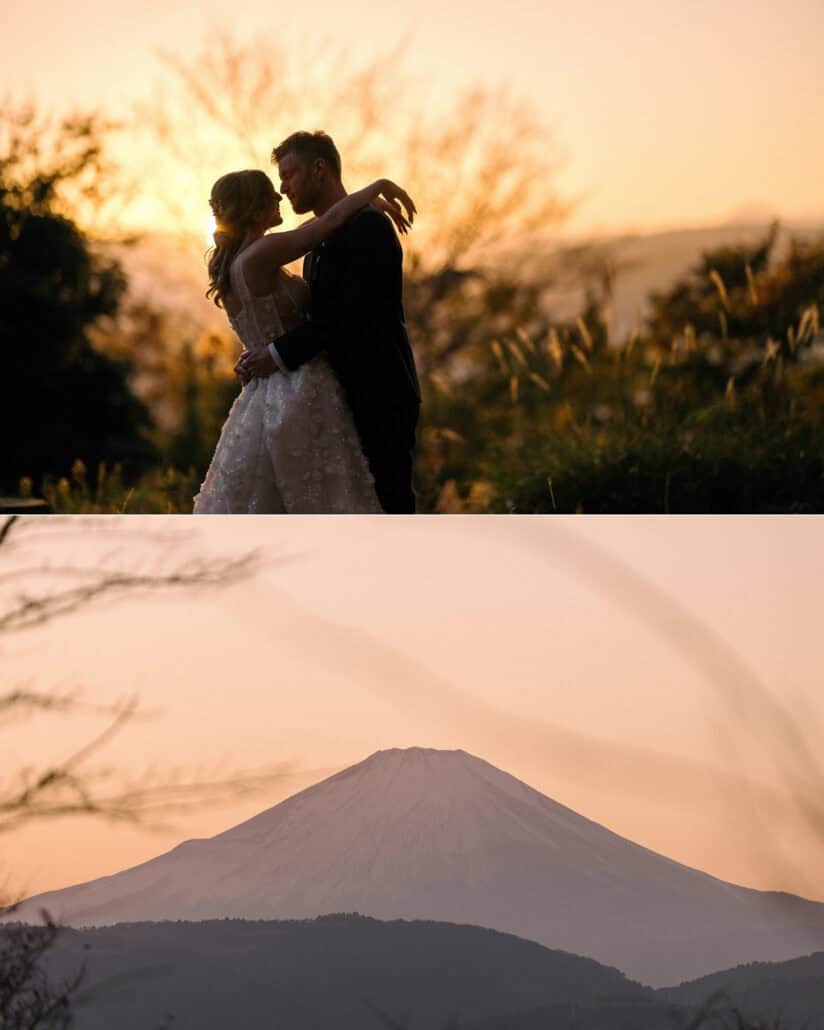
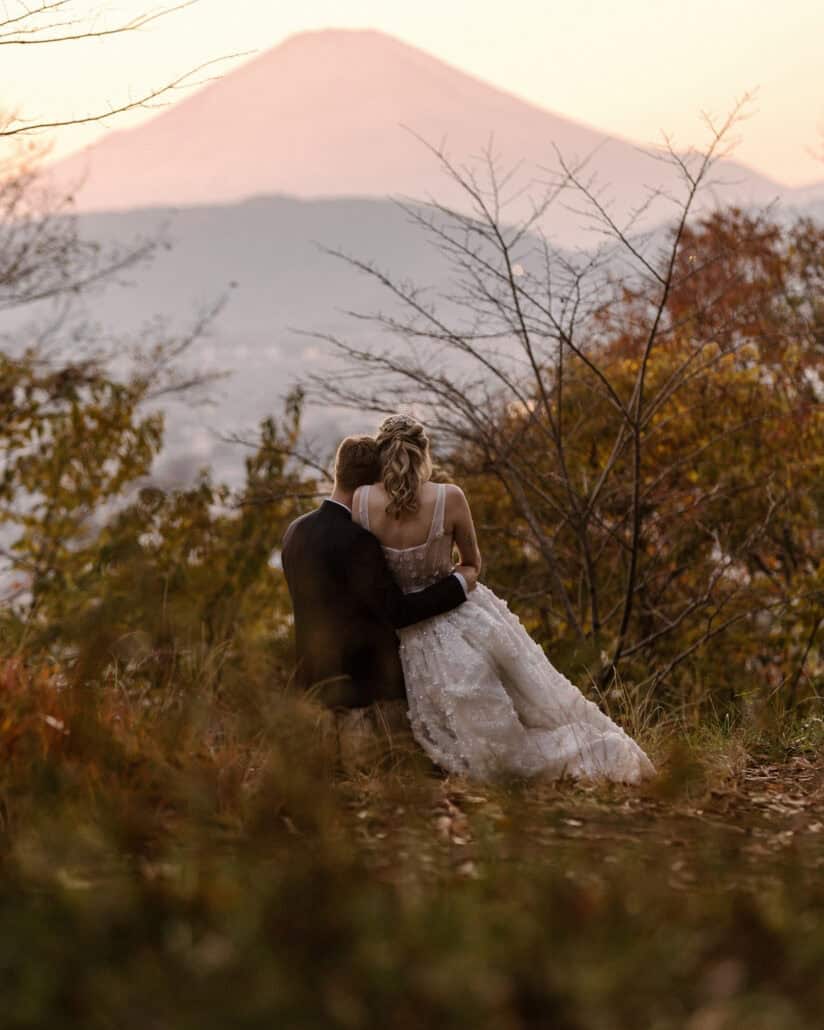
After Jinya, we went higher. The sun was going down. And Fuji was out. Clearly.
There’s no point pretending we ever become blasé about that. We work around Mt Fuji regularly. We know what she looks like. We know roughly where she’ll sit in the landscape. It makes absolutely no difference.
When the air clears and the mountain appears at the end of a wedding day, everybody still stops. You should. There are things worth continuing to be impressed by.
For these two, after Shinjuku, after the ryokan, after their vows and the autumn garden, Fuji at sunset felt almost absurdly fitting. An epic Japanese finale.
And then Sumika reached into her sleeve.
Sumika’s Magic Kimono
Sumika, our assistant planner, wears kimono regularly. She also appears to regard the sleeves as storage. Most of us have pockets. Sumika has infrastructure.
At the top of the mountain, as the couple looked out towards Fuji and the sunset, she reached into the sleeve of her kimono and produced a bottle of sake. Then two cups. Of course she did.
To Sumika, this appeared entirely normal. To the rest of us, it was another confirmation that her kimono may operate according to different laws of physics.
So there they were. The two of them at the end of their elopement day, high above the landscape, Fuji in the distance, drinking sake from cups that had apparently materialised from an assistant planner’s sleeve.
There are photographs you can plan. Then there are the stories you get because you spent the day together. We’ll take both.
How Many Versions of Japan Can One Day Hold?
We sometimes talk about destination weddings as if choosing the destination is the decision. For us, it’s usually the beginning of the decisions. Because there isn’t one Japan.
There’s Shinjuku at night and a villa garden at an old ryokan. There’s a san-san-kudo ceremony and an editorial city portrait. There’s komorebi through red maples. There’s Mt Fuji at sunset. There’s also an assistant planner carrying emergency sake in her sleeve. The interesting part is how a couple moves through all of it.
These two didn’t come here to perform an idea of Japan. They came because Japan already meant something to them. It had been there in their photographs before they met. It had been there in the conversations that helped them get to know each other. Years later, it became the place where they made their vows.
That’s why destination matters. A place can be somewhere you visit. Then something happens there. And suddenly it belongs to your life in a completely different way.
They now have another Japan to come back to. Their Japan.
Shinjuku. Autumn maples. A private garden. Sake. Tears. Komorebi. And Fuji, waiting at the end.