Satoshi Tajiri grew up in Machida, on the western edge of Tokyo, when it still had rice paddies, rivers and forests, and he spent his childhood collecting insects there. Years later he looked at the cable that linked two Game Boys and, as he told TIME, “thought of actual living organisms moving back and forth across the cable.” That’s where Pokémon began: a boy’s bug collection, and an idea about exchange. Something alive passes from one person’s hands into another’s.
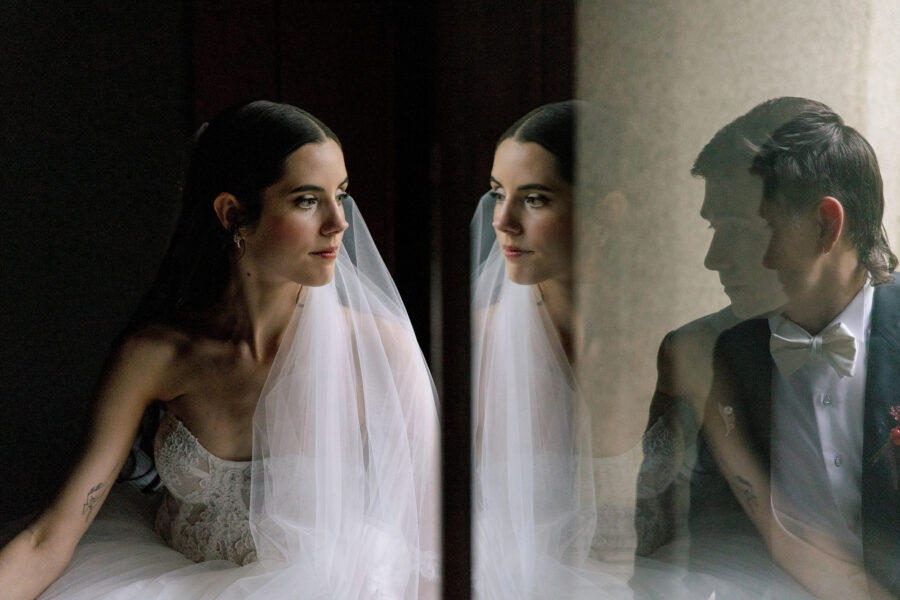
The couple at the heart of this late autumn wedding in Japan understood that idea completely. They’re a Canadian couple who brought their people out to Jinya, in the hills of Hadano, with the maples at their peak, and at every seat they left a Pokémon card made for the person who would sit there. We loved them for it the moment we saw the tables. It said what the whole day said: nobody in that room was a guest in general.

She had followed our work for years, she told us when she first wrote, and had been “patiently waiting” for our bookings to open. Japan was already hers. For him it had always been on the bucket list. Their brief was short and exactly right: “We are not looking for the most luxurious experience, but the most memorable.”
Their film keeps what a still frame can’t: the mountain turning red before anyone was dressed, the garden in full colour, and a room that wouldn’t sit still once the cards went into the air. Our photography and film are made as one piece of work for days like this one, where half the story is movement.
Red Fuji, Before Anyone Was Dressed
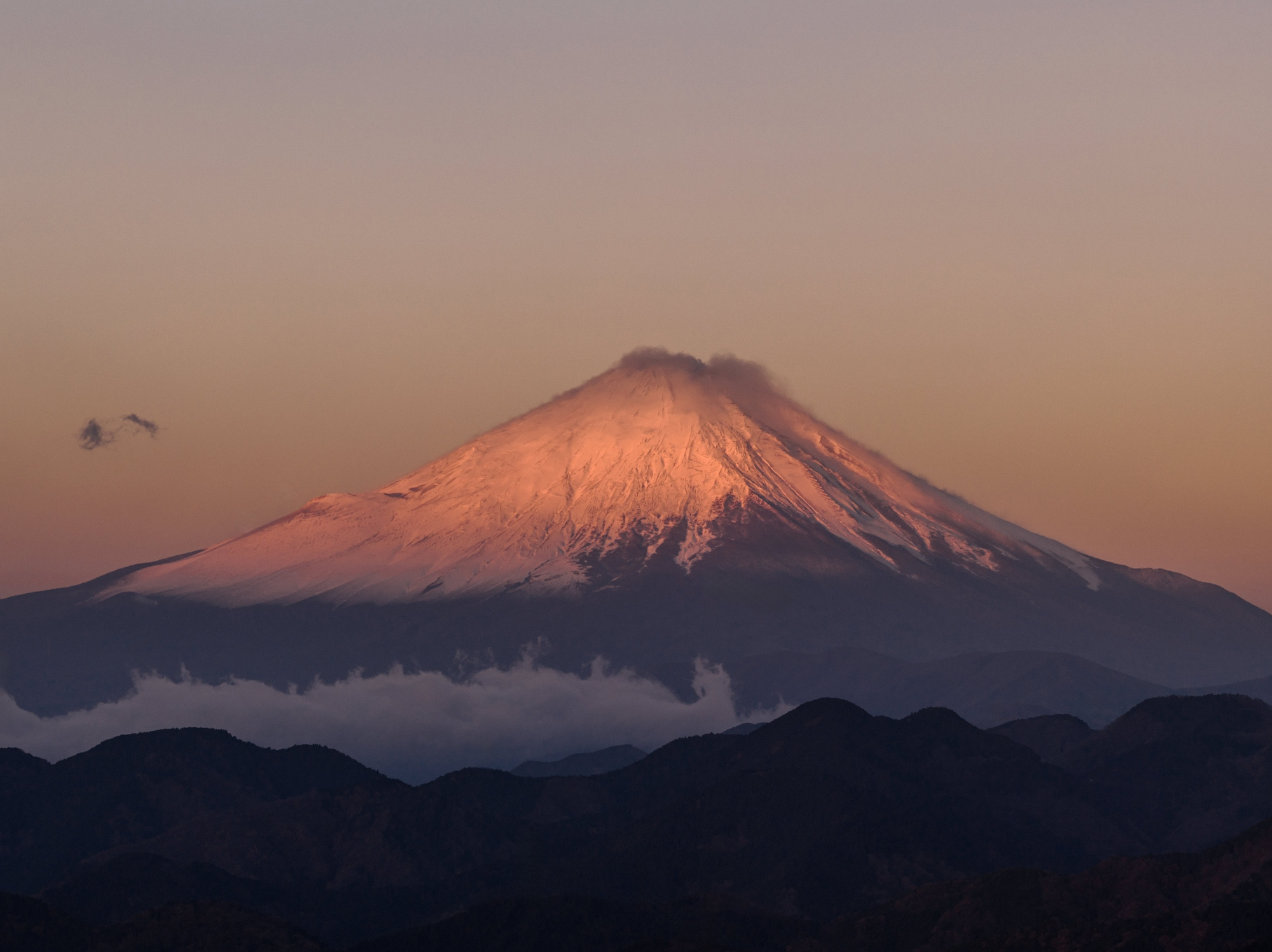
Japanese has two names for a red Fuji. Aka Fuji is the summer mountain, bare rock turned rust-red by a low sun. It’s the one Katsushika Hokusai designed around 1831 as Fine Wind, Clear Morning, in the same series of Thirty-six Views of Mount Fuji that gave the world the Great Wave. Both are ukiyo-e, pictures of the floating world. Beni Fuji belongs to the colder half of the year. Once the snow is back on the summit, dawn can stain it a softer crimson, and Japan’s weather forecasters watch for it from about November to April.
On the morning of their wedding, before anyone was dressed, the mountain did exactly that. The rest of the day came in the same two colours that morning gave it: red on the mountain and in the maples, blue in the ridges and, later, along every table. The rhyme is ours, not theirs. But planning a late autumn wedding in Japan means building the day around light that won’t wait, and being awake for it is part of what we do.
Late autumn asks for that kind of attention all day. The light is low and gold from the start, the garden glows rather than glares, and the evening comes early and cold. So we plan a late autumn wedding in Japan from the sunset backwards: portraits while the maples are still lit from the side, and somewhere warm and bright for everyone to be when the dark comes down.


Jinya at the Height of the Maples
Jinya sits at Tsurumaki Onsen, at the foot of the Tanzawa mountains, and by late November its garden is in full colour. We’ve told the inn’s own long story elsewhere, from a Kamakura-era camp to a home for shogi title matches. This time we kept thinking about an older one.
The Tale of Genji, written a thousand years ago, has a chapter called Momiji no Ga, the autumn celebration. In one of its famous scenes Genji dances Seigaiha with his friend at the court’s autumn excursion, and Murasaki Shikibu has the dance shine out from among falling leaves of every colour. The great classic of Japanese literature put its dancers under the maples. The habit of going out to look at them never left, and the word for it, momijigari, still makes looking at leaves sound like a hunt.
Jinya’s garden runs to ten thousand tsubo, around eight acres, which is enough to lose an hour in. They saw each other for the first time that day out on its paths, and somewhere among the maples he produced a Pokémon card. Of course he did.


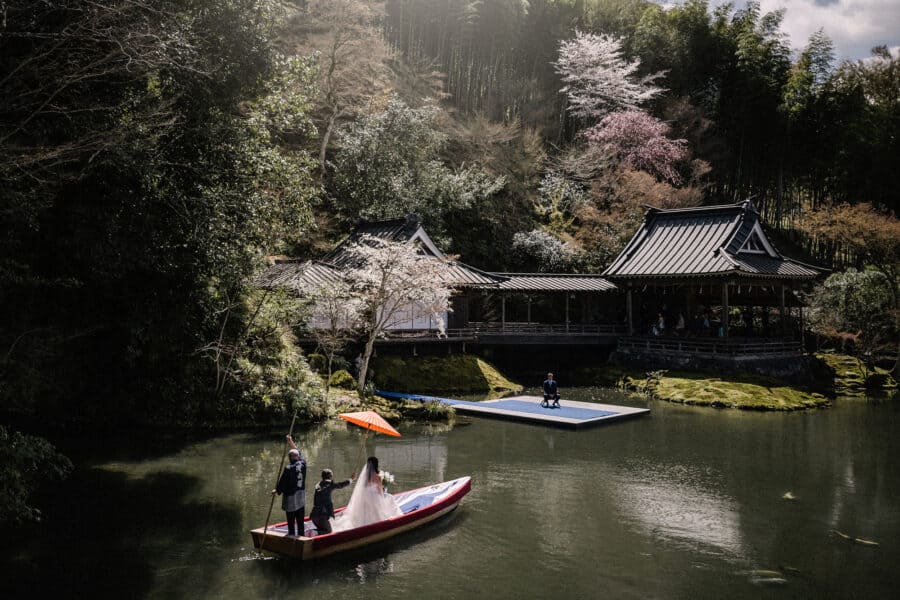
Jinya’s halls carry names a reader of Genji would recognise. The Genji-kan, a building about three hundred years old, rebuilt as the inn’s main hall, is where the couple’s people gathered after the vows, with a yakitori grill going and folding screens we’d asked for at the entrance in case the evening turned cold. The ceremony itself was held in a hall whose back wall is all window, so the garden stood where an altar might have been.


A Room Named for a Song
The reception was in Takekawa, a tatami room that opens onto a terrace and the garden. Takekawa is also the title of the forty-fourth chapter of The Tale of Genji, and before that it was a saibara, a folk song the Heian court took up and made its own. In the story, young men sing it at the New Year’s footsong, dancing their way up to the steps of a house. The words are short and almost reckless: by the bridge over the Bamboo River, in the flower garden, let me go free in the flower garden, with the girls beside me.
We won’t claim the inn had the song in mind when it named the room. But the couple filled it with exactly that spirit. Teal linen ran the length of the tables under orange and blue flowers, and nobody came in quietly: the bridesmaids arrived with a choreographed dance, and the groomsmen with one of their own. A sake barrel was opened for kagami biraki, which is how Japan likes to begin anything worth beginning. Then came mochi pounding, a rhythm two people can only keep together, one swinging the mallet and one turning the rice. Few wedding rituals describe a marriage so honestly.


A Card for Every Guest
The Pokémon card game first went on sale in Japan in October 1996, the first full-scale trading card game made in the country. The games that started it all came out the same year in two versions, Red and Green, and neither could catch everything on its own: some creatures lived only in the other cartridge, so finishing your collection meant finding someone to trade with. The whole idea needs two people.
Nearly thirty years later, this couple made their own set. Each guest found a card at their seat in the game’s own format, with their name across the top and abilities written like the in-jokes of long friendships. The idea was entirely theirs. “The Pokémon craze has hit Canada,” the bride told us, and the cards went on the tables as place cards.
Most place cards tell you where to sit. These told each person what they meant to the two people at the top table, and they did it in the shared language of a childhood. Later, instead of a bouquet toss, there were card tosses, more than one. A bouquet goes to a single person. A pack of cards in the air sends a whole room after something together, and that’s exactly what happened. They were doing it before card tosses turned into a trend online.


This is what we think a destination wedding is for. Their guests came out from Tokyo together by chartered bus and went back together at the end of the night, and in between the day kept handing them reasons to find each other: a card with your name on it, a barrel to open, a mallet to take a turn with, a pack worth diving for. Time and space are the luxury of a wedding like this, and they spent theirs on everyone.
They spent the inn the same way. The day moved through it room by room, from a welcome on the Takekawa terrace to the ceremony hall, out into the Genji-kan garden, back to Takekawa for dinner, and out under the trees again to dance. Every move gave the guests a new room and a fresh reason to mix.
The Day Ended in Red
The doors to the terrace were open, the trees were lit, and the dancing went outside under the maples. Later, the bride changed into red lace for the evening, and the colour that had opened the day on the mountain came back to close it.
Murasaki Shikibu’s dancers moved among falling leaves in front of an emperor. Here the leaves stayed on the branches and the audience was a terrace full of friends. It’s the same instinct, a thousand years apart: when the year puts on its colour, you go outside and dance in it.


What They Gave Away
Tajiri built a game on the idea of living things moving between people. A couple who could have made the day entirely about the two of them made it about circulation instead: cards at every seat, cards in the air, a room built for passing things from hand to hand. They’re the kind of people who put everyone else’s name at the top of the card. We think that’s what a wedding is for.


When the photographs reached them, the groom wrote that he’d taken a peek and loved them. When the film arrived, she told us she had watched it at least ten times and cried the whole way through. “Thank you, thank you, THANK YOU so much for capturing the literal best day of our lives.”