
Some dates don’t need a year attached to them.
In Japan, March 11 is one of those dates. You say it and people go quiet. Not because they’ve forgotten. Because they haven’t. Because the body remembers what the calendar confirms, and fifteen years later the ground still feels different on that day, even if you’re not standing on it.
This year we were in Australia. With family. With the people who hold us together when the world asks too much. We didn’t write anything on the day. We didn’t post. We sat with people we love and let the date pass through us the way it does every year, which is to say not easily and not quietly, but alongside the people who understand why it matters.
We’re writing now because we think it’s time to say something we’ve never fully said on this platform. About what March 11, 2011 did to us. Not just as people living in Japan, but as the people who eventually became this business, this team, this particular way of seeing weddings, photography, life and what it means to show up for other humans during the most important moments of their lives.
What We Saw
When the earthquake hit, everything stopped. Our weddings were cancelled. Fukushima’s nuclear plant was threatening meltdown. International media were telling people to leave Japan. Airlines were running evacuation flights. For a period, the entire country felt like a no-go zone, and for people in our industry, there was no work and no clear path forward.
One of our clients happened to be the CEO of Peace Boat. They were mobilising the first wave of volunteers to head north, immediately, into the disaster zone. They asked us to come. To document what was happening. The destruction, the relief effort, the reality on the ground that cameras needed to see.
We said yes. We loaded the car with supplies that friends, neighbours, and strangers in our community had donated, and drove twelve hours toward the coast.
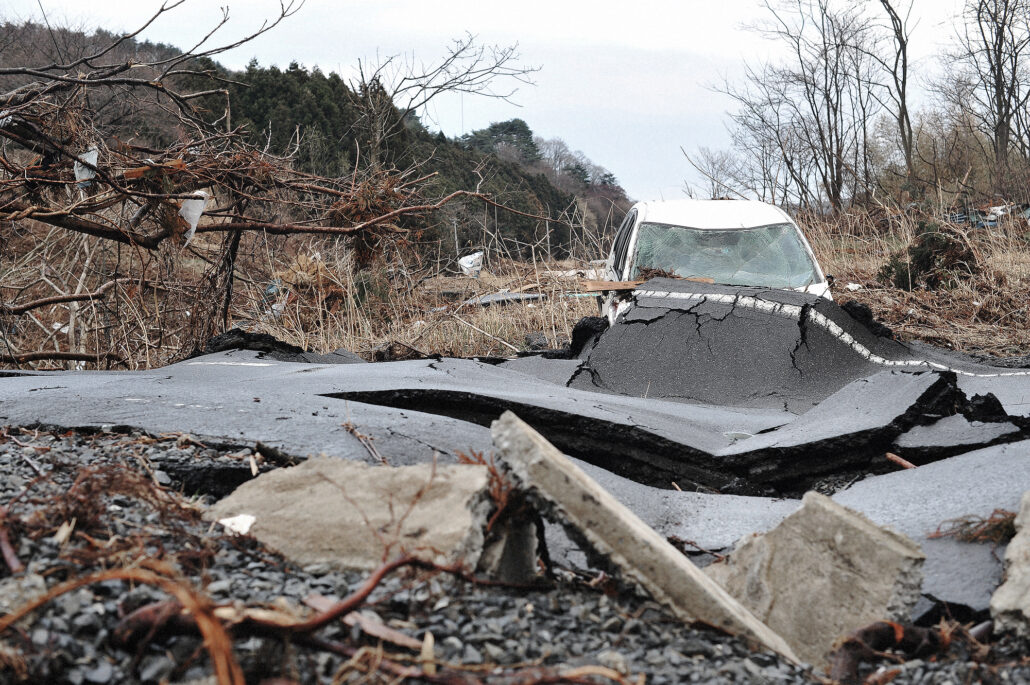
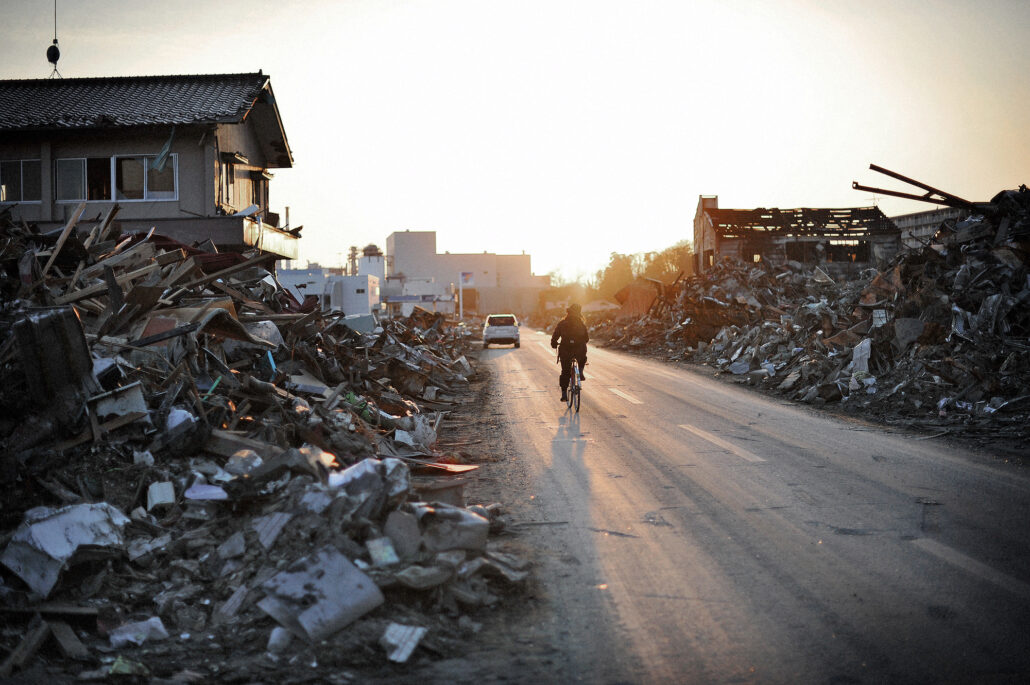
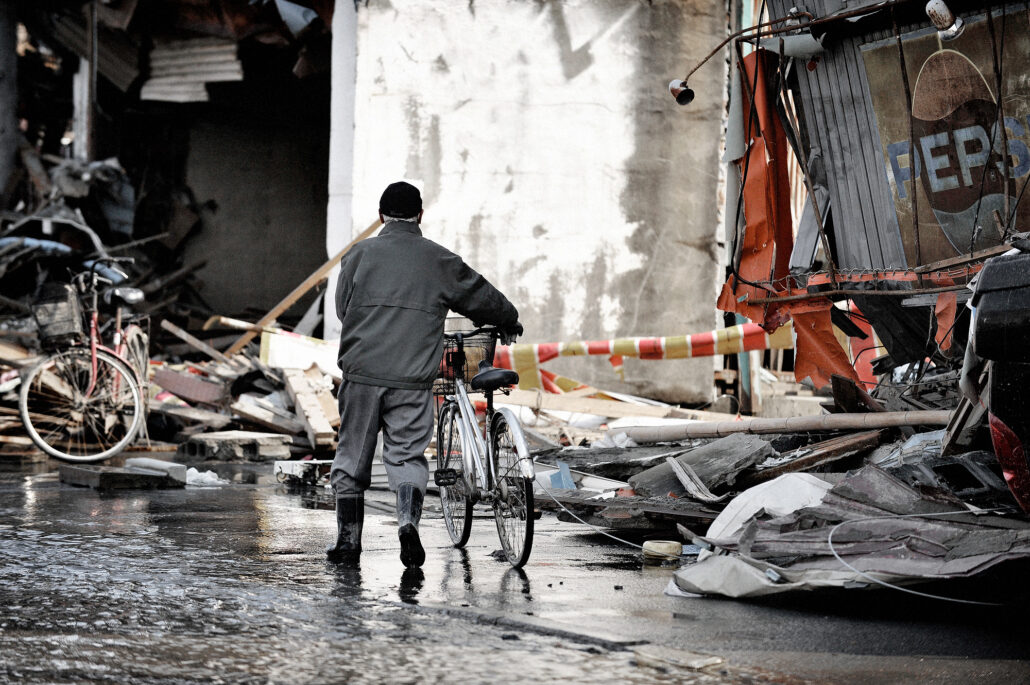
You don’t know what that yes means until you’re standing in it. Until you’re driving through Fukushima in the dark and the towns along the highway are empty and the cars lining the road are crushed and there’s no light anywhere. Until you arrive at Ishinomaki and the coast looks like nothing you’ve ever seen and the air tastes wrong and the scale of it hits you physically, in your chest, before your brain has time to process what your eyes are reporting.
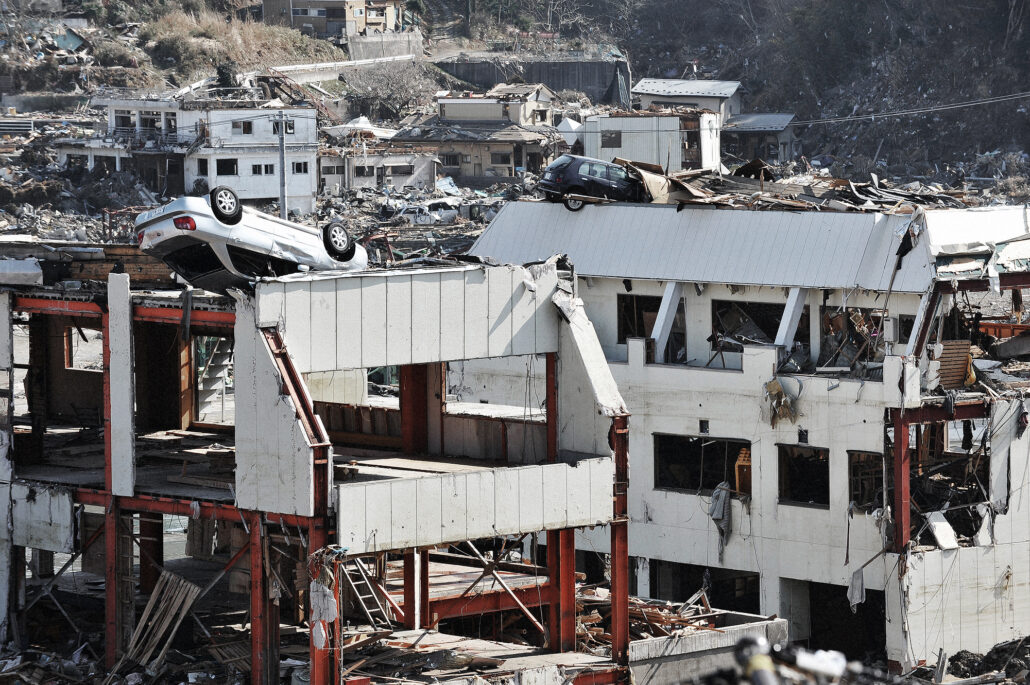
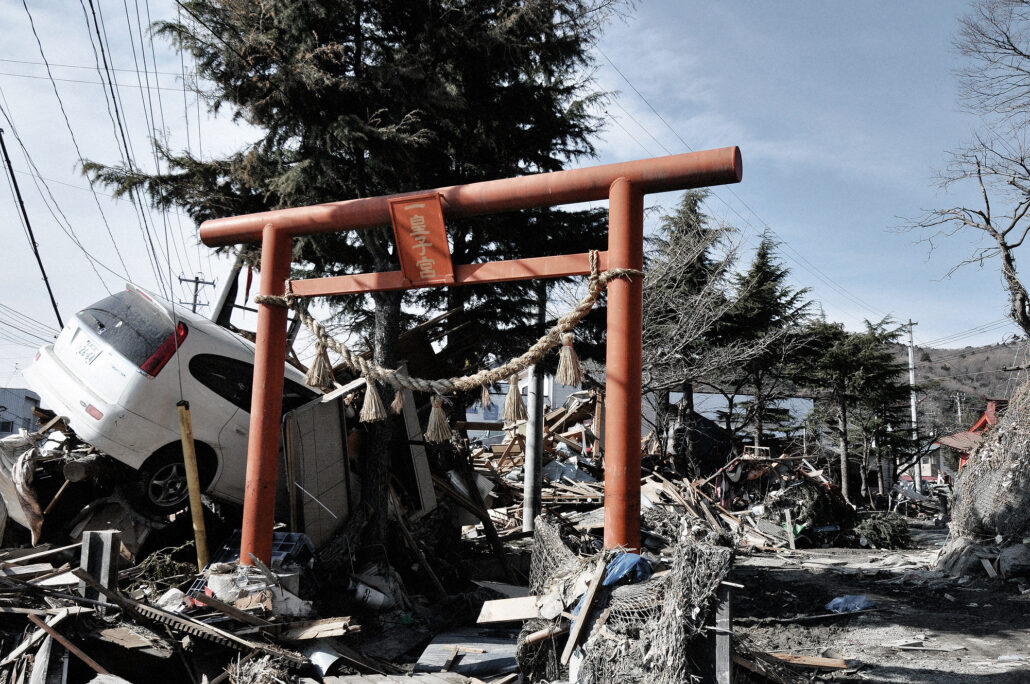
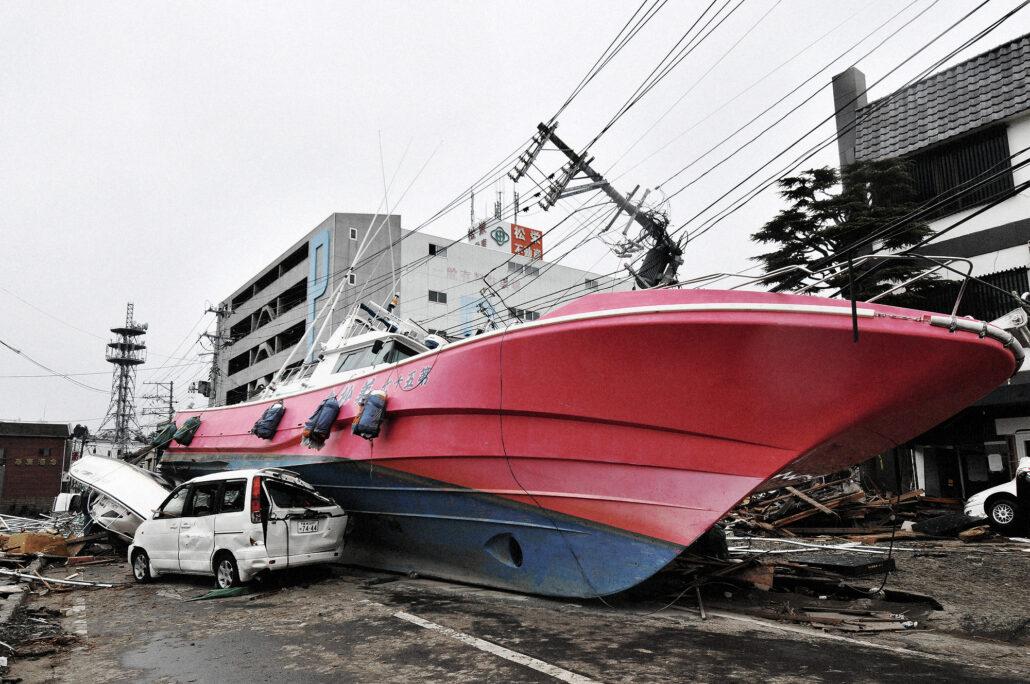
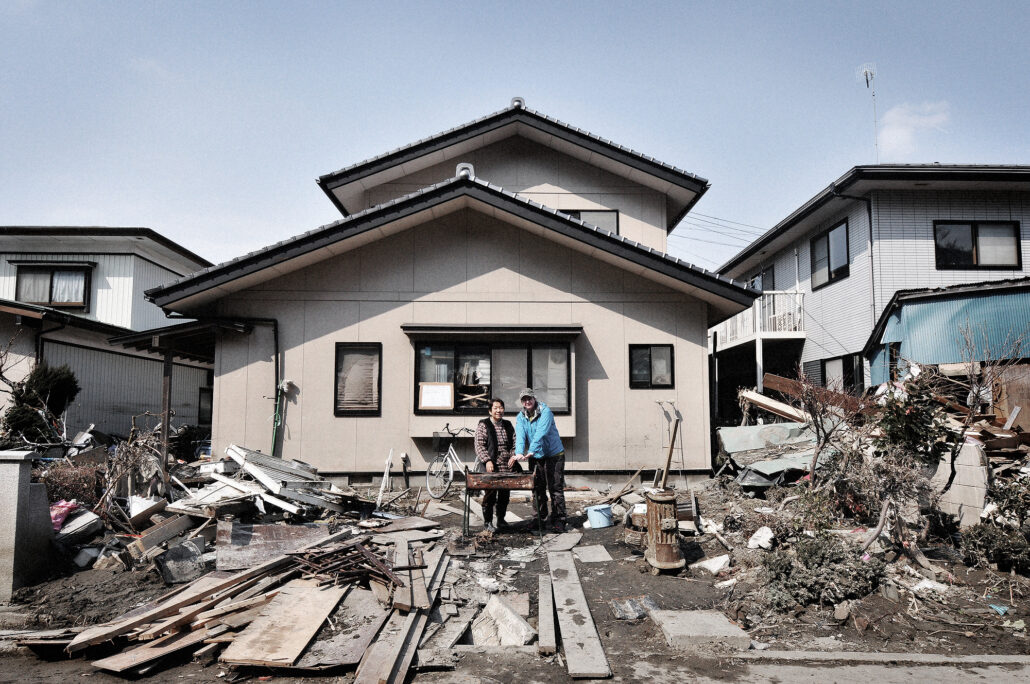
Ishinomaki. Ogatsu. Kesennuma. Rikuzentakata. Onagawa. Towns where the tsunami arrived in under seven minutes and left nothing standing. Fishing boats pushed into main streets. Homes overturned with their rooms exposed to the sky. A stretch of coastline where seventy thousand pine trees once stood, reduced to a single survivor.
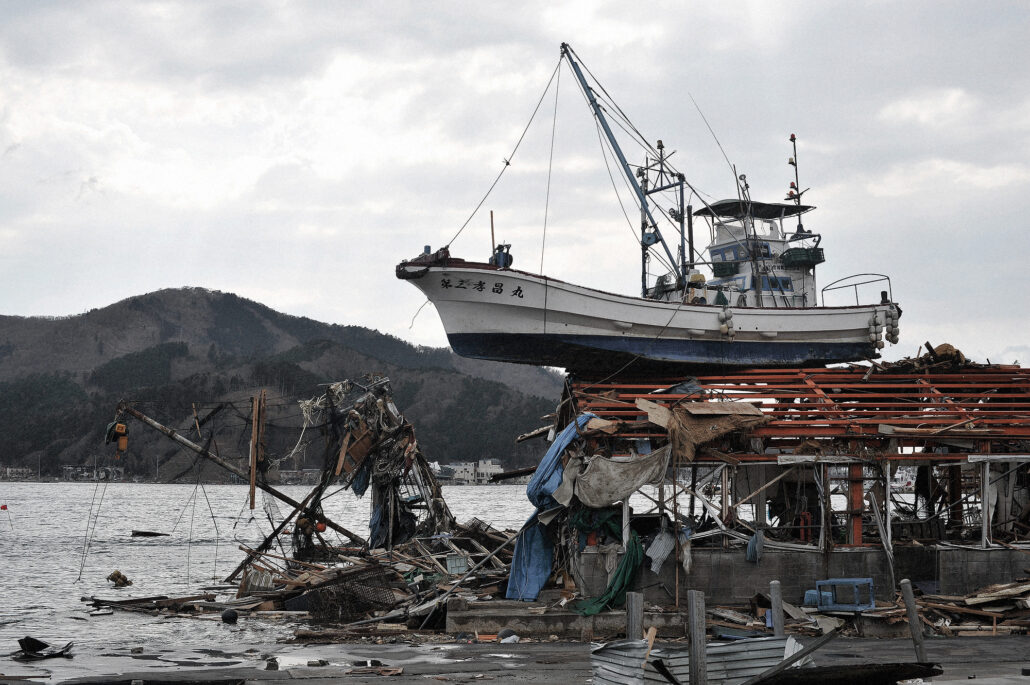
We kept going back. Monthly, for over a year. Cooking meals for government workers too exhausted to feed themselves, running art stations for children in shelters, and doing the only thing we actually knew how to do well: looking, noticing, and documenting what we saw.
We won’t describe everything. The posts from 2011 are still on the blog. The photos are mostly broken links now, but the words are there, raw and unedited, written in tents and cars and temporary housing while the aftershocks were still coming. They say more than anything we could reconstruct from fifteen years of distance.
But there are things from those trips that never left.
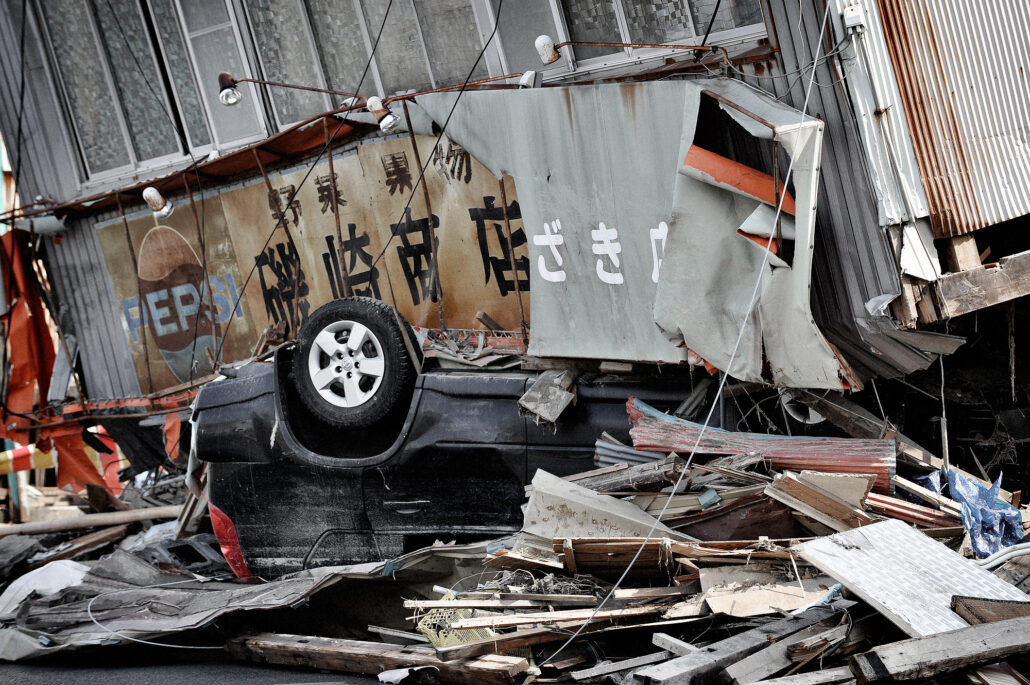
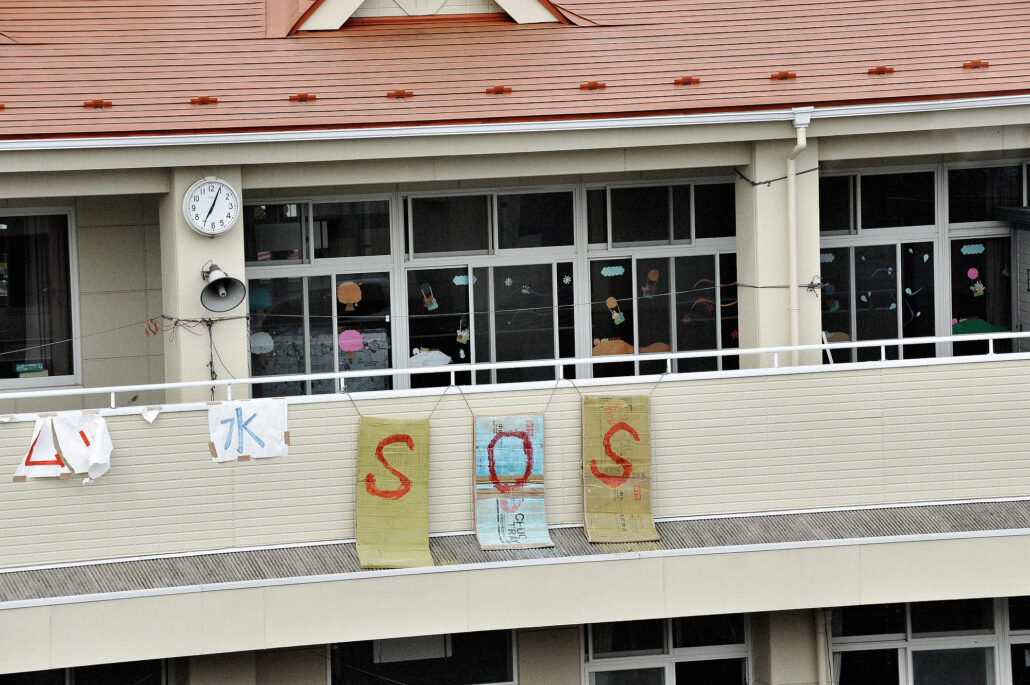
What Stayed
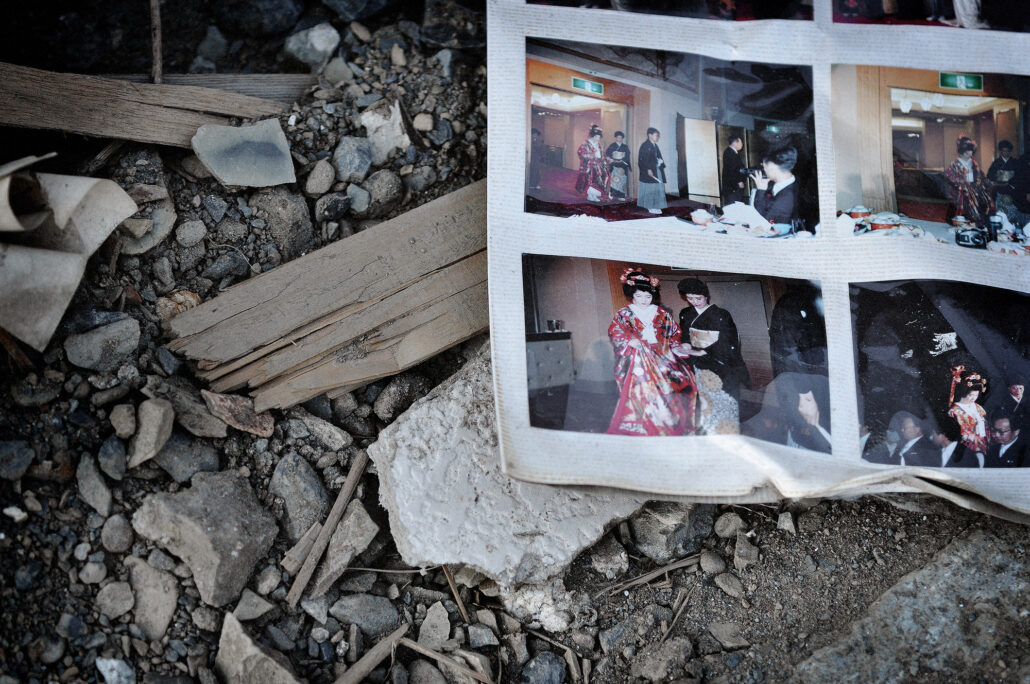
A wedding photo album. Found in rubble in Ogatsu, a town that had been emptied by the water. Handmade binding. Pages intact. Someone’s entire ceremony, their family, their faces, lying in the open where a house used to be.
That album changed something in us that we’re still working through. Because we understood, holding it, that photographs are not decorations. They’re not content. They’re not deliverables. They are proof that people existed, that they gathered, that they loved each other in a specific place on a specific day. And when everything else is taken, the photograph is sometimes the only thing that says: this happened. These people were here. This was real.
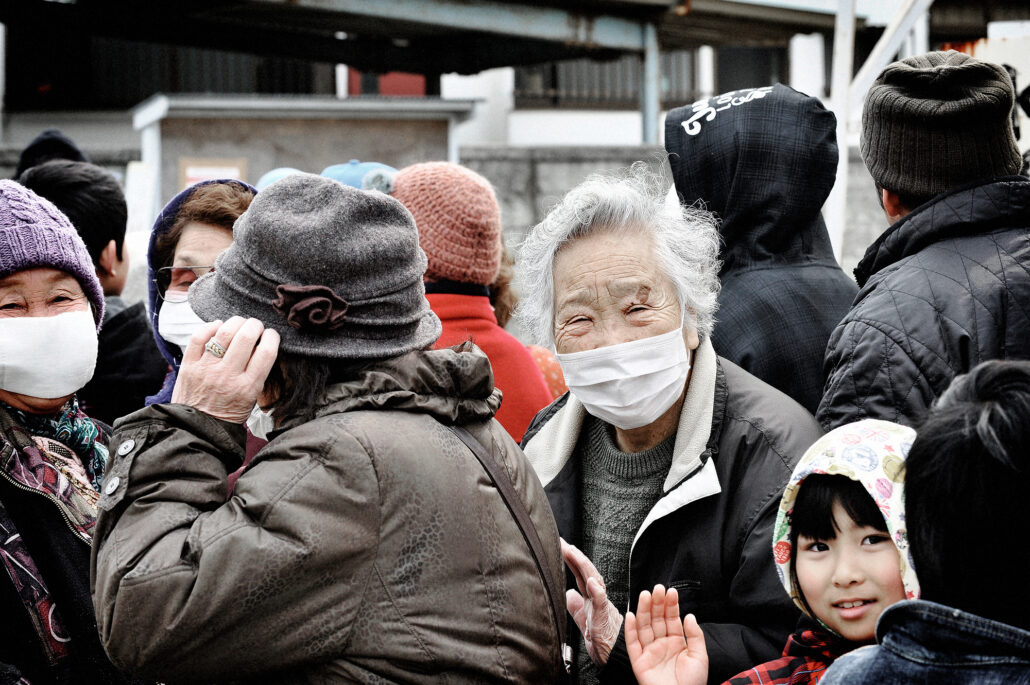
A woman named Kiyoko, at a festival months later in Ishinomaki, carrying laminated photographs of what she’d lost. Her husband. Her home. Her life before. She showed them to us, to strangers, to anyone who would look, because as she put it, without the photos, who would believe it?
A five-year-old girl in a destroyed neighbourhood, sweeping the footpath with a broom almost as tall as she was. The footpath led nowhere. The houses on either side were gone. She swept it anyway.
Children at a shelter drawing pictures while their grandparents, newly responsible for raising them, sat nearby trying to hold themselves together long enough to get through another afternoon.
These are not metaphors. They’re not material for a brand story. They’re things that happened to real people in a real place, and they changed the way we think about nearly everything.
What It Did to Us
We didn’t come home from those trips and carry on. We came home and fell apart. Slowly at first, then completely. There was a period where we genuinely didn’t know if we’d recover. Not the business. Us. How do you go back to normal life when twenty thousand people are lost and still missing and entire towns are trying to figure out how to exist again?
People talk about heartbreak being physical. It is. We felt it in our chests, in our sleep, in the weight of ordinary days that felt obscene in their ordinariness. We carried that for a long time. Years. And we didn’t understand it while we were in it. We just lived inside it.
What eventually changed wasn’t that the feeling went away. It was that we stopped expecting it to. You don’t get over something like Tohoku. You learn to hold it alongside everything else. The grief and the gratitude. The loss and the fact that life, stubbornly, beautifully, keeps asking you to participate.
The towns were doing it. The people were doing it. Rebuilding while still broken. Planting while still mourning. Living while still counting who was missing. If they could hold both things at once, we could learn to as well.
Those days are still a huge part of who we are. They always will be.
What It Taught Us
This is the part that’s hard to write without it sounding like we’re making someone else’s tragedy about ourselves. We’re going to try anyway, because these things are genuinely underneath everything we do now, and we think it matters to say why.
Photography is not a luxury. It’s a record of human life. That album in Ogatsu, Kiyoko’s laminated photos of her husband. Those images mean something. When we photograph anything now, we carry that understanding. The people in front of us will age. Their parents will age. The children at the table will grow up and want to see what that day looked like. The venue might close. The neighbourhood might change. The only fixed version of that gathering will be what we captured. We don’t take that lightly. We never have.
Structure is how you protect what matters. We saw it in every town we visited. The communities that had clear systems, strong preparation, and people who understood their roles were better able to protect the people inside them. The forethought mattered. The invisible work that nobody sees until it’s tested under pressure mattered most of all. When you build something with genuine care for the people inside it, they’re held. That principle lives in us now. It shapes how we think about everything.
Saying yes changes you. We weren’t disaster relief workers. At that time we were wedding photographers whose client happened to run one of Japan’s largest volunteer organisations. When Peace Boat asked us to go north with the first wave of volunteers, to document what was happening while the nuclear plant was still threatening meltdown and the rest of the world was leaving Japan, we said yes. We didn’t fully understand what that yes would mean until we were standing in Ishinomaki looking at a coastline that no longer existed. But that yes is the reason we are who we are now. You don’t wait until you’re perfectly prepared. You go, you learn, you do what you can, and then you do a little more.
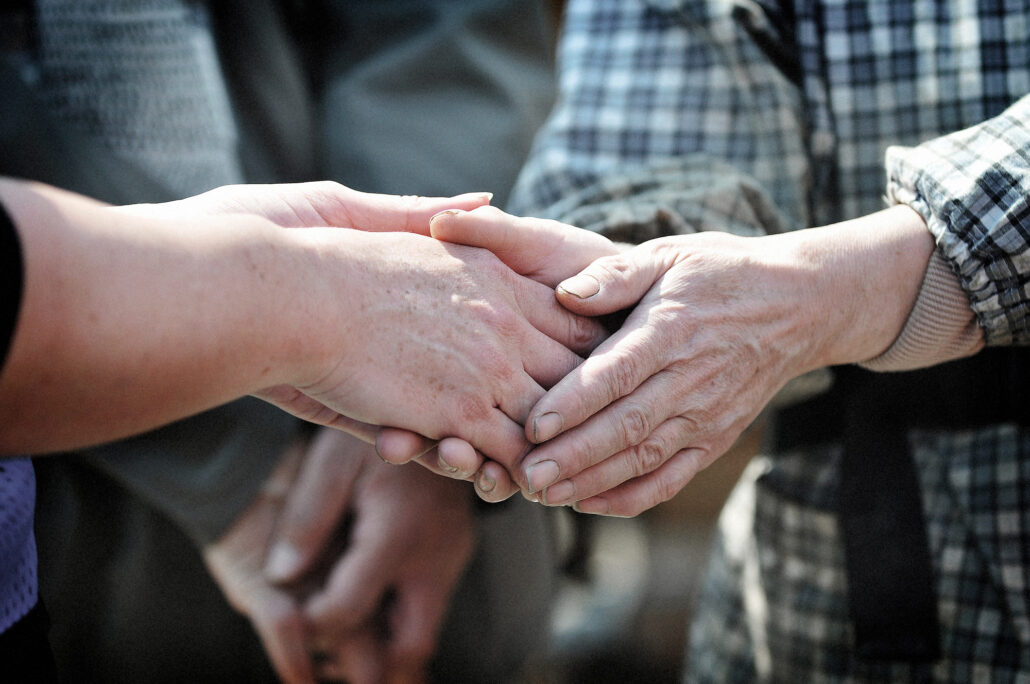
Community is not a marketing word. The people who helped us load that car in the first week. The photographers around the world who joined a photo restoration initiative we started after finding that album. The volunteers who arrived by the hundreds on pink Peace Boat buses. The strangers who became family in a tent camp in Ishinomaki. Community is what happens when people stop calculating what they’ll get back and just give what they have. We’ve seen what it looks like when it’s real. You don’t forget that.
Japan teaches you about recovery. Not the inspirational poster version. The actual, grinding, years-long version where a town goes from rubble to sandbags to cleared lots to temporary housing to slow, painful rebuilding while the rest of the world moves on to the next headline. The people in Tohoku asked us one thing, repeatedly, across every visit: please don’t forget. That request never left.
Fifteen Years
Fifteen years is long enough for a landscape to change. The coastline is rebuilt. Seawalls stand where water once rushed through. New communities have formed around the spaces where old ones were erased. The miracle pine in Rikuzentakata, the single tree that survived out of seventy thousand, was preserved as a monument. Life continued, the way it does, because it has to.
We’re different now too. The pandemic nearly ended our business. We wrote about that recently (I’ll post it soon). But if we’re honest, the reason we survived the pandemic with our sense of purpose intact is because Tohoku had already taught us the hard lesson. That everything can be taken. That the work you thought would always be there can disappear overnight. And that what matters, when it does, is whether you built something real enough to rebuild from.
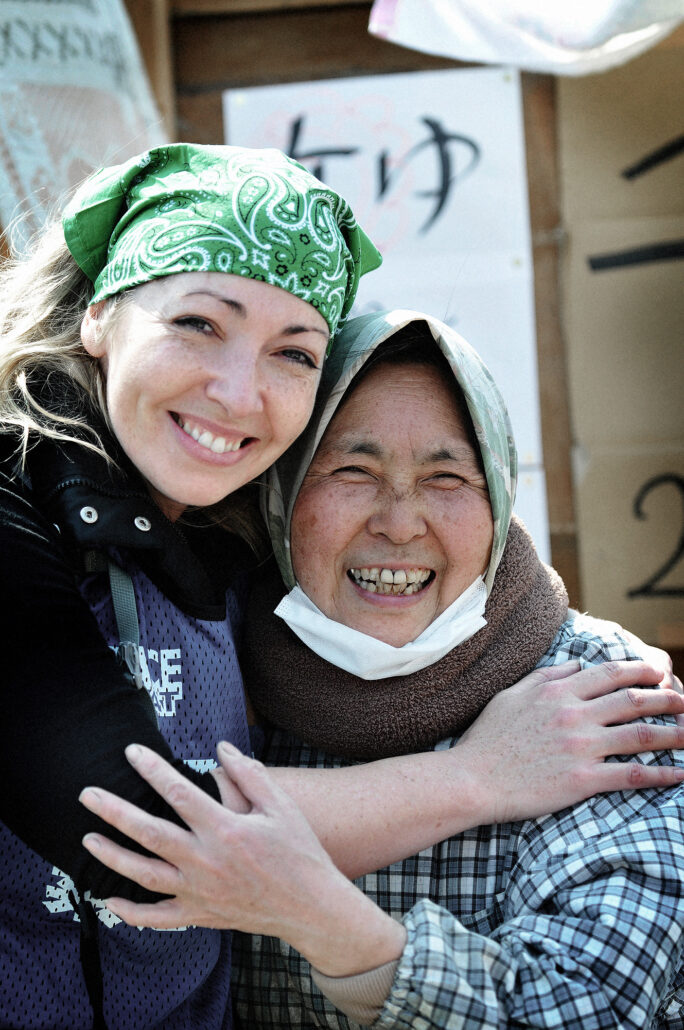
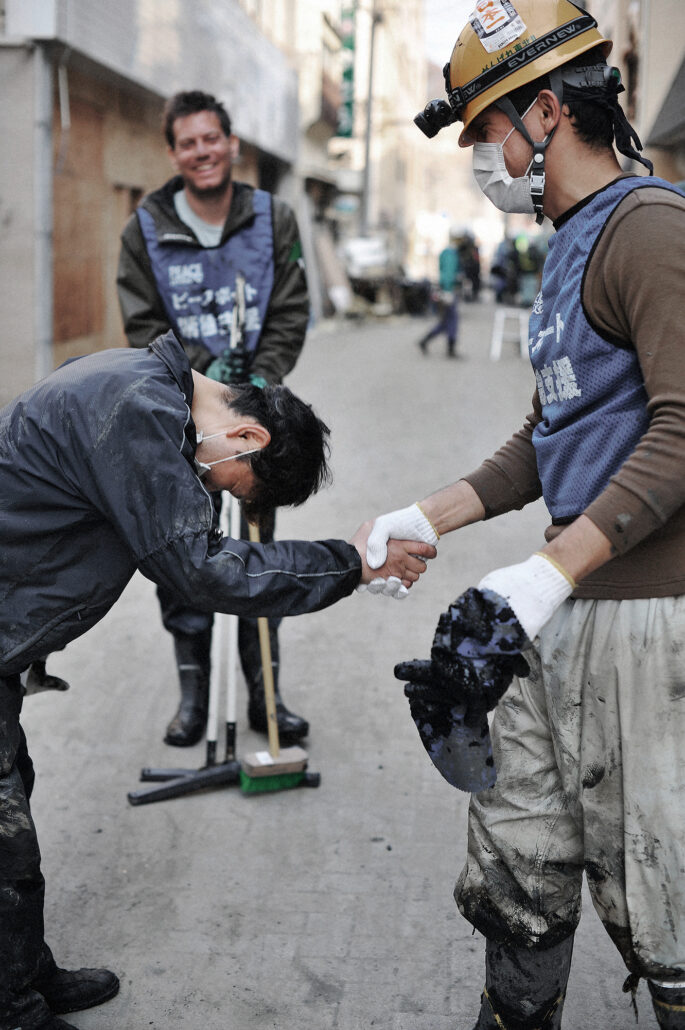
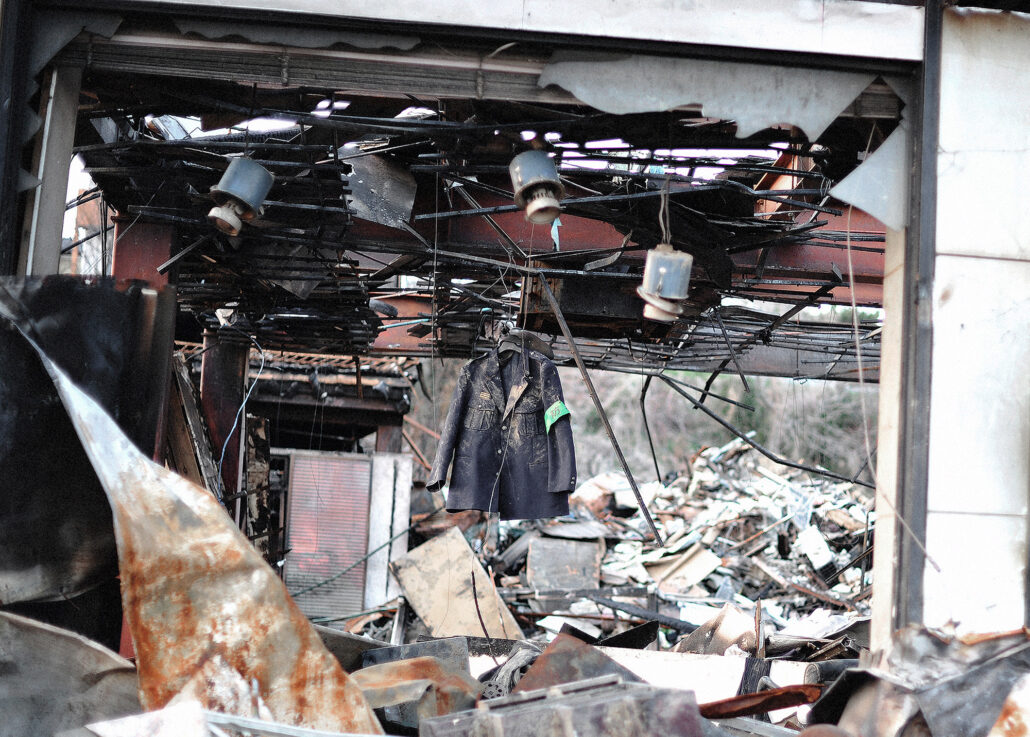
We built something real. We know that because of what happened in those months on the Tohoku coast, cooking meals, drawing pictures with children, finding wedding albums in ruins, driving home in silence because there were no words left, and then driving back the next month because we’d promised we would.
The Thing Underneath
What Tohoku taught us, more than anything about life or business, is that humanity is the engine underneath everything. It’s the reason grief hits so hard and celebration reaches so deep. They come from the same place.
The capacity to love a person, a community, a home, a country, so completely that losing any part of it reshapes you. And the capacity to gather the people who matter, in a place that matters, and mark the fact that you’re alive and together and here. That’s not a wedding industry insight. That’s a human one.
The volunteers who showed up with nothing but their hands. The grandmother raising her granddaughter because her daughter didn’t survive. The couple whose album landed on concrete and somehow held together through a literal tsunami. The towns that rebuilt from flatness. The people who danced at the Ishinomaki festival on the same streets they’d been clearing rubble from three months earlier. All of it runs on the same fuel. The fierce, stubborn, irrational commitment people have to each other.
To showing up. To not forgetting. To celebrating even when the ground is still shaking, because the alternative is to stop living, and people don’t do that.
They just don’t.
This Year
This year we sat in Australia on March 11 and thought about Japan. About the people we met in shelters who are now fifteen years further into their lives. About the towns that came back and the ones that didn’t. About what it means to live in a country that carries this kind of history in its geography, its architecture, its preparation systems, and its annual remembrance.
We didn’t post because sometimes the most respectful thing is just to feel it.
But we’re posting now. Because the promise was always the same.
Don’t forget.